


[ad_1]
Filed
6:00 a.m. EST
01.07.2026
Felony defendants are overwhelming an understaffed state psychological well being system that, a number of years in the past, served 1000’s extra sufferers.
Household pictures and hospital information of Quincy Jackson III, who has been out and in of hospitals and jails, together with three state-run psychiatric services, for a couple of decade.
Ohio’s state-run psychiatric hospital system serves greater than 1,000 sufferers every day.
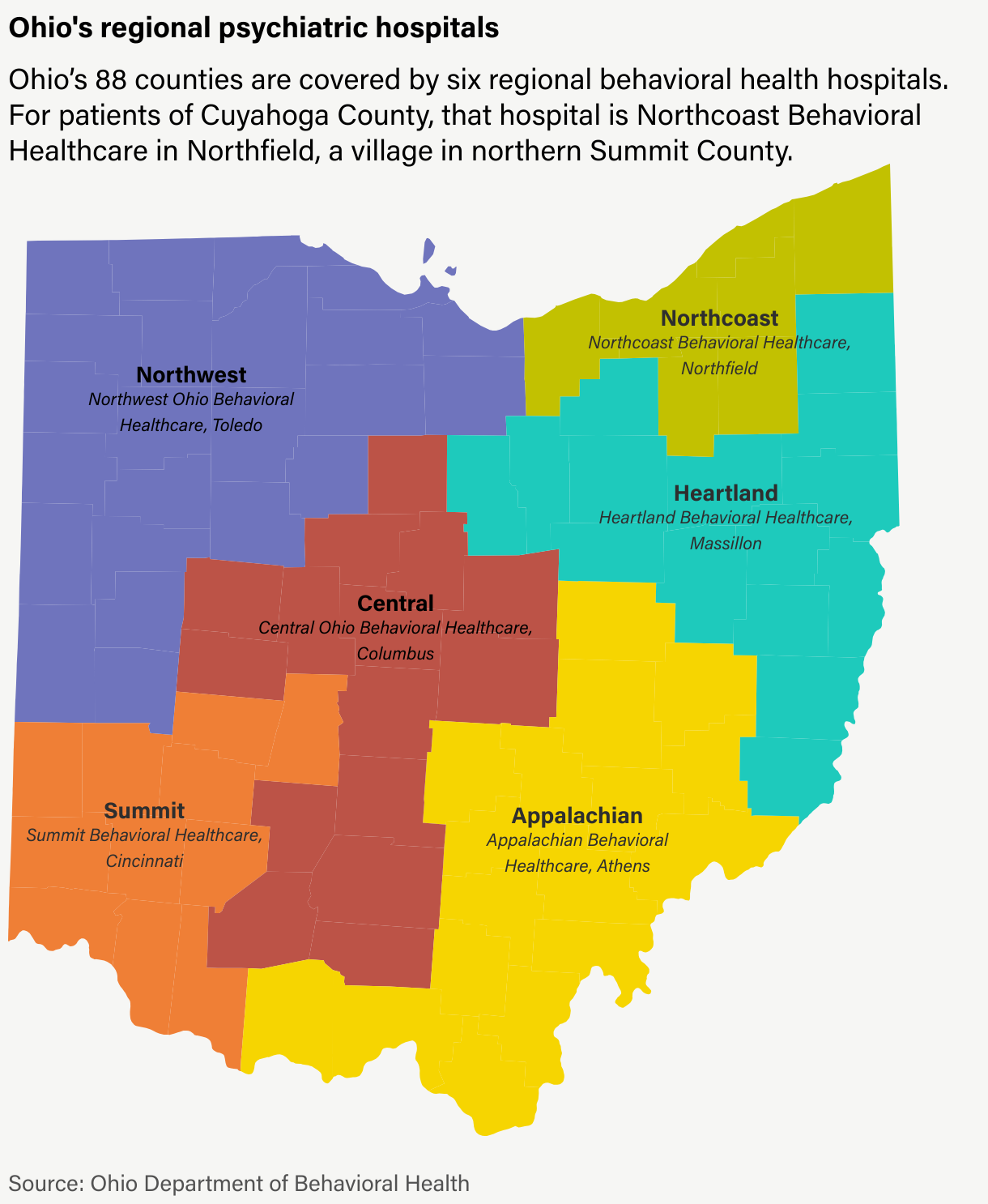
It’s a system of final resort for individuals with no cash, no insurance coverage, extreme psychological sickness and nowhere else to go. Typically flagged by family members or judges as a hazard to themselves or others, sufferers are positioned by courtroom order into the system’s six regional hospitals for stabilization and remedy.
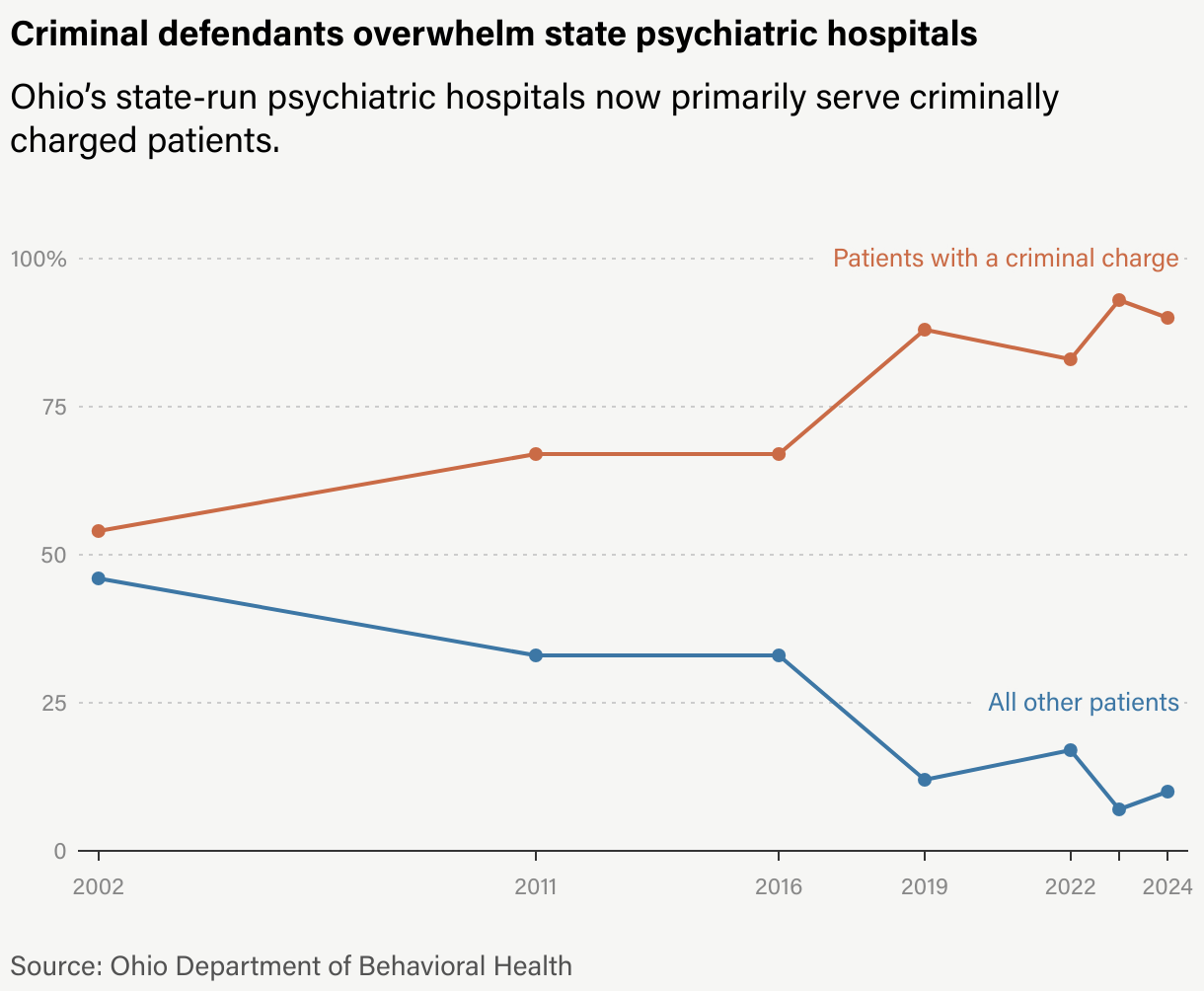
However now, in a pattern that predates the pandemic, the trail to care virtually solely runs by means of the legal justice system. Sufferers awaiting trial for legal prices or discovered not responsible by purpose of madness are overwhelming Ohio’s understaffed state psychiatric hospitals. This exacerbates wait instances for beds and deprives 1000’s of different sufferers of entry to remedy every year, even those that don’t have legal circumstances.
So, why are so many sufferers funneled by means of legal courts? Who’s within the psychiatric hospitals? And when can they get out?
How do individuals get into Ohio’s psychiatric hospitals?
Felony protection attorneys or judges can elevate considerations a couple of defendant’s competency — legally outlined as the power to help their attorneys and perceive the courtroom course of. Defendants are presumed competent till examined by a medical physician or psychiatrist.
A court-ordered competency analysis sometimes takes lower than a month.
If deemed incompetent, the defendant is ordered to be restored at a state hospital. State regulation permits 30 days to a 12 months for restoration, relying on the seriousness of the legal prices.
Restoration will not be remedy, state officers and specialists say, however slightly an effort to make use of remedy to stabilize sufferers and authorized schooling to organize them for trial.
If well being officers can’t restore the defendant, the trial choose might dismiss the case and ask a civil courtroom to involuntarily commit the affected person to a state psychiatric hospital. It’s a transfer just like how members of the family or police request that an individual they concern might hurt themselves or others be pressured into hospitalization by a probate choose — a course of typically known as pink-slipping.
About 10% of state psychiatric beds had been stuffed by civil sufferers final 12 months, down from 33% in 2016. Whereas uncharged sufferers may be involuntarily hospitalized for as much as 90 days, the common keep is 12 days in comparison with 111 days for criminally charged sufferers.
If a choose, after reviewing the physician’s analysis, agrees {that a} legal defendant is competent or restored to competency, the legal case strikes ahead.
A protection legal professional can argue that an altered psychological state on the time of the crime prevented a shopper from understanding proper or fallacious. If discovered not responsible by purpose of madness, the choose might place the defendant in a state psychiatric hospital for so long as they may have been imprisoned if discovered responsible, primarily based on probably the most critical cost, or till their psychological dysfunction may be safely managed outdoors the hospital.
A couple of quarter of Ohio’s state psychiatric sufferers have been discovered not responsible by purpose of madness.
Why are there so many criminally charged sufferers?
Nationwide specialists in psychological well being and legal justice attribute the rise in criminally charged sufferers to:
- A higher consciousness of how psychological sickness can drive crime.
- Courts adopting specialised dockets for defendants with psychological well being or substance abuse problems.
- The disruption of psychological well being providers throughout the pandemic.
The share of criminally charged sufferers in state hospitals grew 3 times quicker in Ohio from 2016 by means of 2023 than elsewhere within the nation, in response to surveys performed by the Remedy Advocacy Middle, a nonprofit analysis and coverage group.
By December 2024, criminally charged sufferers stuffed almost each mattress at some state-run regional hospitals in Ohio, together with Northcoast Behavioral Well being, situated between Cleveland and Akron.
“In all of the years I’ve been concerned, virtually 40 years now, I’ve by no means seen so many critically mentally ailing individuals — sort of on the streets and now punted into the legal justice system — that we have now to take care of,” retiring Lorain Municipal Court docket Decide Mark J. Mihok mentioned at a gathering of attorneys, judges and psychological well being professionals in Could 2025.
State officers say native courts are additionally answerable for the rise in criminally charged sufferers. Municipal and county judges put defendants in state psychiatric hospitals “as a pathway to entry psychological well being care slightly than for its meant function,” state psychological well being officers mentioned on the similar gathering held in Cleveland.
Lisa Gordish, Ohio’s director of forensic providers, added that 63% of court-ordered evaluations discover defendants competent.
How lengthy and why are individuals ready in jail for Ohio’s psychiatric beds?
Wait instances for state psychiatric beds are measured from the time of a courtroom referral, not the time the individual is arrested or jailed.
“We’ve had wait instances that go as much as a 12 months for a person awaiting psychological well being housing,” Bryan D. Morgenstern, the administrator of the Portage County jail, mentioned in response to a statewide survey by The Marshall Mission – Cleveland.
Known as the brand new asylums by affected person advocates and psychological well being specialists, jails usually are not conducive or outfitted to deal with mentally ailing individuals, in response to county officers who run them. Defendants on suicide watch or who require additional care drain sources and pressure staffing.
Wait instances differ by area, and from month to month. At one finish, the regional state psychiatric hospital in Columbus has persistently reported a couple of 30-day wait to confess new sufferers. However throughout southern Ohio, from Cincinnati by means of Appalachia, sufferers have waited as much as almost 90 days, on common, up to now 12 months.
Ohio has fewer state psychiatric beds per 100,000 individuals than the nationwide common, which is already lower than a 3rd of what’s wanted, in response to a 2023 survey by the Remedy Advocacy Middle.
However, at a couple of month-long wait statewide, Ohio will not be the worst.
Criminally charged sufferers in Louisiana, Wyoming and Mississippi waited a median of six months or extra in jail. Texans waited a whopping 444 days.
On the time of the survey, Ohio officers reported 78 criminally charged sufferers had been ready for a psychiatric mattress. Together with sufferers with out legal prices, state information confirmed 160 individuals had been ready even longer — 37 days on common — by the tip of Could 2025.
[ad_2]









