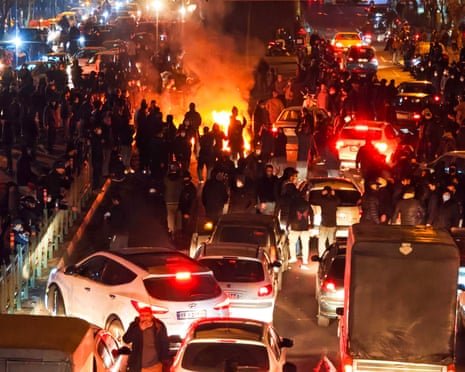
Growing Demands for Transparency
Pressure is mounting within Iran for an independent investigation into the death toll from recent protests. The government announced plans to publish the names of those killed, aiming to counter allegations of widespread human rights violations and claims that up to 30,000 people have died. Official figures from the Martyr’s Foundation put the number at 3,117, including security personnel.
Reformist voices argue that the government’s approach lacks true openness and will not resolve ongoing debates over the casualty count. Mohsen Borhani, a law professor at Tehran University and government critic who has been imprisoned in Evin, views the public identification effort as a step forward. He notes that past protests left families with little information on the deceased and injured.
Borhani advocates for a dedicated website where citizens can anonymously submit names and details of victims. “The site should verify each entry and provide accurate information without bias,” he stated, emphasizing the need for public participation to ensure balance.
Challenges and Risks for Families
One major hurdle remains: families who come forward to identify loved ones killed by security forces face potential retaliation. This fear underscores the deep mistrust fueling the calls for external oversight.
Indicating widespread belief that the true toll exceeds official reports, the Tehran teachers union has demanded the release of all detainees. Their statement describes the events as “one of the bloodiest chapters of repression in contemporary Iranian history,” with tens of thousands of children, women, and men affected in under a week.
Reformist Proposals for Resolution
Ahmad Zeidabadi, a reformist analyst, highlights the profound distrust between the state and society, which has led many to reject official statistics. He proposes inviting a United Nations fact-finding team for credibility. On his Telegram channel, Zeidabadi questioned, “Why not entrust this task to a legitimate international body so that opposition forces and other countries cannot easily cast doubt on it?”
The Reform Front, a coalition of reformist groups that supported President Masoud Pezeshkian’s election, echoes these sentiments. They urge the creation of an independent committee to examine the “unprecedented disaster” and deliver a clear report to the public.
Reformist lawyer Ali Mojtahedzadeh stresses addressing underlying issues by fostering a robust civil society to rebuild trust. Former President Hassan Rouhani, in his initial comments, pointed to the protests—driven by a generation raised under the Islamic Republic—as a signal for sweeping reforms. He called for establishing political parties and halting the disqualification of electoral candidates.
Ongoing Detentions and Sentencing
An unofficial committee has formed to track individuals still held in custody, as security operations continue to target alleged protest leaders. No precise figures exist for detainees, but estimates suggest tens of thousands remain imprisoned. Details on minors under 18 in detention are unavailable, though teaching union sites share verified photos of child victims.
Images have surfaced of officials visiting detainees. Lawyers report that most arrested individuals were born between 1980 and 1985, serving as primary family providers from working-class backgrounds. Many cannot afford bail, and initial court sentences range from two to five years.