

Defending Allied Sacrifices in Afghanistan
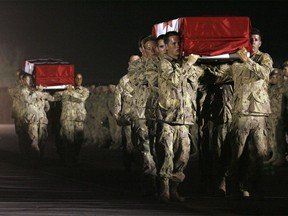
Governments worldwide have condemned recent statements from U.S. President Donald Trump, who suggested that NATO allies kept their distance from the front lines during the Afghanistan conflict from 2001 to 2021. While the U.S. lost approximately 2,450 soldiers, it’s essential to note that around 1,100 troops from allied nations also perished. Trump avoided service in Vietnam with a questionable deferment, yet these allied forces stepped up without hesitation.
NATO members rallied to support the United States following the September 11, 2001, attacks, embodying the alliance’s motto of ‘one for all, all for one.’ Trump’s past interest in acquiring Greenland from Denmark—a NATO ally with just six million people that lost 44 soldiers in Afghanistan—has further strained relations.
Sylvio Le Blanc from Montreal emphasized this unity.
Veterans’ Advocacy for Accurate Recognition
The organization advocating for Canadian veterans, their families, and active military members remains strictly non-partisan. Recent assertions that NATO provides no aid to the U.S. and that members avoided combat in Afghanistan demand clarification.
NATO activated Article 5 only once, after the 9/11 attacks, with all allies standing in solidarity. Canada acted swiftly, hosting diverted flights in Gander, Newfoundland and Labrador, and aiding thousands of stranded passengers with remarkable hospitality.
Between 2002 and 2014, over 40,000 Canadian Armed Forces personnel deployed to Afghanistan, mainly in Kabul and Kandahar. The mission claimed 158 Canadian lives, with many survivors facing severe injuries. Efforts focused on enhancing security, bolstering governance, and enabling Afghan girls’ education—tasks executed on the front lines with bravery and expertise.
Canadian and American forces have trained and operated jointly for decades. U.S. veterans encountered express deep appreciation for Canada’s role. Those who served must continue highlighting the shared sacrifices made when the U.S. needed its partners most.
A.R. Dunham, President & CEO of Dominion Command, ANAVETS (Army, Navy & Air Force Veterans in Canada), shared this perspective.
Reflections on Mercy and End-of-Life Choices
A recent account of a decades-long relationship ending in a mercy killing paints a poignant picture of love and sorrow. The caregiver’s unseen struggles deserve recognition, but the psychological toll on a former ballet dancer and athlete—unable to perform as before—intensifies the anguish over prolonged dependency.
Society invests heavily in life extension, often prolonging suffering, pain, and isolation. Redirecting funds toward improving quality of life—such as feeding hungry children, providing clean water to reserves, environmental protection, addiction recovery, housing, and reliable transport—would reveal national priorities. There’s no eternal youth; focus instead on a fulfilling, albeit shorter, path to happiness.
The courts should consider leniency for Philippe Hébert, who demonstrated profound devotion.
Larry Baswick from Stratford, Ontario, offered this view.
Economic Strength of Middle Powers
The collective economic might of middle powers rivals that of the U.S. A group of 15 such nations—including Japan, Germany, U.K., France, Italy, Spain, Canada, Australia, South Korea, Poland, Switzerland, Sweden, Norway, Finland, and Belgium—boasts a combined GDP of US$31.8 trillion, surpassing the U.S. figure of US$30.6 trillion.
U.S. President Donald Trump should proceed cautiously in international dealings.
Mike Priaro from Calgary noted this economic reality.
Addressing Alberta’s Unrest Beyond Agreements
A recent analysis on Alberta separatism highlights a key issue: surveys show about 20 percent of Albertans favor separation. This dissatisfaction signals deeper problems within Canada that require urgent attention, beyond mere political rhetoric from groups like MAGA.
Prime Minister Mark Carney’s team must not treat the new Memorandum of Understanding with Alberta Premier Danielle Smith as a complete solution to the unrest.
Jeffrey Barker from Mississauga, Ontario, urged comprehensive action.
GST Rebate Increase: A Temporary Fix?
Prime Minister Mark Carney’s plan to boost the GST credit resembles a superficial remedy for a deeper wound. Canada’s food inflation exceeds other G7 nations, driven by government deficits and expanded money supply.
Funding this expansion likely means larger deficits and debt, echoing the 1990s crisis warnings from economists. A weaker Canadian dollar from such debt hikes import costs, including food.
Prioritizing spending control is crucial, though environmental taxes adding to inflation seem unlikely to vanish. Carney argues economic growth will improve finances, but historical pipeline projects—like the 1950 Edmonton-to-Superior line built in 150 days—contrast with current delays. Even securing an MOU with Alberta took longer than that swift construction.
Carney appears more substantive than his predecessor, but results will prove his effectiveness.
Rick Hird from Whitby, Ontario, critiqued this approach.
Gratitude for U.S. Security Support
Canada’s location next to the U.S. has allowed it to underinvest in self-defense, with public funds favoring social programs. While critiquing the U.S. expresses nationalism, it risks poor choices, like closer ties to an assertive China.
Canada can uphold global norms in trade talks without yielding to unorthodox tactics. Trump may not warrant thanks, but the U.S. does for sheltering Canada militarily over 50 years. Shifting toward China’s harsher influence overlooks long-term risks.
Gary Krieger from North York, Ontario, expressed this sentiment.
Prioritizing Military Needs Over Politics
Opting for Swedish Gripen jets alongside fewer U.S. F-35s would necessitate duplicate training, maintenance, and additional bases for a mixed fleet. Canada has committed to 16 F-35s, with plans for 88 total—why reduce that for a petty jab at Trump?
The core question: Is the F-35 superior? If yes, procure all 88. Governments change; in three years, a new U.S. administration may value Canada as an ally. Focus on military best interests, not posturing.
Allowing mixed vehicles at defense headquarters suggests pilots should have options too, but interoperability matters. Consult pilots on such vital decisions, not treat them as political tools. Expand trade with democracies (excluding China), but security comes first.
Margaret Johnson and John Charrett from Airdrie, Alberta, and Harry K. Hocquard from King, Ontario, voiced these concerns.
Justice Gaps for Indigenous Women
Indigenous women face murder rates six times higher than non-Indigenous women, with killers often receiving lighter sentences. Factors include overrepresentation in justice systems, police prioritization issues, and enforcement challenges in remote areas.
Notably, most perpetrators against Indigenous women are also Indigenous, leading judges in identity-based courts to impose reduced penalties.
Brian Forrest from Toronto highlighted this disparity.
Avoiding Ties with Authoritarian Regimes
During his campaign, Prime Minister Mark Carney warned of China’s dangers. Yet, recent visits to China and Qatar omitted such critiques, despite their abysmal human rights records. China detains over one million Uyghurs in forced labor, with Parliament declaring genocide against Uyghurs and Turkic Muslims in Xinjiang five years ago—though key officials boycotted the vote.
Qatar exploits migrant workers as slaves. Canada should shun business with such regimes to uphold its values.
Bob Erwin from Ottawa called for principled diplomacy.
Call for Decisive National Action
Justin Trudeau’s quip that ‘the budget will balance itself’ proved false, mirroring inaction on borders, auto industry growth, energy diversification, military strengthening, and U.S. reliance.
Canada requires a decade of bold measures to counter years of rhetoric without results.
John P.A. Budreski from Whistler, British Columbia, echoed this need.









