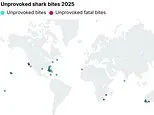
Global Shark Attack Trends in 2025
A new map highlights the top shark attack locations worldwide for 2025, with Florida emerging as the leading hotspot. The International Shark Attack File’s annual report indicates that unprovoked bites returned to near-average levels after a decline in 2024. Authorities recorded 65 attacks globally last year, slightly under the 10-year average of 72. Yet, the year stood out for its severity, registering nine fatalities against the typical six.
United States Dominates, Florida Takes Top Spot
The United States recorded the highest number of incidents with 25 bites, comprising 38% of the global total. Florida alone saw 11 attacks—more than the combined totals of the next three states—and accounted for 17% of worldwide unprovoked bites. Over half of these occurred in Volusia County in east-central Florida.
Surfers represented one-third of victims in unprovoked attacks. For instance, surfer Matt Bender suffered a severe arm injury from a shark near Smyrna Beach, Florida. In another case, nine-year-old Leah Lendel lost part of her hand while snorkeling off Boca Grande, Florida.
Key Hotspots by Country
- USA: 25 bites
- Australia: 21 bites
- Bahamas: 5 bites
- New Zealand: 3 bites
- Vanuatu: 1 bite
Australia’s High Fatality Rate
While the US led in total bites, Australia claimed the most fatalities, representing 56% of global deaths despite 32% of bites. The country experienced 21 incidents, exceeding its five-year average of 13. Habitats of bull, tiger, and great white sharks contribute to the danger.
Gavin Naylor, director of the Florida Program for Shark Research at the Florida Museum of Natural History, notes: “If these bites occurred anywhere other than Australia, they would probably have resulted in even more fatalities. Their beach safety is second to none. Within minutes of a bite, they’ve got helicopters airborne ready to respond.” Remote beaches, however, sometimes delay aid, as seen in a November bull shark attack on a Swiss couple that killed the woman despite a bystander’s tourniquet on the man.
Notable Australian fatalities included Charlize Zmuda at Bribie Island, Queensland, on February 5, and an incident at Dee Why Beach, Sydney, on September 6.
Other Global Incidents
Attack levels elsewhere stayed near average. Canada reported its first since 2021 when a white shark bit a paddleboarder’s board, leaving the rider unharmed. South Africa saw the first recorded dusky shark fatality during the sardine run, where a free diver fell victim amid feeding frenzies.
In the Canary Islands, a British surfer sustained a thigh wound after a shark struck his hydrofoil board and leg, yet swam to safety.
Victim Activities and Shark Population Insights
Swimming or wading caused 46% of injuries, followed by surfing at 32% and snorkeling or free diving at 15%. Despite stable bite numbers over decades—varying by just four from 10-, 20-, and 30-year averages amid declining shark populations due to overfishing and climate change—experts highlight resilience. Naylor adds: “Out of the 1,200 species, 30 per cent of them are categorised as endangered. That’s a lot, especially because these animals have managed to persist for about 330 million years.”
The risk remains low: nine shark deaths pale against 24,000 annual lightning fatalities.
Tips to Avoid Shark Encounters
Experts from the Florida Museum of Natural History recommend:
- Stay in groups, as sharks target solitary swimmers.
- Avoid distant waters or low-light periods.
- Enter cautiously if bleeding or menstruating; skip shiny jewelry.
- Steer clear of murky waters, fishing areas, or bait fish zones.
- Minimize splashing, keep pets out, and watch contrasts in clothing or tanning.
- Evacuate if sharks appear, especially near sandbars or drop-offs.