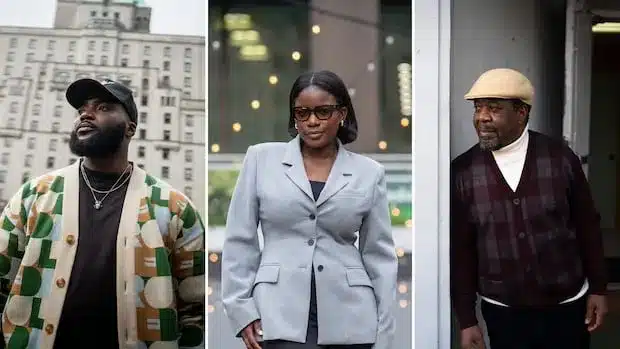
The Black population in Metro Vancouver expands rapidly, rising 38% from 29,830 in 2016 to 41,180 in 2021, based on Statistics Canada figures. Across British Columbia, this demographic grows 42%, reaching 61,760 individuals or 1.3% of the province’s total population.
Shifting Visibility in Daily Life
Corporate controller and content creator Viccy Birungi Namuyomba observes more Black residents since relocating from Uganda to Canada eight years ago. “It’s not as it used to be before where you used to be like a lone wolf walking around Vancouver. So I feel like there’s a shift,” she states.
University of British Columbia student Gankal Ka, who moved from Senegal in 2021, echoes this trend. “I’d be the only Black student in classes. You look around on campus, you see that one Black person and you’re like, yeah, [I] see you. Whereas now, I think there’s a lot more people both at UBC and outside that you can connect with,” she notes.
Challenges to Community Building
Despite growth, dispersion hinders connections, according to Handel Kashope Wright, director of UBC’s Centre for Culture, Identity & Education. “The fact that there aren’t that many Black people, the fact that we’re dispersed and the fact that there are no Black ethno-burbs where you’re just going to bump into a lot of other Black people, and the fact that there’s a need to sort of more consciously bring people together,” he explains.
Hogan’s Alley’s Lost Legacy
Vancouver once hosted Hogan’s Alley, a vibrant Black neighborhood in Strathcona from the early to mid-1900s. This three-block area featured the African Methodist Episcopal Fountain Chapel and Black-owned businesses like Vie’s Chicken and Steak House. Demolition in the 1970s for Georgia and Dunsmuir viaducts displaced residents.
Djaka Blais, executive director of Hogan’s Alley Society, highlights lasting isolation. “That’s had an impact on people, you know, talking about growing up in Vancouver and having a very isolated experience, whether it’s being the only Black kid in your class or your school, the only Black family in the neighborhood, the only Black person in your workplace, and you’re experiencing racism and discrimination and going through that,” she says.
Wright adds that the site’s destruction signaled unwelcomeness and stifled organic growth. In 2022, the City of Vancouver approved transferring land bordered by Main, Gore, Union, and Prior streets to a community land trust managed by Hogan’s Alley Society. The site will include housing, amenities, and a cultural center, though no timeline exists.
Current Hubs for Connection
Black residents connect through organizations like the Centre for Integration of African Immigrants in New Westminster, founded over 20 years ago by Paul Mulangu. It offers job fairs, tax clinics, senior and youth programs, and Black History Month events. Mulangu emphasizes in-person gatherings aid family-oriented networks for jobs and housing, but inconsistent government funding poses challenges.
The Black Block Association organizes an annual free summer Black Block Party at the Vancouver Art Gallery, featuring music, vendors, food, and drinks. Operations lead Ayobami Suara notes costs reach $60,000, covered by sponsors. “There’s nothing stopping [5,000], 6,000 people coming for Black Block Party, but you have to be open and willing to, you know, make the trip, go down there,” he urges.
Surrey Emerges as a Gathering Spot
Surrey hosts a significant portion of the region’s Black population. Ekaose Nwadiani runs VanSuya restaurant, which doubles as a venue for karaoke, fundraisers, African Independence Day celebrations, and Caribbean nights. Capacity limits and licensing restrict larger events to about six annually. “One of the biggest struggles we have is capacity. We have a small capacity, but because it’s really high demand, sometimes we face challenges of going over capacity where we get fines from the liquor board,” Nwadiani explains. He seeks license upgrades to expand offerings.
“You know, it’s just a way to make you mentally stable because you know that you are walking into a safe space that is your own,” Nwadiani adds.
Vision for a Central Hub
Leaders envision a dedicated hub for fun, creative, and professional interactions. “A hub, just a hub where we can all come together, connect on a fun level, creative level, professional level, where we can just do things that have never been done in the city before,” Suara proposes.