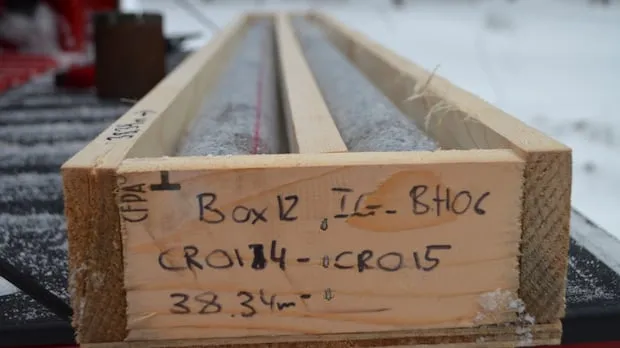
Natural Resources Canada invests up to $40 million to establish a national digital library for drill core data. Mineral exploration firms and prospectors extract cylindrical samples, known as cores, from solid rock using diamond-tipped drills. Laboratory analysis of these cores reveals mineral composition, guiding decisions on potential mining sites for critical minerals.
Canadian Digital Core Library Aims to Streamline Access
The Canadian Digital Core Library seeks to simplify access to digitized drill core data nationwide for researchers, government bodies, and mining companies. Gisele Roberts, director of research and innovation at Laurentian University, highlights how this resource supports efficient data sharing.
Partners including Laurentian University, the University of Toronto’s Creative Destruction Lab, and major mining firms—such as Agnico Eagle, Anglo American, BHP, Hudbay, Teck, and Vale—signed a non-binding agreement at the recent Prospectors & Developers Association of Canada (PDAC) convention in Toronto to advance the project.
De-Risking Exploration Efforts
This initiative equips mining companies with tools to identify new mineral deposits more effectively. Roberts notes, “It de-risks exploration and drilling for critical minerals by leveraging existing core samples, avoiding redundant efforts.”
If initial core analyses indicate potential, companies can pursue further investigation to confirm viable deposits. The project remains in early development, with no confirmed launch date.
Government’s Vision for Critical Minerals Leadership
Natural Resources Canada states the library will speed up the discovery and sustainable development of critical minerals. Minister of Energy and Natural Resources Tim Hodgson emphasizes, “By uniting digital geoscience assets, we modernize mapping and comprehension of subsurface resources. This positions Canada as a global leader in mining and critical minerals—not only in extraction but in building, processing, and scaling value.”