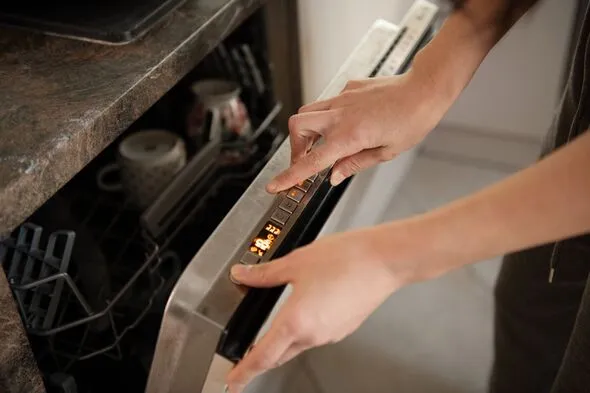
Dishwashers accumulate soap scum, food debris, and grease over time, fostering germs and lowering efficiency. Regular maintenance ensures optimal performance.
Expert Tips for Dishwasher Care
Lara Brittain, a kitchen expert at Currys, emphasizes that dishwashers clean dishes effectively but require manual upkeep to handle residues like old food, limescale, and undissolved detergent.
“Dishwashers might clean your dishes, but they can’t clean themselves,” she states. “These can be nasties like old food, limescale and undissolved detergent build-up over time.”
To prevent buildup, rinse dishes under the tap before loading them into the machine. This minimizes lingering debris.
Quick Filter Cleaning Method
Locate the filter near the dishwasher’s center and clean it regularly. A simple rinse often suffices, but scrubbing may be necessary for stubborn grime.
Powerful 30p Cleaning Hack
For deep cleaning, add a glass of white vinegar to an empty dishwasher and run a hot cycle. The vinegar dissolves tough food remnants, soap scum, and dirt without leaving any odor.
“A little hack is to add a glass of white vinegar to your empty dishwasher,” Brittain explains. “Then let it run on a hot cycle. The vinegar will break down any tough spots of food, soap scum and dirt. Don’t worry, it won’t make the dishwasher smell of vinegar.”
Additional Maintenance for Washing Machines
Brittain also advises periodic deep cleans for washing machines. Remove trays and baskets, then scrub them with a sponge or toothbrush. Use a toothpick to clear food from the spray arm.
Opt for detergent, vinegar, or sprinkle bicarbonate of soda for extra fizzing action against filth. Thoroughly wipe door seals, where dirt often hides.
White vinegar proves versatile, cleaning the washing machine drum, drawer, and seal while softening laundry.