

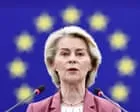
Ursula von der Leyen delivers a stark warning: Europe must abandon its role as guardian of the outdated world order and pursue a pragmatic, interest-focused foreign policy. During her pivotal address this week, the European Commission president reaffirms the EU’s commitment to the rules-based international system, while cautioning that chaos prevents full reliance on it. Missiles strike Tehran and southern Iran on the conflict’s 10th day, underscoring her message.
The Middle East war ripples through Europe, sparking diverse actions. France deploys 12 naval vessels to the Mediterranean and Red Sea. EU leaders convene an urgent summit with regional counterparts to demonstrate solidarity. Aid reaches Lebanon, supporting 130,000 people displaced alongside over 500,000 others by Israeli strikes and evacuation directives.
Yet Europe’s appeals lack impact. Donald Trump veers between positions, calling the war “very complete, pretty much” before adding “we haven’t won enough.” EU pleas for restraint go ignored.
Deep Divisions Hamper Unity
Internal rifts undermine a unified stance. Spain’s Prime Minister Pedro Sánchez rejects involvement in globally damaging actions that clash with core values. German Chancellor Friedrich Merz counters that allies should not face lectures on international law now.
Generic EU diplomatic overtures face backlash. A former EU diplomatic service head portrays Brussels as immobilized, relegated to bystander status amid southern flank turmoil. The EU’s ex-representative to Palestinian territories deems the reaction to US and Israeli strikes on Iran “shameful: stunned, sidelined, and disunited.”
Critics note condemnations target Iran’s response but omit the initiators’ launch absent imminent threats. European Council on Foreign Relations analysts label the approach a “fiasco at best, strategic lunacy at worst.”
Julien Barnes-Dacey, ECFR’s Middle East and North Africa programme director, observes Europeans tiptoe around Trump to avoid friction, shying from a clear war position. “They could amplify pressure for restraint by declaring the conflict disastrous and contrary to EU interests,” he states.
Leadership Clashes Emerge
The crisis exposes debates on external representation. France faults the Commission for encroaching on Foreign Policy Chief Kaja Kallas’s domain, defined by the 27 member states. Foreign Minister Jean-Noël Barrot demands treaty compliance.
Senior French MEP Nathalie Loiseau blasts von der Leyen’s Gulf leader outreach as beyond her remit. Defenders argue crisis leadership suits the Commission president. An EU diplomat calls such critiques mere cover for policy disputes.
Von der Leyen’s regime change endorsement for Iran sparks unease, viewed as Trump alignment. Kallas deems a democratic Iran aspirational yet improbable. Von der Leyen hints at rules-based order’s demise, seeking fresh partnerships. Kallas urges its revival to avert chaos.
Vice-President Teresa Ribera questions the phrasing, emphasizing international law’s role in European security. Socialist MEP leader Iratxe García Pérez charges von der Leyen with abandoning law defense, risking a “law of the jungle.” Von der Leyen responds to MEPs: “Seeing the world as it is strengthens our resolve for the world we seek.”
Barnes-Dacey sees realism as Ukraine leverage with Trump, implicitly recognizing the war’s illegality amid reluctance to challenge him.
Ukraine Faces New Risks
Leaders fret over Ukraine repercussions, four years post-invasion. Russia gains from surging energy costs, redirected defenses, and waning focus. European Council President António Costa declares: “Russia remains the sole beneficiary.”
Barnes-Dacey warns of missteps: prioritizing Ukraine management and stability blinds Europe to broader war fallout.









