

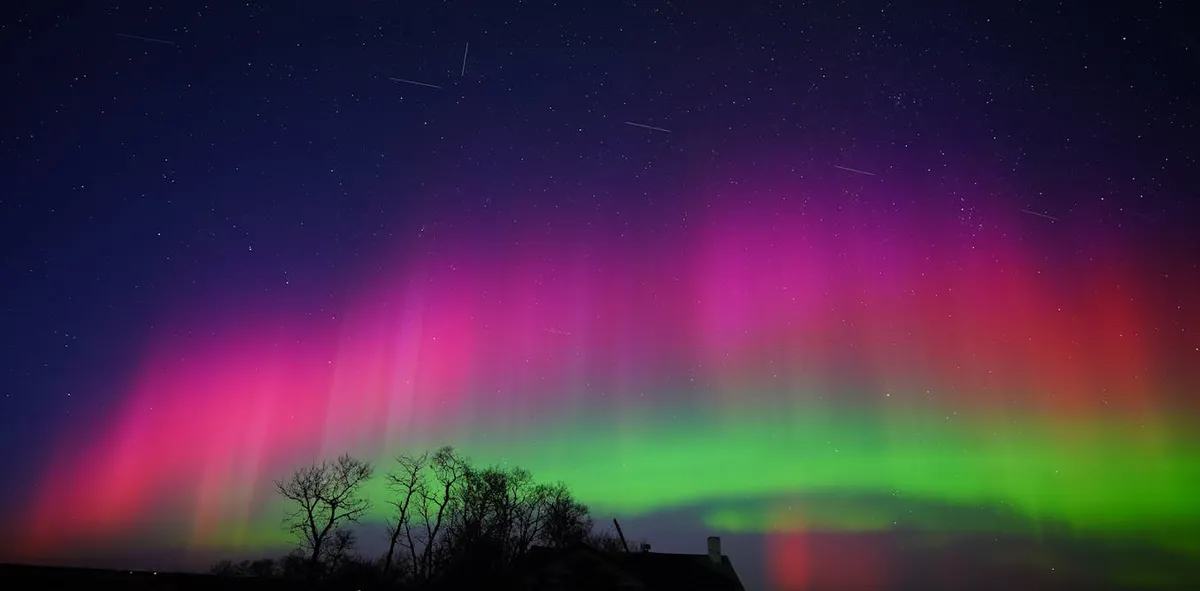
Over 10,000 Starlink satellites currently orbit Earth, visible as they crawl across dark skies worldwide and streak through research telescope images. SpaceX now proposes launching one million additional satellites to serve as orbital data centers for AI computing power.
Night Sky Predictions
Analysis from calibrated models, based on observations of existing Starlink satellites, forecasts severe impacts. With 65,000 satellites from major constellations, one in 15 visible points in the night sky would be a satellite rather than a star. A million satellites would overwhelm this dramatically.
The human eye detects fewer than 4,500 stars in an unpolluted night sky. Simulations predict more visible satellites than stars during large portions of the night and year, affecting everyone on Earth.
Simulation Insights
Updated simulations, using orbital data consistent with SpaceX’s U.S. Federal Communications Commission filing, show satellites in higher orbits visible for extended periods. Brightness models scale from Starlink V1, V2, and projected V3 versions, accounting for increased size and power needs.
From latitude 50 degrees north at midnight on the summer solstice, tens of thousands of sunlit satellites appear, with thousands naked-eye visible. Colored sky maps reveal positions, from faint blue to bright yellow points, far outnumbering stars.
Orbital Data Center Challenges
These satellites would function as space-based data centers amid growing criticism of ground-based ones for high water and electricity use. However, orbital operations ignore launch pollution, collision risks, and re-entry debris.
Daily satellite re-entries already pollute the atmosphere and risk ground debris injuries. Rising satellite densities heighten orbital collisions. Dispersing waste heat in space proves difficult, as intense solar radiation complicates radiative cooling. Early tests, like a blackened ‘Darksat’ prototype, led to overheating and electronics failure.
Threat to Astronomy
SpaceX has engineered Starlink satellites to dimmer levels with new coatings, aiding research despite challenges. Yet, the new proposal omits FCC-required coordination for dark skies, disregarding years of collaboration with astronomers.
Finite Orbital Resources
The FCC filing lacks details on orbits, satellite dimensions, de-orbiting casualty risks (vaguely capped at 0.01%), or undeveloped technologies. Despite sparse information, the agency quickly opened a brief comment period.
Earth’s orbital space remains finite. International guidelines exist but fall short. No single entity should compromise orbits, night skies, and atmospheres for all.









