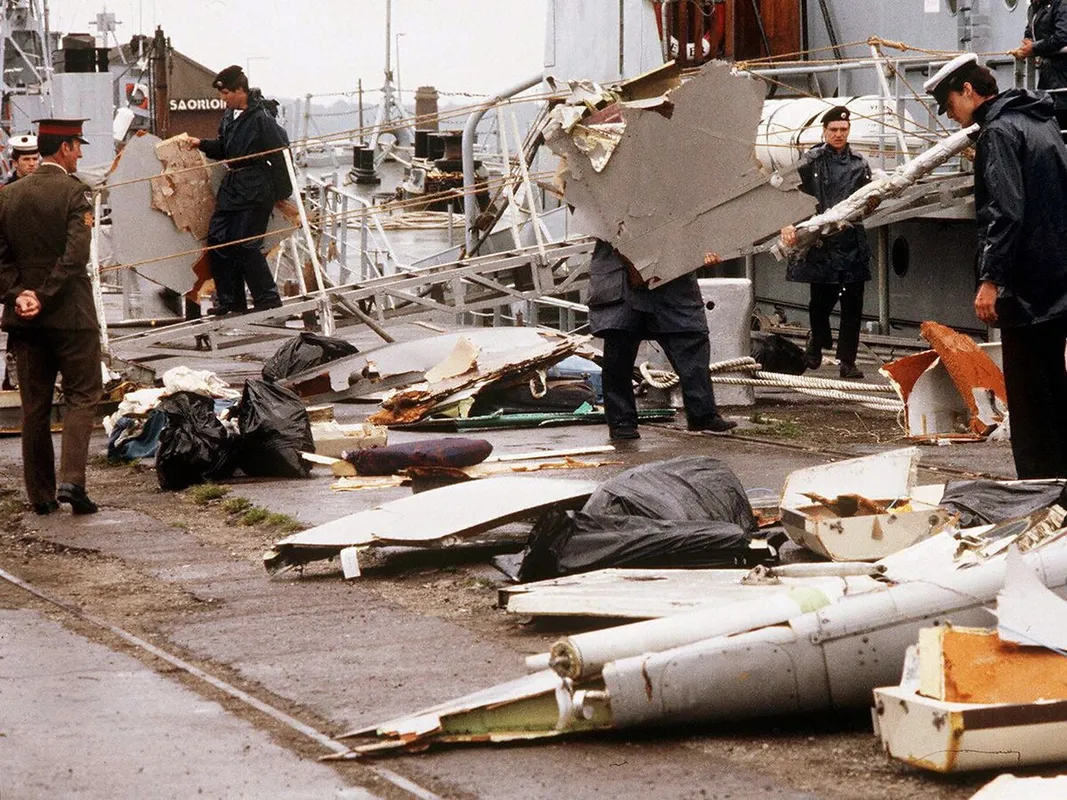
On June 23, 1985, Air India Flight 182 exploded mid-air off Ireland’s coast, killing all 329 aboard in Canada’s deadliest terrorist attack. Authorities had witnessed bomb tests weeks earlier but failed to act, allowing Sikh extremists to execute their plot unchecked.
The Overlooked Bomb Test
June 4, 1985, near Duncan, British Columbia: Canadian Security Intelligence Service (CSIS) agents surveilled terror suspect Talwinder Singh Parmar, leader of the Babbar Khalsa group. Agents observed Parmar, Inderjit Singh Reyat, and another man detonate an explosion in a remote wooded area. One agent identified it as a bomb; the other mistook it for a gunshot. A brief search yielded no evidence, and they departed without further action.
Intelligence had already flagged a plot by B.C.-based Sikh militants to bomb an airliner. Informants warned the RCMP and Vancouver Police months prior about extremists building a device for an Air India flight cargo hold, targeting supporters of India’s government amid the Khalistan separatist movement.
The Devastating Explosion
Three weeks later, a similar bomb detonated in Flight 182’s cargo hold en route from Toronto to Mumbai via Montreal, London, and Delhi. The Boeing 747, dubbed Emperor Kanishka, disintegrated at 10 kilometers altitude, subjecting survivors of the initial blast to explosive decompression, freezing winds, and a three-minute freefall into the Atlantic.
Recovery efforts off Ireland’s coast retrieved 131 bodies, mostly women and children, amid horrific scenes of dismembered remains. The toll: 329 lives, including 268 Canadians—many families vacationing in India. It exceeded Canada’s total 1985 homicides.
Victims’ Stories and Dual Plot
Families shattered: Montreal’s Trilok Soni lost his wife and three children; Toronto’s Ramesh Kapoor, his wife and two daughters. Schools in Ontario and Quebec emptied chairs; Concordia University mourned two professors.
Extremists planned double strikes. A second bomb, shipped from Canada for Air India Flight 301, exploded prematurely at Tokyo’s Narita Airport, killing two baggage handlers.
Khalistani Extremism’s Roots
Babbar Khalsa sought an independent Sikh theocracy in Punjab. Leader Jarnail Singh Bhindranwale occupied Amritsar’s Golden Temple, launching attacks. Former B.C. Premier Ujjal Dosanjh recalls: “There was no question that there was terrorism and extremism, violence happening from within the temple.”
Parmar, immigrated in 1970, preached violence openly, including threats against Indian planes. Canada denied India’s extradition request despite murder charges. Ajaib Singh Bagri declared at a 1983 conference: “Until we kill 50,000 Hindus, we will not rest.”
Multiple Security Failures
Air India requested extra security for Flight 182. At Vancouver Airport, two unaccompanied bags—linked to no-show passengers—bypassed rules and connected via CP Air flights. Enhanced checks pulled suspicious luggage, but the fatal suitcase evaded detection.
In Montreal, a bomb-sniffing dog stood unused. Inquiries later deemed screening “inadequate,” with unreliable tech and untrained staff. Reporter Kim Bolan notes: “There were so many missed opportunities.”
Prosecution Collapse
No one faced full accountability. CSIS erased key surveillance tapes, crippling RCMP efforts. Parmar evaded charges post-raid and fled to India, killed in 1992. Reyat, the bombmaker, served time mainly for perjury.
Two alleged accomplices acquitted due to evidentiary gaps. Witnesses like publisher Tara Singh Hayer, shot and paralyzed in 1988 then killed in 1998 under RCMP protection, faced intimidation. Dosanjh, beaten in 1985, warned officials: “I’m afraid that there might be more violence unless you do something.”
Persistent Extremism
Canada remains a hub for Khalistani activity. Parades in Surrey feature Parmar’s images; temples host memorials. In 2023, Parliament observed silence for Hardeep Singh Nijjar, a wanted Khalistani figure killed outside a Surrey temple.
Attacks continue: 2024 Brampton temple assault by flag-waving militants. Dosanjh warns: “It’s much worse… the rhetoric has become much more violent.” Political engagements, like inviting convicted plotter Jaspar Atwal to events, fuel concerns.
Lessons Unlearned
Two inquiries highlighted systemic failures by RCMP, CSIS, and government. Victims’ families endure: Parkash Bedi testified, “I am like a dead body moving around.” Bolan adds: “It did not need to happen.” Yet anniversaries blend into generic terrorism remembrances, with many young Canadians unaware.