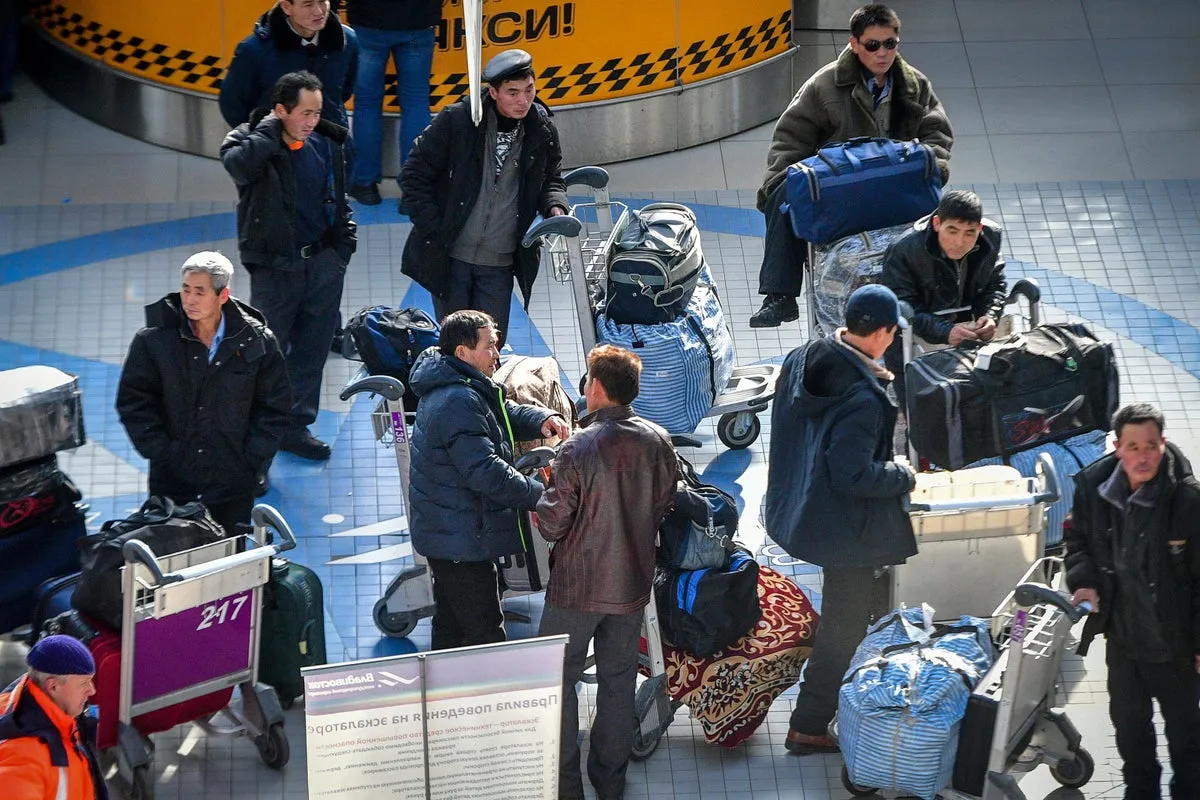
A 29-year-old North Korean worker from Pyongyang, referred to here as Guemhyuk Kim to protect his identity, struggles to recall his last proper shower. Sent to St. Petersburg in 2024 for stadium construction under North Korea’s overseas labor program, he lives in a shipping container 200 meters from the site, sharing a cramped room with 20 countrymen.
“There’s no shower facility so we just clean off our face with a tap,” Kim states. The containers swarm with cockroaches and bedbugs, leaving workers chronically sleep-deprived from long shifts and harsh conditions. Showers occur only once or twice yearly.
Widespread Abuses in Labor Program
At least 100,000 North Koreans work abroad in construction, factories, and farms across Russia, China, and parts of Africa. Conditions include restricted movement, withheld identity documents, physical and sexual violence, plus intimidation and threats. At least 21 workers confirm life-threatening dangers to meet quotas “no matter what… dead or alive.”
Despite a 2017 UN Security Council resolution banning such labor by December 2019 to curb funding for North Korea’s nuclear and missile programs, the practice accelerates in Russian cities. Many workers seek these roles to flee North Korea, often described as the world’s largest prison.
Grueling Schedules and Quotas
Workers endure up to 16-hour days, from 7 a.m. to midnight, 364 days a year, earning about $10 monthly. They face mandatory quotas, known as Gukga Gyehoekbun, funneling earnings back to Pyongyang.
“Every afternoon, I find myself calculating whether I can meet this month’s quota,” one worker explains. “The mandatory monthly quota… is a central fact of life for every DPRK worker abroad. Most workers had never heard of it before they arrived.” DPRK stands for Democratic People’s Republic of Korea.
Another worker describes their existence: “We led lives worse than cattle.” Extreme Russian winters demand work without protective gear. Injuries and illnesses receive no care, viewed as work obstacles. Salt water serves as treatment for severe wounds, with immediate return to duty required.
Yeji Kim, DPRK advisor at the Hague-based Global Rights Compliance, recounts: “One of the workers told me that once he got badly hurt on his arm but then all he was given to treat his wound was salt water… He also had to work immediately after the incident.” She adds that failing quotas burdens colleagues, sparking tensions.
Russia’s Labor Needs and Selection Process
Russia’s shortages, driven by Ukraine war losses, mobilization, and worker exodus, fuel demand. President Vladimir Putin and Kim Jong Un maintain a deal exchanging laborers for currency and diplomatic leverage, including technical aid for North Korea’s satellite program and defense equipment.
Loyalty to the regime, not physical strength, determines selection. Workers with families face higher risks, as defection endangers relatives. Mutual spying leads to clashes. When accessing smartphones, many consume South Korean YouTube content, movies, and pornography—acts reported by embedded spies, resulting in punishment or repatriation.
Yeji Kim notes: “They watched videos on Korean escapees… movies, and also massively binged on pornographic content.”
Parallels to Military Deployment
These laborers share fates with North Koreans sent to fight Ukrainian forces for Russia, both facing minimal prior information and pervasive fear of the unknown in Russia.