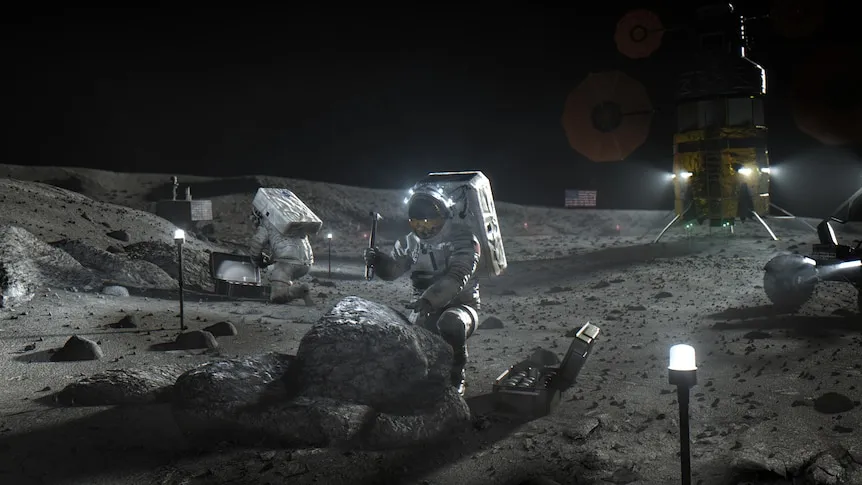
NASA cancels plans for an orbiting space station around the moon and redirects efforts to build a $28.7 billion base directly on the lunar surface. Components from the paused Lunar Gateway project will support this surface outpost, as the agency also prepares a nuclear-powered mission to Mars.
Sweeping Artemis Program Changes
NASA Administrator Jared Isaacman, who assumed leadership in December under President Donald Trump, announces major updates to the Artemis initiative. These shifts expand human presence on the moon to outpace China’s anticipated astronaut landings around 2030.
Key elements include launching more robotic landers, deploying drone fleets, and installing nuclear power systems on the lunar surface within the next few years.
“This revised step-by-step approach to learn, build muscle memory, bring down risk, and gain confidence is exactly how NASA achieved the near impossible in the 1960s,” Isaacman states, referencing the Apollo era.
Nuclear Mission to Mars
The agency plans to send Space Reactor 1 Freedom to Mars by late 2028, showcasing advanced nuclear electric propulsion in deep space. The spacecraft will release helicopters upon arrival to survey the Martian terrain, advancing nuclear technology from labs to operational use.
Gateway Repurposed for Surface Base
Contractors like Northrop Grumman and an Intuitive Machines subsidiary have nearly completed the Lunar Gateway, originally designed as an orbital hub for research and astronaut transfers to the moon.
“It should not really surprise anyone that we are pausing Gateway in its current form and focusing on infrastructure that supports sustained operations on the lunar surface,” Isaacman explains from NASA’s Washington headquarters.
This complex repurposing effort adapts existing hardware and partner contributions to prioritize surface goals.
Questions for International Partners
Japan, Canada, and the European Space Agency face unclear roles after committing components to the Gateway.
“Despite some of the very real hardware and schedule challenges, we can repurpose equipment and international partner commitments to support surface and other program objectives,” Isaacman notes.
European Space Agency Director General Josef Aschbacher plans to evaluate the updates and discuss them further with NASA.
Lander Progress and 2028 Landing Target
Artemis aims for crewed moon landings in 2028, relying on lunar landers from SpaceX and Blue Origin, both grappling with delays.
Acting Associate Administrator Lori Glaze reveals SpaceX explores Starship design tweaks for faster development. NASA will deploy whichever lander proves ready first, bypassing original mission sequencing.
A recent agency review indicates SpaceX trails by two years, with both firms addressing tough engineering issues. These changes disrupt billions in contracts amid competition with China’s 2030 timeline. Artemis, started in 2017, revives lunar exploration after Apollo.