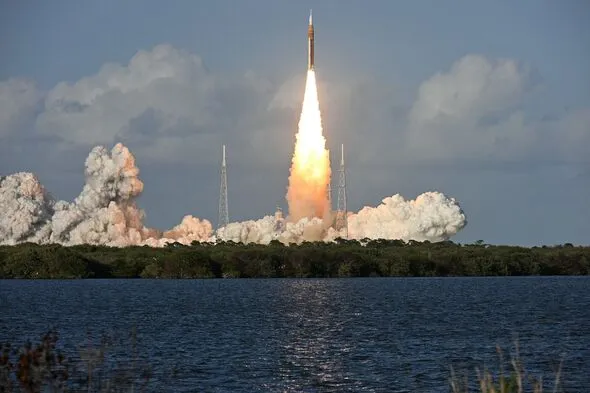
The Artemis 2 astronauts head back to Earth after traveling farther into space than any previous human mission. This journey tested innovative technologies for expanded lunar exploration and laid groundwork for a sustained Moon presence.
Crew’s Final Day in Space
The Artemis II crew—NASA astronauts Reid Wiseman, Victor Glover, and Christina Koch, along with Canadian Space Agency astronaut Jeremy Hansen—woke to “Lonesome Drifter” by Charley Crockett on their last full day. Approaching Earth at 147,337 miles, they reviewed re-entry and splashdown procedures while performing a trajectory correction burn.
Splashdown Schedule and Location
Orion’s re-entry and splashdown occur around 8:07 p.m. ET (5:07 p.m. PDT) on Friday, April 10. The spacecraft targets waters off the San Diego, California, coast.
Re-Entry Sequence
The service module separates about 20 minutes before Orion hits the upper atmosphere southeast of Hawaii. A final trajectory burn, if required, refines the path. Orion peaks at approximately 23,864 mph just before entry interface, followed by roll maneuvers to avoid hardware.
During descent through 400,000 feet, a six-minute communications blackout ensues due to plasma buildup from peak heating. The crew experiences up to 3.9 Gs. Orion then jettisons its forward bay cover, deploys drogue parachutes at 22,000 feet, and main parachutes at 6,000 feet for splashdown.
Post-Splashdown Recovery
Recovery teams extract the crew within two hours using helicopters, flying them to the USS John P. Murtha. Aboard the ship, astronauts receive post-mission medical checks before heading ashore and flying to NASA’s Johnson Space Center in Houston.
Mission Launch Recap
The mission launched on April 1 after resolving a flight termination system issue less than two hours before liftoff, clearing the way for the lunar voyage.