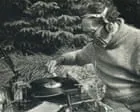
Ludwig Koch’s distinctive German-accented voice captivated British listeners much like David Attenborough’s does today. His relentless dedication to recording birdsong introduced chirps, trills, and natural sounds into homes through innovative sound books and BBC radio broadcasts starting in the late 1930s.
Peter Sellers parodied Koch observing urban sounds at a Glasgow traffic junction, while Penelope Fitzgerald’s 1980 novel Human Voices portrayed his meticulous capture of nature’s audio during wartime BBC, showcasing the value of diverse talents like his.
A Distant Grandfather’s Legacy
To filmmaker granddaughter Anthea Kennedy, Koch remained somewhat remote. “I don’t remember ever having a conversation with him,” she recalls. Instead, he sang opera arias to her, squeezing her hand and quizzing her on the pieces despite her confusion—a nod to his abandoned tenor career cut short by the First World War.
Surprisingly, Kennedy and partner Ian Wiblin crafted a heartfelt tribute film, Alarm Notes. It weaves Koch’s archival recordings—like the golden oriole’s warm whistle in Spandau, sneezing seals on Skomer Island, and his late-life Schubert lieder—with modern footage from Berlin and his naturalist haunts, bridging their unspoken generational gap.
“I wanted to explore what had really happened to him in Berlin,” Kennedy explains. “Neither he nor my grandmother ever talked to a soul about anything in their past.”
Pioneering Sound Recordings in Germany
Before Nazi rule, Koch led the culture department at a top German record company, Carl Lindström, producing hit sound books of birds, wildlife, and cityscapes. He professionalized field recording, often dragging cables through dense undergrowth at night for intimate audio.
His 1889 recording of a pet shama bird at age eight in his Frankfurt home stands as the earliest known bird recording.
Entangled in Nazi Terror
Koch and wife Nelly unwittingly rented a room to Georgi Dimitrov—known to them as Dr. Steiner—who faced Gestapo scrutiny in the 1933 Reichstag fire probe, which Nazis exploited to seize power. After Dimitrov’s arrest, the couple endured interrogation.
Fearing worse, they penned suicide notes, ingested barbiturates, and ignited their kitchen gas before their maid intervened. Dimitrov later apologized during his Leipzig trial, as Kennedy uncovered through archives and his diaries. The couple rarely discussed their ordeal or Nazi oppression.
Despite his Jewish heritage barring him from bird protection groups, Nazis initially overlooked it for his expertise. In 1933, Koch proposed—and created—a propaganda sound book, Im Gleichen Schritt und Tritt, featuring machine-gun fire to soldiers’ campfires.
During a 1936 Swiss work trip, after his Nazi escort’s assassination, officials warned him: “The air in Switzerland is better than in Germany.” He fled to Britain, embraced by naturalists and becoming a BBC Children’s Hour favorite.
British Life and Family Memories
Koch, who passed at 92 in 1974, never took Kennedy on recording trips. Her sole “bird man” memory: a unsettling London Zoo visit at age seven, entering a cage where a toucan rolled a grape into her mouth and back, under his gaze. Myna birds, mimics prone to profanity, stayed hidden from public view.
Producing Alarm Notes transformed her perspective. Archival letters revealed his battles for respect and income among British peers. “I can’t help but think they made a caricature out of him, but that he decided, OK, I’ll fit into that, if that’s what it takes,” she says. “It’s made me understand his suffering, and how incredibly difficult his life was. I admire his patience and desire, and it’s made me finally like listening to birds.”