

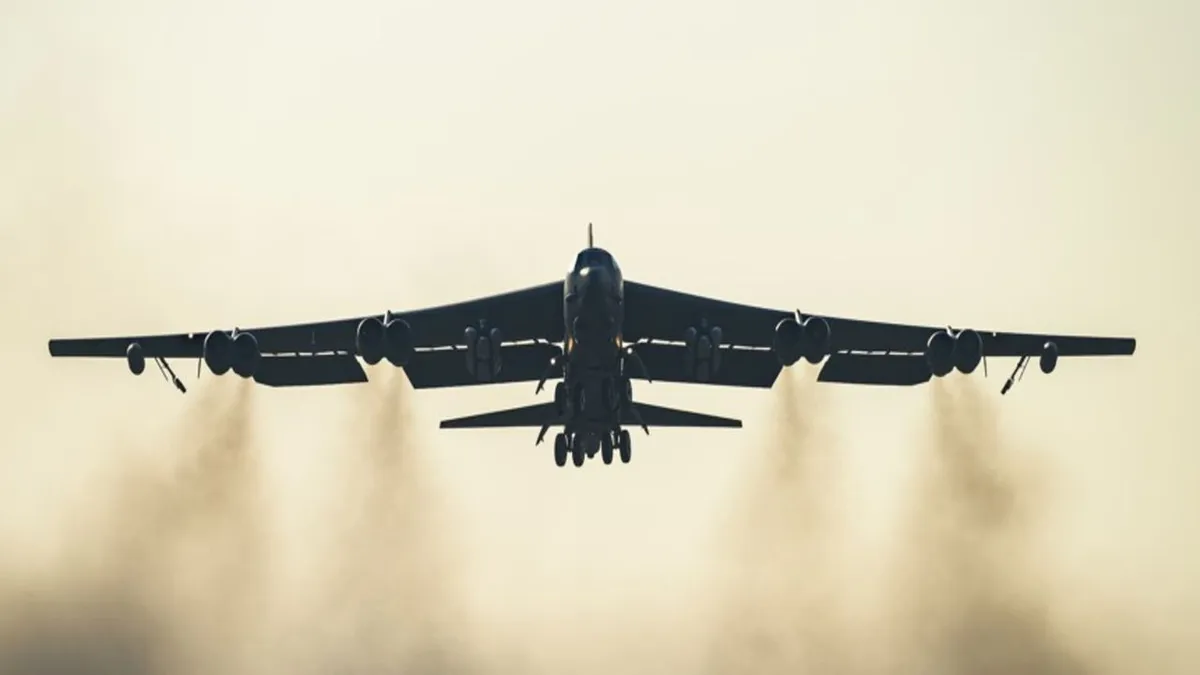
The U.S. Air Force has approved Boeing to replace the aging Pratt & Whitney TF33 engines on the B-52 Stratofortress, nicknamed the ‘BUFF’ bomber, with modern Rolls-Royce F130 turbofans. The first aircraft heads to Boeing’s San Antonio, Texas facility later this year for the upgrades under the Commercial Engine Replacement Program (CERP), which recently completed a critical design review originally planned for 2023.
Lifecycle Costs Reach $1.3 Trillion
Analysis estimates the B-52 program’s total cost at $1.3 to $1.5 trillion in 2050-adjusted dollars. This figure spans development, production, operations, maintenance, and ongoing modernizations from 1952 to 2050, when the fleet peaked at 744 aircraft.
The current TF33 engines, out of production since 1985, drive up maintenance expenses. The F130 turbofans deliver superior fuel efficiency, lower upkeep, extended range, and reduced need for aerial refueling.
Comprehensive Modernization Enhancements
Upgrades feature new twin-engine pods and advanced generators that boost electrical power. Combined with radar improvements, these changes redesignate the B-52H as the B-52J.
In service since 1955, the B-52 has conducted nonstop missions, including recent operations against Iran-backed targets. Planners aim to sustain the fleet into the 2050s, marking nearly a century of operation.
Overcoming Delays in the Upgrade Process
Since the 2021 Rolls-Royce contract, CERP faced setbacks from engine inlet distortion issues, prompting redesigns and wind tunnel tests. Program costs have climbed from $8 billion to $9 billion.
“This CERP critical design review represents the peak of extensive engineering and integration efforts,” stated Lt. Col. Tim Cleaver, CERP program manager. He emphasized the upgrades’ role in maintaining the B-52 as a key long-range strike asset beyond 2050.
Initial re-engined B-52Js undergo testing at Edwards Air Force Base before full rollout to the remaining 74 aircraft. The bomber’s robust 1950s airframe has outlasted peers, proving more economical to modernize than replace with new designs. Flight tests in the 2030s will validate the strategy.









