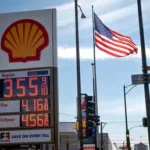

Australians face urgent calls to top up their fuel tanks as petrol prices threaten to climb above $3 per litre. Escalating conflict in the Middle East drives wholesale oil prices beyond $160 AUD per barrel, sparking widespread concerns over supply disruptions.
Drivers in regional Queensland and western Sydney already encounter prices exceeding $2.30 per litre at pumps. Shane Oliver, Head of Investment Strategy and Chief Economist at AMP, warns that rates above $2 per litre have emerged, with the ongoing oil surge likely pushing them to at least $2.20.
Potential for Extreme Price Spikes
Oliver highlights historical parallels to 1970s oil shocks, where global prices quadrupled. A similar scenario today could elevate world oil to over $200 per barrel, adding at least $1.30 per litre to current pump prices.
“The surge in price would still impact us as oil and gas prices are now set globally,” Oliver states. He emphasizes Australia’s limited fuel reserves of 30-35 days—improved from a decade ago but short of the recommended 90 days.
Fuel Security Vulnerabilities Exposed
Australia imports 90 percent of its refined fuel from Asia, heightening risks if regional exporters like China impose restrictions, as recently signaled. Major wholesalers such as BP, Ampol, Mobil, and Viva now limit sales to contracted buyers amid yesterday’s oil price jumps.
Relief may come if Iran signals negotiation willingness or US President Donald Trump pursues de-escalation. Prices last peaked at these levels following Russia’s 2022 Ukraine invasion.
Global Supply Disruptions
Producers in Iraq, Kuwait, and the United Arab Emirates have slashed oil output and refinery operations due to storage shortages. Iran’s threats to ignite ships transiting the Strait of Hormuz block OPEC exports through this vital chokepoint, which handles 20 percent of global oil daily.
Reports show Iraqi output from key fields plunging 70 percent to 1.3 million barrels per day. A fire at Tehran’s Shahran oil depot, triggered by US and Israeli strikes, has rendered multiple fuel tankers and vehicles inoperable.
Market Turmoil and Economic Fears
The Australian sharemarket shed nearly $130 billion Monday morning, with the ASX 200 dropping four percent by midday AEDT—its worst since Trump’s ‘Liberation Day’ tariffs last April. All sectors except energy suffered heavy losses.
Oliver attributes the decline to fears of slowed global and domestic growth. “Further falls are likely, particularly the longer the war and oil supply disruption continues,” he notes, forecasting a 15 percent correction before rebound.
Government Cracks Down on Gouging
The ACCC monitors retailers closely after motoring groups flag exploitative practices. Treasurer Jim Chalmers urges stricter enforcement, stating service stations must not exploit the crisis for profit.
“Australia’s fuel pricing follows global markets, but the government has been clear—this is an international crisis, not a commercial opportunity,” adds Energy Minister Chris Bowen. The Albanese government maintains strong national fuel security.