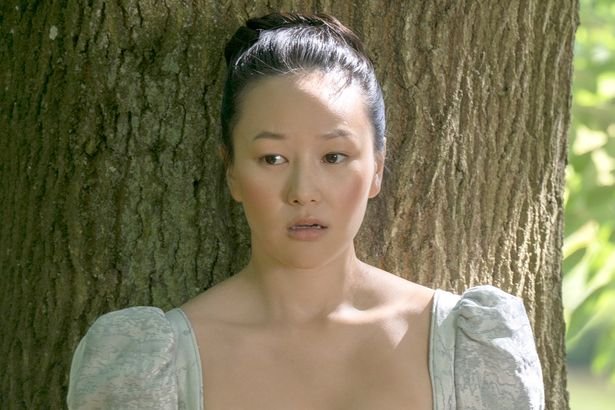
Bridgerton enthusiasts have devoured the initial four episodes of season four and eagerly await the second installment, scheduled to premiere on Netflix on February 26. Drawing inspiration from Julia Quinn’s Regency romance novel An Offer from a Gentleman, the series chronicles the budding romance between Benedict Bridgerton, portrayed by Luke Thompson, and the housemaid Sophie Baek, played by Yerin Ha. While the adaptation faithfully draws from Quinn’s works, it introduces notable alterations to characters, plotlines, and timelines. Below, explore seven major divergences between the novel and season four. Note: This discussion includes spoilers from both the books and the show.
Diverse Historical Setting
The Netflix series unfolds in an alternate reality where people of color hold noble titles and estates, as established in the spinoff Queen Charlotte: A Bridgerton Story. This framework prompts character adjustments, such as renaming Sophie Beckett from the book to Sophie Baek, honoring actress Yerin Ha’s South Korean background. Showrunner Jess Brownell consulted Ha, who suggested Baek as a fitting alternative to Beckett.
Sophie’s Family Dynamics
In the novel, Sophie’s father, Lord Penwood (depicted as Arthur Lee), maintains emotional distance from his illegitimate daughter, born to a housemaid. Raised initially by her grandmother after her mother’s death in childbirth, Sophie joins Lord Penwood’s household at age three, presented falsely as an orphaned relative. Despite recognizing her resemblance to himself, he offers little affection.
Contrastingly, the series portrays Lord Penwood as deeply affectionate toward Sophie. She confides in her stepmother, Araminta Gun (Katie Leung), about this bond. His death devastates her, and she reacts with disbelief when Araminta reveals no inheritance provisions in his will.
Deeper Male Character Development
The adaptation enhances the male protagonists, making them more relatable and endearing. Benedict exudes a warm, playful vibe reminiscent of a loyal companion, diverging from his more aloof book persona. His proposition for Sophie to become his mistress stems from confusion rather than entitlement; in the novel, he views her primarily as a servant and persists despite her objections, revealing a more domineering side.
Altered Adaptation Sequence
Shondaland reshuffled the novel order, adapting the fourth book, Romancing Mister Bridgerton, before the third, An Offer from a Gentleman. Thus, in the books at this stage, Colin Bridgerton (Luke Newton) and Penelope Featherington (Nicola Coughlan) remain unmarried, with Colin unaware of her identity as Lady Whistledown. Season one exposes Whistledown to viewers, but the novels withhold her secret until the fourth installment, keeping it hidden from high society.
Violet’s Evolving Role
The books depict Violet Bridgerton (Ruth Gemmell) as a devoted widow focused solely on her children’s romantic pursuits, loyal to her late husband Edmund (Rupert Evans). The series, however, revitalizes her character, introducing a passionate connection with Lord Anderson (Daniel Francis) that brings her renewed joy.
Queer Representation Through Casting Choices
Book fans expressed surprise at Michaela Stirling’s introduction (Masali Baduza) in season three, signaling a gender swap from the male Michael Stirling in the sixth novel, When He Was Wicked. This shift paves the way for a same-sex storyline between Michaela and Francesca Bridgerton (Hannah Dodd), anticipated in seasons five or six, adding fresh layers to the Regency narrative.
Expanded Supporting Characters
Figures like Queen Charlotte (Golda Rosheuvel) and Lady Danbury (Adjoa Andoh) play minor roles in the novels, orbiting the central couples. The series elevates them with intricate backstories and conflicts, including a rivalry unique to the show. These enhancements center on broader societal dynamics rather than solely romantic arcs.
Season four, part two arrives on Netflix February 26, promising further twists on Quinn’s beloved world.