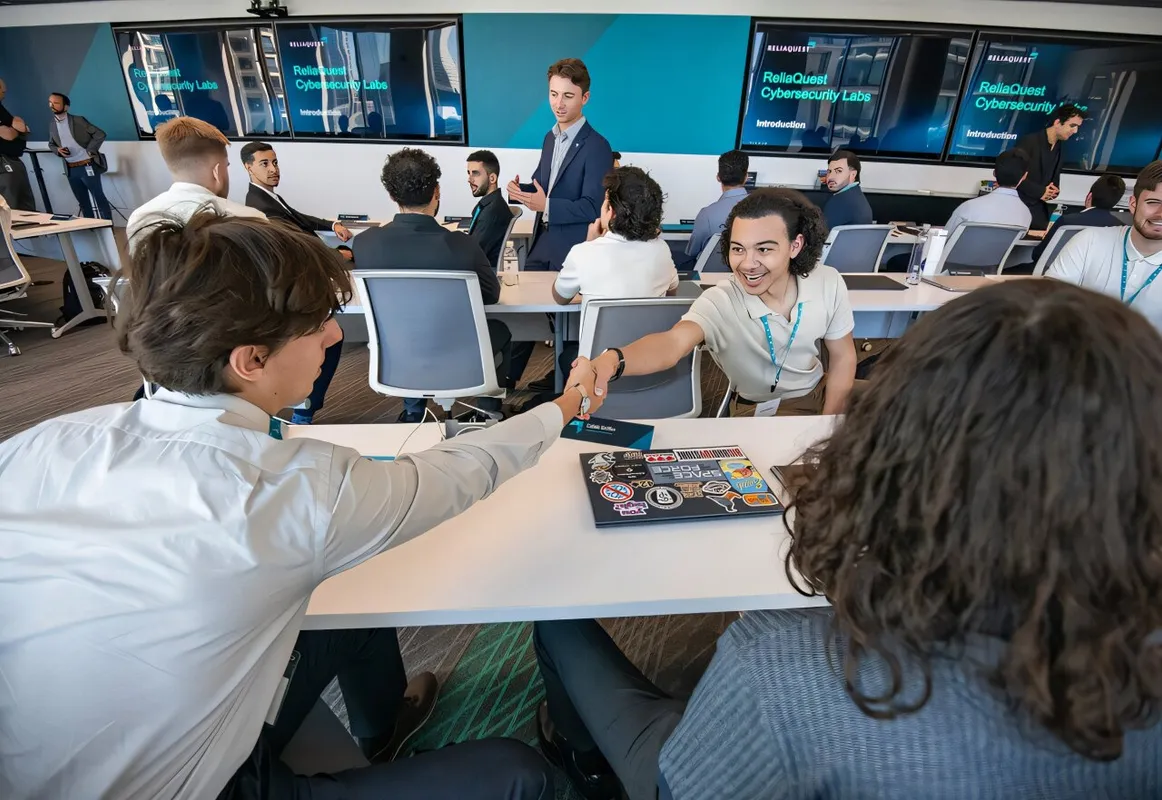
As demand for cybersecurity experts surges, research from the University of South Florida reveals increasing adoption of work-based learning in higher education programs. This approach bridges the divide between classroom knowledge and employer needs in a fast-changing field.
Key Insights from the Research
Associate Professor Oscar A. Aliaga and Assistant Professor Noémi Nagy from the College of Education’s Leadership, Policy and Lifelong Learning department analyzed work-based learning across U.S. cybersecurity programs. Their findings, published in the Journal of Cybersecurity and Privacy, emphasize hands-on training to equip students for evolving threats.
“This is critical in an environment where technology rapidly changes and the workforce must adapt,” Aliaga stated. “Strengthening programs with work-based learning creates a scalable, inclusive, and career-ready talent pipeline.”
USF graduate students Bonnie Gómez Torres, Ajara Mahmoud, and Courtney Callahan mapped program variations, noting greater prevalence in two-year associate degrees. Aliaga urges broader expansion and deeper industry partnerships to deliver experiential learning and eliminate skill shortages.
USF’s Bellini College Leads the Way
The University of South Florida’s Bellini College of Artificial Intelligence, Cybersecurity and Computing exemplifies this model through collaborations with leaders like Idaho National Laboratory, ConnectSecure, Rapid7, and Timus Networks. These ties offer training, joint courses, and internships.
“Experiential learning proves essential in cybersecurity, where tools, threats, and technologies evolve constantly,” said Kurt Friday, an assistant professor in the Bellini College. “Close industry partnerships enable students to apply classroom lessons to real-world challenges, priming them for careers.”
Friday delivers courses such as Cybersecurity Tools for Workforce Readiness and Computing Tools for Workforce Readiness. Developed with industry input, advisory boards, faculty, and job market analysis, they focus on threat detection, intelligence, and AI-driven security operations.
Growing Hub in Tampa Bay
These skills gain urgency in Florida, where Tampa Bay emerges as a cybersecurity center. A flagship initiative, the annual RealiQuest Labs program, partners USF’s Bellini College with ReliaQuest. This competitive challenge immerses students in real-world scenarios, team-based threat analysis, incident investigations, and security operations center tools.
Launched in 2018 under the Muma College of Business, the program has engaged over 300 USF students. Participants often secure paid internships or full-time positions at ReliaQuest.
“Our goal builds an educational environment where students actively practice cybersecurity and AI in real settings,” said Sudeep Sarkar, launch dean of USF’s Bellini College. “Experiential learning and industry ties prepare graduates to contribute immediately.”