A Journey from Beauty Therapy to Sheep Shearing
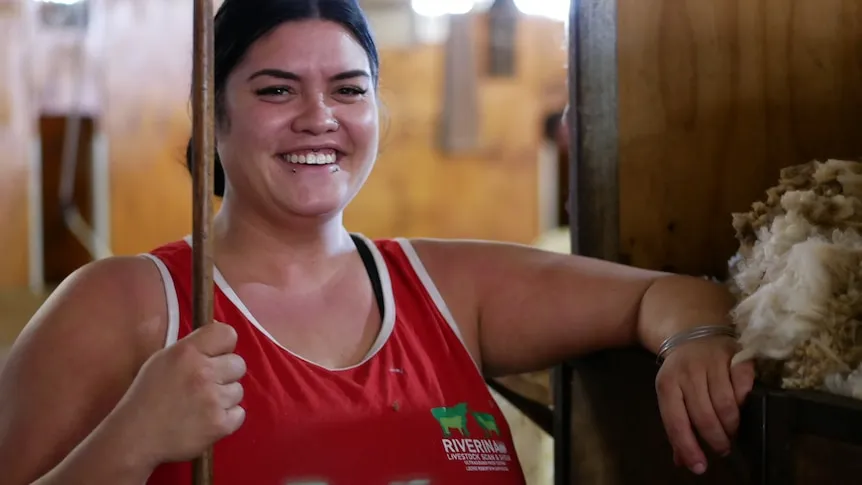
Brittnee Bazeley left school aiming for a career as a beauty therapist, yet she now thrives in regional New South Wales shearing sheds after 15 years. She has advanced in the male-dominated sheep-shearing field to serve as a wool classer and second-in-command at a station near Wagga Wagga.
Her transition started as a teenager during a challenging period at age 17. Her mother arranged a trip to New Zealand to reunite with her father, who worked as a shearer. “I just started out as a learner,” Bazeley recalls. “I stuck to his hip and watched him for a couple of days, and just went on from there.”
Life in the shearing shed required quick adjustments. “When I first started in the shearing, I actually used to get up and do my hair and makeup, and I’d look like a raccoon by lunchtime, so that didn’t last very long,” she admits.
Breaking Barriers in a Male-Dominated Field
Sheep shearing remains overwhelmingly male, with 2021 Census data indicating fewer than 5 percent of workers are women. Industry observers note an increase in female involvement following COVID-19 border closures that excluded international shearers.
Nikki Lyons, a New South Wales shearer, exemplifies this shift. She set a world record last October by shearing 502 merino lambs in nine hours near Marnoo in Victoria’s Wimmera region, working from 6am to 6pm. Lyons began with her mother’s dressmaking scissors and discovered her passion at agriculture school.
“I like being physical,” Lyons explains. “An office job was never for me. Before settling down and having kids, I loved the travel that shearing offered. It’s a job that can take you all around the world.”
She pursues records for personal growth and to inspire her children. “My greatest wish is for my children to chase their dreams. They were a part of this journey with me, they heard the medicine ball slams at 4:30am, they saw me come home from work tired and sore, only to get back up the next day and do it all again,” she says. “Shearing is a sport and an art. Regardless of how long you have been shearing, there is always something you can improve on and learn.”
Essential Roles Behind the Scenes
Women like Bazeley handle wool classing, sorting and grading fleeces to optimize sale values. She also served as a rouseabout, maintaining clean floors, assisting shearers, and ensuring smooth production.
Jaz Taunoa plays a vital role as the cook, sustaining the team. “They get five meals a day,” she notes. “I’m up at 4:30 every morning. It’s breakfast, smoko, lunch, afternoon smoko, dinner and dessert. It’s stressful. The shopping, oh my gosh, the shopping.”
Originally from Hawke’s Bay, New Zealand, Taunoa worked as a rouseabout with her mother until age 18. After moving to Australia 20 years ago, she shifted to cooking for better pay to support her three young children.
The Allure of the Shearing Lifestyle
The industry attracts with high earnings, travel opportunities, and connections. “You’re able to travel, you make amazing money. You meet some really good people. This job takes you places a lot of jobs can’t,” Bazeley states.
For Bazeley, a Māori woman, it deepened her cultural ties. “Before, I knew a little bit about New Zealand. I didn’t know anything about the culture. I didn’t know what it meant to be Māori,” she shares. “But in this industry, everybody and anybody is from New Zealand somehow, and knows somebody in New Zealand.”
Her son, Tama, integrates into shed life from infancy. “It’s a lifestyle that I love, and it’s something I’ve been able to build my family around,” Bazeley concludes.