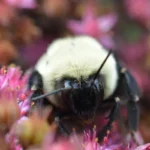
Bumblebee queens endure submersion underwater for up to a week, according to recent research. This surprising ability emerged during an observation when condensation from a cold refrigerator dripped into containers with four queen bees, yet they remained alive.
Winter Survival Mechanism
These queens enter diapause, a hibernation-like state during winter. Scientists previously assumed melting snow and heavy rains would drown them in saturated soil. New findings indicate they withstand flooding for a full week.
Lab Experiment Details
Researchers simulated winter conditions, inducing diapause in queen bees for four to five months before submerging them for eight days. They tracked metabolic rates and physiological shifts throughout.
The queens maintained gas exchange and breathed at a drastically reduced metabolic rate. Professor Charles-Antoine Darveau from the University of Ottawa explains: “This study started from a discussion with my co-author and postdoctoral researcher, Sabrina Rondeau, whose recent findings showed that these queens can survive submersion for over a week, which is extraordinary for a terrestrial insect. We wanted to understand how that’s even possible.”
Key Survival Strategies
“The first key is metabolic depression,” Prof Darveau states. “Their metabolism is already extremely low during diapause. That low energy demand makes survival possible. They’re not relying on just one strategy. They combine underwater gas exchange with anaerobic metabolism. That flexibility is what allows them to survive these extreme conditions.”
After eight days underwater, the queens’ metabolic rates surged for two to three days before stabilizing for about a week. A thin air layer around their bodies acts as a physical gill, enabling oxygen and CO2 exchange with the water.
Implications for Pollinators
“This study shows how resilient these pollinators are,” Prof Darveau notes. “Understanding these mechanisms helps us predict how bumblebee populations might cope with increasingly frequent spring floods.”