

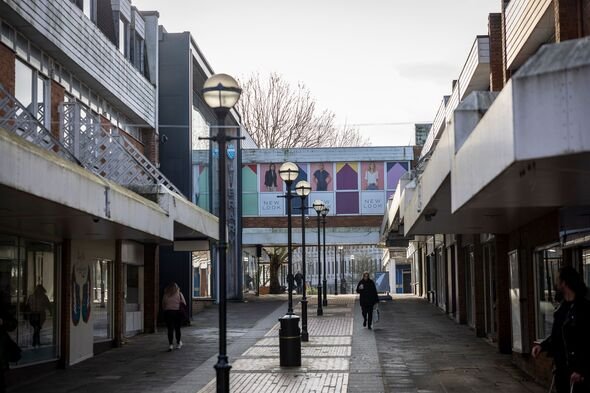
High streets across the UK continue to face challenges, with many towns showing signs of decline. In Burgess Hill, Sussex, a historic market town near Brighton, the shopping district struggles despite promises of revitalization. Officials highlight its potential as a key growth area, supported by industrial developments and infrastructure upgrades.
A Storied Past and Promising Future
Burgess Hill boasts a rich history dating back to the 17th century, known for brick and tile production. It hosted the annual St. John’s Sheep Fair from the 1300s until 1912. Today, authorities view it as a vital economic hub, featuring the largest industrial floorspace market in the region. Projections indicate further expansion, including a Science and Technology Park and 25 additional hectares of employment space. Its position along the A23, with improvements to the A2300, enhances accessibility.
Current Struggles in the Shopping District
Despite these prospects, parts of the town center appear neglected. Empty retail units line a rundown area near the Martlets Shopping Centre, accompanied by makeshift sales signs and overgrown patches. Mid Sussex District Council collaborates with retail firm New River on redevelopment, but progress remains slow.
Residents Frustration
Local army veteran Rob Milton, 62, notes that redevelopment plans often fail to materialize. “Promises are like water,” he states. “It’s really frustrating when you go to a shop you used to go to and it’s closed down.” He recalls the area as busier in 2005, with more shops and cafes now frequently shuttering.
Susan Truran, 68, a retired revenue analyst, describes Burgess Hill as “a town on the edge of oblivion.” She remembers it as a thriving market 30 to 40 years ago, drawing shoppers from Brighton. Now, she laments the lack of options and recent car park fee increases. “As there’s nothing here, why am I going to pay a couple of quid to park a car?” Anti-social behavior also deters visitors, she adds, questioning new homebuyers’ choices.
Miranda Griffin, 50, a teaching assistant, compares it unfavorably to bustling Horsham. “People say retail is dead, but if you go to places like Horsham, it’s always busy,” she says. She doubts the regeneration motives, suspecting a push for residential development. Her husband, Andrew Griffin, 56, an insurance worker, points to major employers like American as untapped potential.
Sandra Stapleton, 77, who has lived there nearly 50 years, finds the decline depressing and longstanding, predating Covid. She shops in nearby Crawley or Brighton, where options abound. The former market on Wednesdays and Saturdays, along with independent stores, has vanished, she notes. “I almost think it’s got past doing anything really major,” she warns. “It’s almost got too bad.”
Jennifer Uriguen-Beckett, 39, a receptionist from Chicago who moved to the UK 20 years ago, attributes the issues to a lost sense of community. The town needs to foster pride and responsibility, she suggests, as governments worldwide disappoint.
Signs of Hope Amid Challenges
Not all views are pessimistic. Jo Homan, 46, a volunteer at the Creative Community Hub offering sewing and pottery sessions, believes improvements are coming. She acknowledges similar issues nationwide and credits New River for supporting local charities. Vandalism by youths affects empty units, she adds, making the area look uninviting.
Rosanne Sadler, 71, another volunteer, highlights community-led efforts over council initiatives. Retail viability remains low, leading to more charity shops, she explains. “They just can’t afford it anymore, and that’s a shame,” she says.
Redevelopment Plans Take Shape
The proposed overhaul aims to modernize the 1970s Martlets Shopping Centre into a vibrant retail and leisure hub. Plans include 50,000 square feet of new retail space, a 21,000 square foot food store, 172 homes, and a 102-room hotel, generating jobs.
In December 2025, New River and Mid Sussex District Council formed a joint venture to advance the project. New River states: “This agreement sets out the conditional framework for our shared ambition to transform the outdated center into a modern destination, creating new homes and jobs. A project of this scale involves stakeholders, investment, and time.”
A council spokesperson affirms commitment: “The overarching agreement signed in December 2025 demonstrates confidence in partnership for the community. Challenges like retail sector pressures, the pandemic, and inflation affect construction, but our determination persists.”