

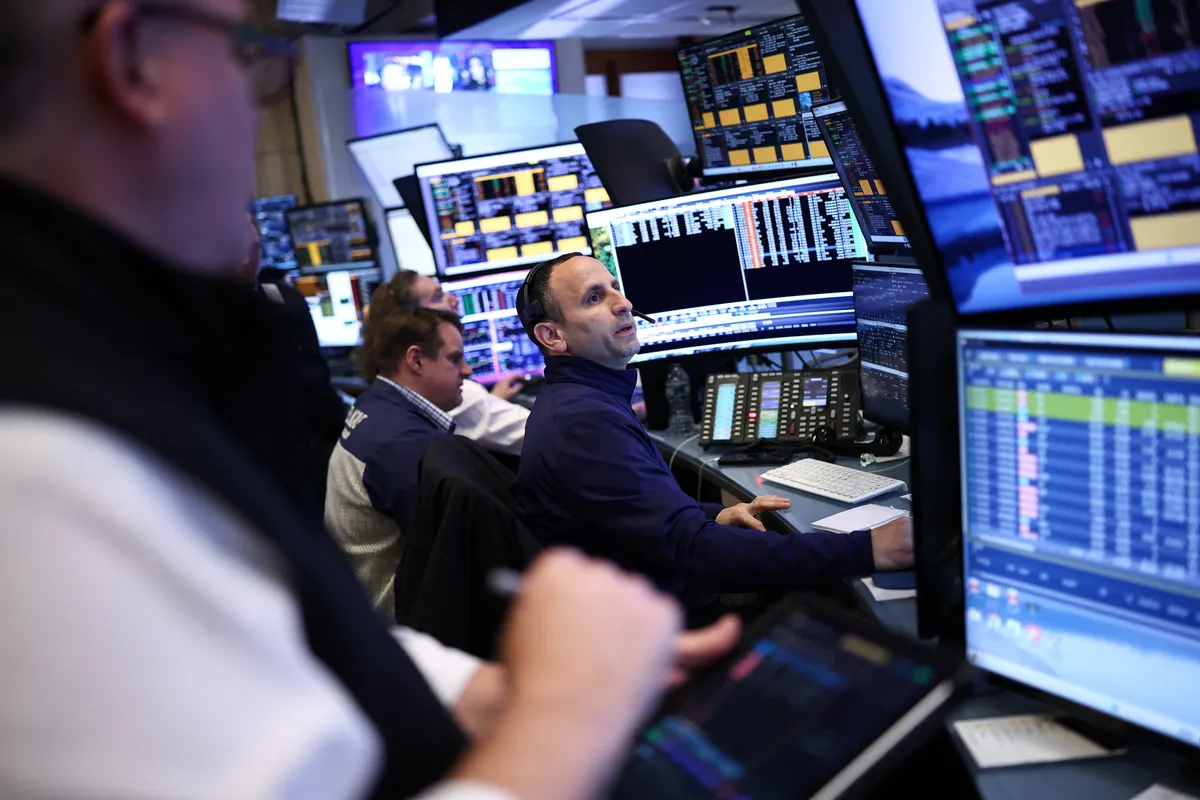
Canadian and U.S. stocks surged Wednesday after U.S. President Donald Trump declared a pause in the Iran conflict, following earlier threats to dismantle its civilization. This ceasefire represents the latest shift in a six-week war that has rattled global markets, with analysts forecasting enduring economic fallout.
Persistent Economic Pressures Ahead
Neil Shearing, group chief economist at Capital Economics, warns in a client note that resolution of the conflict and restored energy flows by late April still leave lasting damage. Higher oil prices will drive inflation upward in major advanced economies, he predicts.
Diverse Investor Strategies Emerge
Canadian investors show mixed reactions to the volatile outlook and shaky truce, balancing opportunity against uncertainty in their portfolios.
Opportunities in Energy Volatility
Chris Thom, CEO of Vancouver-based Moat Financial Ltd., an options-focused portfolio manager, views the ceasefire skeptically. “These sorts of geopolitical events rarely end as quickly as they start,” he says. Market turbulence suits his firm’s core business of managing funds for individuals and families, including its new Active Premium Yield ETF. Moat increases energy sector exposure via cash-covered puts, which generate income like stock insurance. “Those option premiums get way more expensive when the world goes crazy like it is right now. So the strategy benefits from volatility like this,” Thom explains. Disruptions justify focus on energy, where oil at US$75-85 per barrel promises huge profits for firms like Cenovus, Canadian Natural Resources, and Suncor. Moat reduces consumer discretionary holdings, vulnerable to spiking gas prices.
Conservative Resilience for Retirees
Stuart Peterson, a retiree and DIY investor in Guelph, Ontario, emulates his grandfather’s Great Depression-era success by avoiding losses. His conservative portfolio prioritizes Canadian dividend stocks for income, with one year’s expenses in cash and two more in fixed-income funds. The Iran war barely impacts him. “It really doesn’t affect me that much,” he notes, confident in his $1-million-plus portfolio. Peterson plans to stay the course amid escalation or downturns, learning from 2008 crisis withdrawals for his children’s education. He shifts from U.S. investments to Canadian index funds. “That would be the only change I would make,” he adds.
Long-Term Optimism and Governance Focus
Kelly Hirsch, president of Kaivalya Research in Vancouver, holds steady post-February Middle East war outbreak. The chaos creates challenges but fits her long horizon. “This instability will lead to innovation and accelerate changes in the longer term that, without the impetus, wouldn’t happen,” she says. Extreme events prompt governance reviews beyond metrics, checking directors’ risk expertise and accountability systems. The COVID-19 pandemic highlighted firms over-reliant on efficiency, she cautions.
ETF Inflows Reflect Caution
TD Securities analysts highlight defensive shifts in their Canadian ETF Weekly report. March equity inflows reached $10.5 billion amid $19.1 billion total, despite market drops. Cash ETFs see first positive flows since April 2025, signaling wait-and-see attitudes. Fixed-income ETFs attract $4.8 billion, as investors dial back risk.