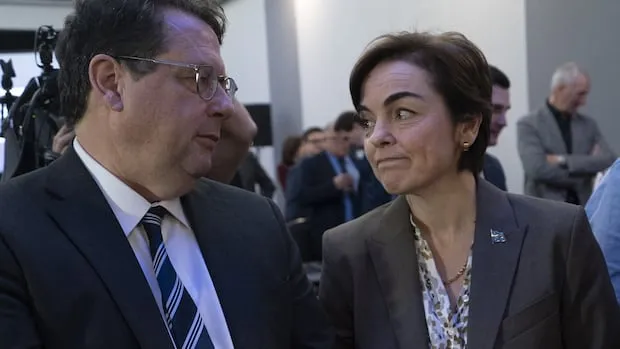
Two leading candidates in the Coalition Avenir Québec (CAQ) leadership race have proposed exceptions to the recently discontinued Quebec Experience Program (PEQ), diverging from the party’s current stance on immigration.
Christine Fréchette and Bernard Drainville, both former cabinet ministers under outgoing Premier François Legault, are competing to replace him following his resignation last month. The PEQ ceased on November 19, 2025, leaving the Skilled Worker Selection Program (PSTQ) as the primary pathway for economic immigrants seeking permanent residency in Quebec.
Candidates’ Proposals for PEQ Exceptions
In a recent social media update, Fréchette announced plans to reopen the PEQ for a two-year period, allowing exemptions for applicants already residing in Quebec at the time of its closure. “This two-year transition period will provide a fair and predictable pathway for those who are already integrated here,” Fréchette stated. She added that invitations under the PSTQ would decrease proportionally to maintain the province’s immigration caps.
Drainville echoed support for targeted exceptions during an interview, focusing on skilled workers in critical sectors like health care, education, construction, and specialized manufacturing who lived in Quebec before the PEQ’s end. “If you’ve been in Quebec for two years, speak intermediate-level French, and if you work in those sectors, you should have a grandfathered right,” he said. “We should be able to keep you because we need you.” Drainville noted he was initially the sole candidate advocating this position.
Legault Opposes Exceptions Amid Worker Surge
Premier Legault has firmly rejected any exceptions, citing the presence of 350,000 temporary foreign workers in Quebec and concerns over the declining use of French in Montreal. “We cannot accept all the temporary foreign workers in Quebec so that they become permanent,” Legault declared recently.
Mayors Voice Support for Pragmatic Changes
Montreal Mayor Soraya Martinez Ferrada welcomed the candidates’ ideas, stating they reassure applicants expecting to stay under prior government promises. “What people will tell you is that they don’t really care what the program is. They want to stay here under the promise that they had when they came here,” she told reporters.
In January, Martinez Ferrada and interim Projet Montréal leader Ericka Alneux jointly called for exemptions for established immigrants. Quebec City Mayor Bruno Marchand also endorsed Fréchette’s approach, describing it as pragmatic. “It would provide quick reassurance to those living through an unsustainable situation and would also offer an initial response to the needs of businesses that contribute to the vitality of their communities throughout Quebec,” Marchand said.
Government and Opposition Reactions
Immigration Minister Jean-François Roberge commented that the leadership race is surfacing diverse views. “It’s very good that these debates are happening, and people will ultimately decide,” he remarked.
Québec Solidaire MNA and immigration critic Guillaume Cliche-Rivard criticized the minister’s stance as increasingly isolated, urging immediate exemptions to ease anxiety among thousands of immigrants. “The climate of uncertainty, now amplified by the CAQ leadership race, is simply untenable,” Cliche-Rivard stated.
Protests erupted across Quebec cities on February 7, with demonstrators arguing the PSTQ fails to address the limbo faced by PEQ applicants and could harm the provincial economy.