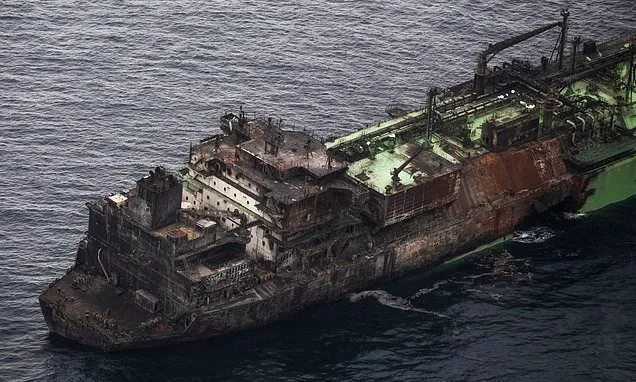
A Russian tanker, damaged in an alleged Ukrainian drone strike, drifts unmanned in the Mediterranean Sea, posing a severe threat of an unprecedented environmental catastrophe. The Arctic Metagaz, part of Russia’s shadow fleet, carries 61,000 tonnes of liquefied natural gas (LNG) and 700 tonnes of diesel fuel. A large hole in its side leaves it vulnerable, with no crew aboard since the attack two weeks ago.
Ship Details and Incident Background
The vessel operates without a valid national flag to evade Western sanctions on Russia. It was en route from Murmansk, Russia, when struck near the Libyan coast, according to Moscow’s account. Now drifting toward Malta from Italian waters, the tanker ignited in early March, producing massive flames and thick smoke, as captured in post-attack footage.
Libyan port authorities initially reported the ship had sunk, but it remains afloat and abandoned. Russia maintains contact with the owner, LLC SMP Techmanagement, and relevant international bodies.
Urgent Warnings from Regional Officials
Italian authorities caution that the tanker could explode at any moment, leading to enormous consequences. In a letter to the European Commission, EU member states highlight the imminent risk: “The precarious condition of the vessel, combined with the nature of its specialised cargo, gives rise to an imminent and serious risk of a major ecological disaster in the heart of the Union’s maritime space.”
Maltese officials express grave concerns over potential pollution impacting desalination plants, critical for the island’s water supply. The centrist Momentum party states: “Malta ranks among the top 10 countries globally for water scarcity, depending almost entirely on desalination plants for drinking water. Any pollution of the surrounding sea resulting from a maritime attack or sunken vessel would mean our taps run dry. It would be a national disaster of unprecedented proportions.”
Maltese MEP Thomas Bajada adds: “Any marine pollution incident in proximity to these (seawater desalination) installations could have serious consequences for water security and for the functioning of essential national infrastructure.”
Russian Foreign Ministry spokesperson Maria Zakharova emphasizes: “The international legal norms applicable to the current situation imply the responsibility of coastal countries… for resolving the situation with the drifting vessel and preventing an environmental disaster.” She notes further involvement by the shipowner and Russia depends on circumstances.
Shadow Fleet and Broader Implications
Sanctioned by the US and UK, the Arctic Metagaz belongs to Russia’s shadow fleet—a network of up to 800 vessels transporting Russian oil and gas in defiance of embargoes. These ships frequently navigate busy routes, including dozens monthly through the Dover Strait.
Over 60 percent of Russian crude exports rely on this fleet, fueling the ongoing conflict in Ukraine. The UK recently imposed major sanctions to disrupt these revenues. Defence experts warn of rising tensions, with potential naval confrontations near British waters.
Defence analyst Professor Michael Clarke states: “There must come a point at which Britain and its allies—the Dutch, Danes, and Norwegians and the sea-going nations of Northern Europe—they together will get much tougher with these Russian ships, even if they’re escorted. When that happens, we’re heading probably sometime this year for some sort of militarised confrontation at sea possibly in the Channel or the North Sea, somewhere certainly near to British coast.”