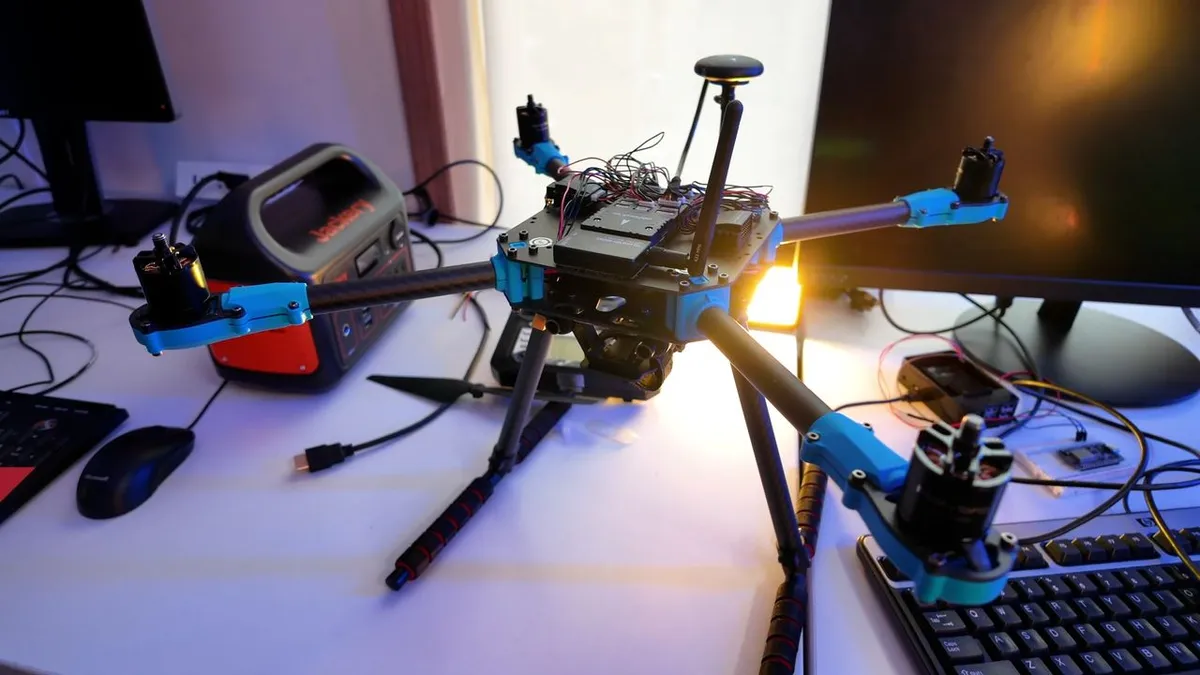
Mobile networks depend on fixed cell towers, which often falter during demand surges or infrastructure breakdowns. Engineers at Stevens Institute of Technology have developed AURA-GreeN, a system deploying coordinated drone swarms as aerial cell towers. This innovative setup complements traditional ground-based systems, dynamically extending coverage and stabilizing signals in real time.
Aerial Networks That Adapt on the Fly
AURA-GreeN deploys multiple drones as mobile radio units. These aerial nodes interconnect with each other and ground users, repositioning based on live network demands. The result is a responsive overlay that activates precisely when needed, without replacing permanent infrastructure.
Ying Wang, associate professor in the Stevens Department of Systems Engineering, explains, “Big cities with dense populations and limited space for new towers face the biggest challenges. During traffic control, disasters, or search-and-rescue operations, fast and reliable wireless links prove essential.”
Balancing Performance Priorities
The platform continuously monitors signal strength, interference levels, and traffic volume. It optimizes data routing and spectrum allocation to sustain stable connections amid congestion or outages.
Beyond basic coverage, AURA-GreeN prioritizes data timeliness through the “age of information” metric. Ishan Aryendu, a PhD candidate at Stevens, states, “It keeps the age of information low, ensuring data stays fresh and mirrors real-time conditions. Tests showed a 460% improvement in this area.”
The system juggles reduced latency, efficient spectrum use, reliable links, and energy constraints. While simulations yield strong results, full-scale deployment may encounter unforeseen real-world hurdles.
Applications in Crowded Events and Emergencies
Drone swarms suit massive gatherings where networks overload suddenly. Researchers highlight integration with existing event-filming drones, leveraging their presence for added coverage without extra flights.