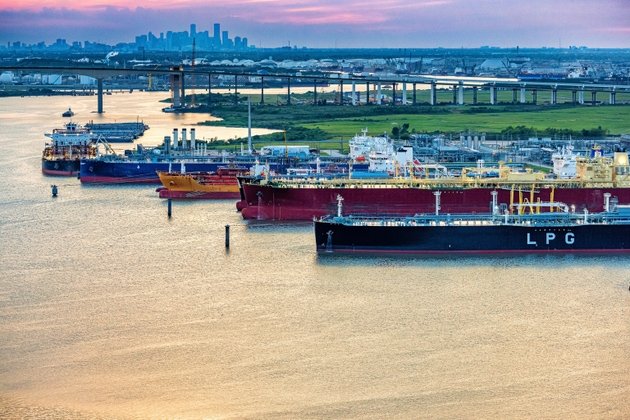
European refiners increasingly turn to U.S. crude oil, strengthening the role of NYMEX WTI in global markets. The addition of WTI Midland to the Brent basket underscores this shift, linking U.S. prices more closely with international benchmarks.
Since Russia’s invasion of Ukraine in 2022, European refiners diversify crude supplies in record volumes, reducing reliance on Russian oil. North American grades, particularly from the U.S., see heightened demand as a result.
U.S. and Canadian crude production surges from 8 million barrels per day in 2008 to approximately 19 million barrels per day in 2025. This growth stems from expanded infrastructure following the 2015 lifting of the 40-year export ban, enabling efficient delivery to global markets.
Rise of NYMEX WTI and Global Influence
NYMEX WTI gains prominence as U.S. export capacity expands, influencing worldwide crude pricing. The WTI-Brent futures spread, reflecting differences between U.S. and North Sea crudes, narrows from a $25 per barrel high to around -$4 per barrel under Brent by late 2025.
Export infrastructure development supports this convergence. Trading volumes in WTI-Brent futures, used for hedging U.S. crude flows, average 61,000 contracts daily through December 2025—a fivefold rise from 2024, according to CME Group data.
North Sea production from fields like Brent, Forties, Oseberg, Ekofisk, and Troll declines by about 100,000 barrels per day over the past year. Meanwhile, U.S. crude exports to northwest Europe climb to 1.1 million barrels per day, surpassing the 550,000 barrels per day from core North Sea grades, per Vortexa analytics.
This influx benefits European refiners, who replace traditional supplies with light sweet U.S. crudes like WTI Midland. These grades yield higher outputs of diesel and gasoline, key for regional transport fuels, bolstering NYMEX WTI futures and related markers like Argus MEH.
Surge in European Trading Hours
Trading activity in NYMEX WTI futures extends beyond U.S. hours, with volumes during London sessions reaching 200,000 contracts per day in 2025—a 16% increase from 2024. In three months, European-hour trades account for 25% of total volume.
The 2023 inclusion of WTI Midland in Dated Brent drives this trend, alongside rising exports. CME Group WTI Midland futures, basis NYMEX WTI at Cushing, see expanded use. Argus WTI Houston vs. NYMEX WTI futures (HTT) hit record highs in October 2025, tripling prior peaks during European mornings.
These patterns indicate growing liquidity and regional interest in hedging quality and location risks for WTI Midland cargoes.
WTI Midland’s Role in Hedging and Pricing
WTI Midland increasingly influences Dated Brent assessments, with more U.S. cargoes setting prices. Volumes in WTI Midland and WTI Houston vs. NYMEX WTI rise 14% year-over-year to 18,000 contracts per day in 2025, from 15,900 in 2024.
Open interest peaks near 705,000 contracts by December 2025, nearing records. European refiners hedge WTI Midland purchases via NYMEX WTI plus Argus WTI Houston differentials against NYMEX Brent futures, elevating WTI Midland as a key swing barrel.
Record U.S. Production Fuels Exports
The shale boom propels output, with U.S. Energy Information Administration data showing 14 million barrels per day across key districts. In PADD III, encompassing the Permian Basin, production hits 10.2 million barrels per day in Q4 2025—an all-time high.
Higher exports to Europe and Asia draw global traders to NYMEX WTI, solidifying its benchmark status. As more U.S. crude refines abroad, adoption of this pricing mechanism accelerates among international buyers.