The human body features intricate components, from cellular structures to limbs, eyes, liver, and brain, shaped over four billion years of evolution. Scientists continue to investigate why humans developed this specific form. For instance, humans possess a unique chin, absent in other species. Relative to body weight, human testicles weigh three times more than a gorilla’s but one-fifth that of a chimpanzee’s.
Tracing the Evolutionary Blueprint
Evolution reveals how species assemble from simple origins, adding components along specialized branches of the tree of life. Humans progressed from animals to vertebrates, mammals to primates. Shared branches with other species indicate the sequence of body part emergence: body and gut precede backbone and limbs; milk and hair come before fingernails.
Researchers study the purpose of these features through convergent evolution, where traits appear ly on multiple branches. This phenomenon acts as a natural experiment. Swallows and swifts, once misclassified as relatives, differ genetically—swallows align closer to owls—highlighting convergence’s challenges and insights.
Testicle Size Reveals Mating Strategies
Primate testicle sizes exemplify convergent evolution. Abyssinian black-and-white colobus monkeys and bonnet macaques, similar in body size, show stark differences: colobus testicles weigh about 3 grams, while macaques reach 48 grams.
Possible explanations tie size to mating behaviors. Colobus males fiercely guard harems, mating exclusively with select females, requiring minimal sperm production. Macaques form mixed troops where promiscuity prevails—males with multiple females and females with multiple males—necessitating larger testicles for sperm competition.
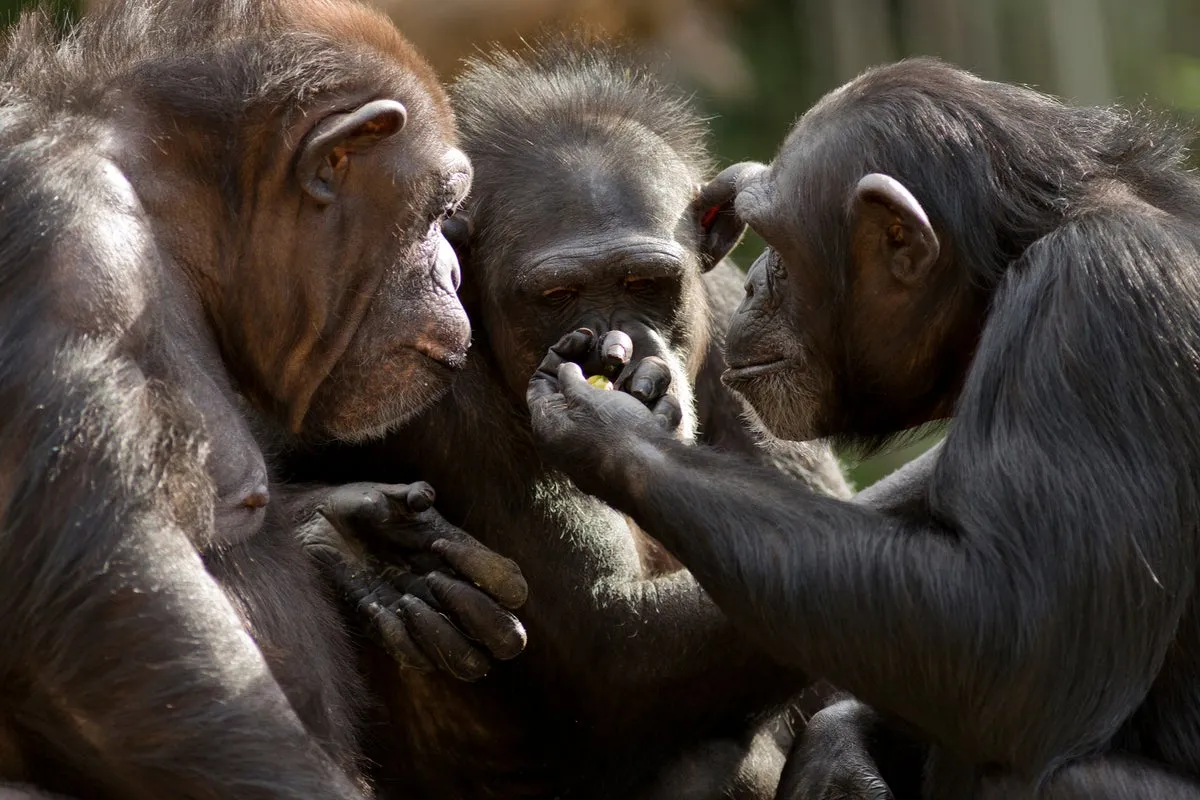
Across mammals, patterns hold: larger testicles correlate with promiscuous species, smaller with monogamous ones. Silverback gorillas, with small testicles, monopolize harems. Promiscuous chimpanzees and bonobos boast larger ones. Dolphins exhibit the largest relative testicles, up to 4% of body weight, linked to mass mating events like spinner dolphin ‘wuzzles.’ Humans fall midway, reflecting moderate mating dynamics.
The Elusive Purpose of the Human Chin
The human chin sparks debate among scientists. Theories abound: it may reinforce jaws for combat, enhance beard prominence, or result from softer cooked foods shrinking the jawline.
Unlike testicle size, the chin appears uniquely in Homo sapiens, absent even in Neanderthals or other mammals. Without convergent evolution for comparison, testing these hypotheses proves impossible. Certain aspects of human anatomy remain enigmatic mysteries.