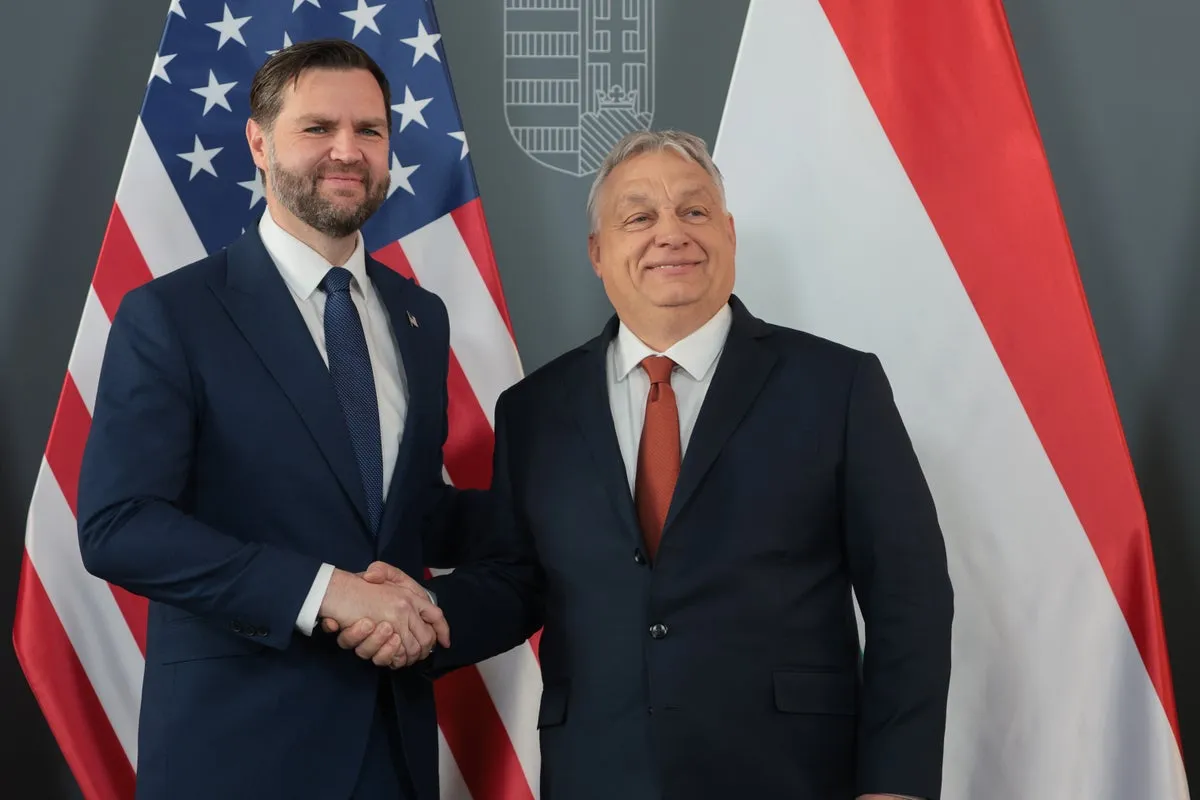
Viktor Orbán, Hungary’s leader since 2010, outlined his vision for an “illiberal democracy” in a 2014 speech in Romania. He argued that the 2008 financial crisis revealed flaws in liberal systems and advocated for a strong state prioritizing national interests over individual freedoms. “Just because something is not liberal, it still can be a democracy,” he stated.
Now 62, Orbán positions himself as a guardian of Hungarian cultural identity. His government enforces strict asylum policies, restricts gay rights, and provides family incentives to boost birth rates. These moves position Hungary as a challenge to European norms on free speech, rule of law, and tolerance. Voters head to the polls Sunday in an election where polls predict Orbán’s defeat.
Trump’s Backing Backfires Amid Economic Strain
Orbán’s hardline stance on immigration and promotion of “Christian family” values drew support from Donald Trump. Fidesz aligned with MAGA ideals, including a campaign visit by U.S. Vice President JD Vance this week. Yet this endorsement coincides with Trump’s “America First” policies straining European economies, contributing to Orbán’s declining support.
Recent polls after Vance’s visit show Orbán’s ratings dropping. Hungary grapples with inflation and fiscal limits despite its high-income status. The EU has frozen about €19 billion in funds over rule-of-law and corruption concerns, exacerbating economic stagnation.
Peter Magyar Emerges as Strong Contender
Challenging Orbán is Péter Magyar, 45, a former Fidesz insider who launched his rival Tisza party in 2024. Magyar capitalizes on public frustration with corruption and economic woes, declaring it “now or never” to undo Fidesz’s damage. His “Hungarian New Deal” pledges anti-corruption measures, state asset repurchases, healthcare reform, housing, and infrastructure using EU funds.
Éva Fodor, a professor at Central European University, notes Orbán’s campaign lacks fresh ideas. “Before every election, they had a different kind of enemy: immigrants, George Soros, Brussels, and the gender lobby. But now they don’t seem to have a new enemy that they can construct. So they’re just trying to sort of double down on some of these topics,” she states.
Polls Favor Tisza, But Race Remains Close
Polls open early Sunday, with results starting around 8 p.m. Voters select constituency candidates and national party lists, with 95% of votes tallied that night. Overseas ballots may delay final outcomes in tight races.
A Publicus Institute survey shows Tisza leading with 52% among decided voters, Fidesz at 39%. About 20% remain undecided. Gerrymandering, Fidesz support among ethnic Hungarians abroad, and potential irregularities could shift results.
Challenges Await a Tisza Victory
Dr. Jonathan Eyal, associate director at the Royal United Services Institute, warns a Magyar win faces entrenched resistance. Orbán’s government created quasi- bodies to obstruct successors, promising “guerrilla warfare” via rural disobedience and parliamentary blocks. Pre-committed spending limits options for the next leader.
“Orban has waged two campaigns,” Eyal explains. “One was a very direct frontal assault to stop him getting elected. The second one was to plant landmines everywhere to ensure that if he does get elected, he cannot succeed.” Unlocking EU funds quickly could aid early wins.
Shift Impacts Russia-Ukraine Dynamics
Hungary relies heavily on Russian oil and gas, making it key for Moscow’s European influence. Orbán faces accusations of pro-Russia leanings, including leaked talks where he offered Putin assistance: “In any matter where I can be of assistance, I am at your service.”
Magyar promises pragmatism: “We have no say in Russia’s internal affairs, and they don’t have any say in our affairs. We are both sovereign countries, and we respect each other, but we don’t have to like each other.” He remains cautious on Ukraine but aims to avoid obstruction, potentially enabling a €90 billion EU loan.
Only 34% of voters favor a Ukraine policy shift, versus 32% for continuity. Eyal stresses Europe must balance expectations: “If Orbán was to lose power then I think that this is an important lesson for other countries that you can reverse this trend… but it requires the Europeans not to be too pure about this.” A Tisza success could signal autocracy’s decline is reversible.