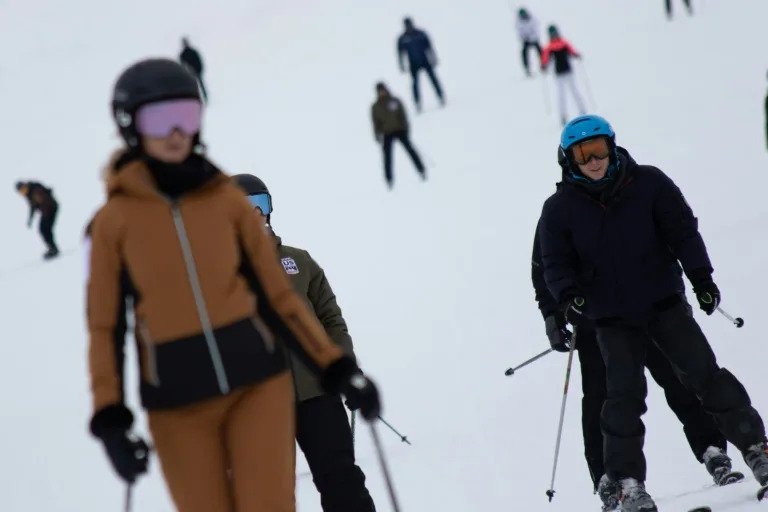
Buses from Naples roll in steadily, discharging thousands of visitors clad in vibrant ski gear into the quaint mountain town of Roccaraso in central Italy. Each winter weekend, the streets buzz with day-trippers, and the modest slopes teem with locals from Naples eager for snowy adventures and crisp mountain air.
“We don’t ski, but we enjoy sledding. Sometimes I even slide using a plastic bag under me!” shared Anna Lippolis, a 58-year-old hairdresser sporting a retro pink ski jacket and silver earrings. She boarded the 30-euro round-trip bus from Naples on a recent Sunday to escape routine and relax after a demanding week.
Away from Italy’s premier Olympic venues, many residents discover winter sports at unpretentious spots like Roccaraso. However, the influx of visitors has stirred conflicts with locals, highlighting the struggles of mountain destinations to handle booming crowds amid shrinking natural snowfalls.
Crowds Strain Local Resources
The sole ski run reachable on foot from Roccaraso, at 1,200 meters elevation, remains shuttered for some time, now serving as a play area for children. Visitors can ride the chairlift for panoramic views, then hike, sled, or descend via lift.
“This is my son’s first encounter with snow,” noted Raimundo Di Bello, 68, while waiting in line for the 30-minute lift queue. “Being in the mountains feels wonderful.”
Just a 10-minute drive away lies Alto Sangro, a full-fledged ski area with over 100 kilometers of trails reaching up to 2,100 meters, attracting 500,000 annual visitors. There, seasoned skiers often voice frustration over day-trippers who prioritize lounging and sipping spritz cocktails amid blaring music from nearby speakers.
“Non-skiers arrive and disrupt the natural surroundings, the environment, and the essence of the sport,” commented Kikka Misso Gentile, a 41-year-old Neapolitan with a vacation home in nearby Rivisondoli.
Last year, the situation escalated into international news when over 250 buses transported 12,000 to 13,000 people in a single day, spurred by a popular TikTok call from influencer Rita Di Crescenzo inviting Neapolitans to join. In response, officials now restrict bus arrivals to 50 per day on busy Sundays and station wardens to oversee the throngs.
Nicola Pitucci, a 46-year-old electrician owning property in Roccaraso, observed a sharp rise in visitors in recent years alongside erratic snow patterns. “Everyone deserves snow-filled enjoyment,” he said, “but capping numbers makes sense—the town lacks the facilities and infrastructure for 50,000 people.”
Rising Expenses and Snow Scarcity
Numerous day visitors explained that skiing proves too costly, often exceeding 200 euros per person daily when factoring in transport, rentals, and lift passes. Though generally more affordable than in France or Switzerland, Italy’s ski passes have climbed up to 10 percent in select areas, as highlighted by consumer group Altroconsumo last December, further limiting access.
Despite these hurdles, the sector demonstrates strong endurance. Tourism analyst Laurent Vanat described it as “very resilient,” with Italy achieving record-breaking seasons in 2022-23 and 2023-24. This holds true even as climate change reduces snow coverage, curtailing European resort seasons.
Over 90 percent of Italy’s ski runs rely on snowmaking equipment, including Roccaraso’s extensive system, the nation’s largest per environmental organization Legambiente. Yet Antonio Montani, president of the Italian Alpine Club, cautioned that “artificial snow serves as a temporary fix, growing tougher with warming temperatures.”
He advocated for diversification in resorts, noting that lower-elevation sites like Roccaraso, which support hiking and cycling, hold an edge over high Alpine areas. “Apennine mountains offer stunning beauty, remaining untamed while brimming with history, culture, and art,” Montani added.
Unique Alternatives Emerge
For thrill-seekers, Sicily provides an exceptional option: skiing an active volcano. Mount Etna draws global tourists to its otherworldly terrain, as local guide Mirto Monaco explained. “Lava, snow, and sea combine for a one-of-a-kind adventure,” he said.