Controversial Restoration Work Sparks Dual Investigations
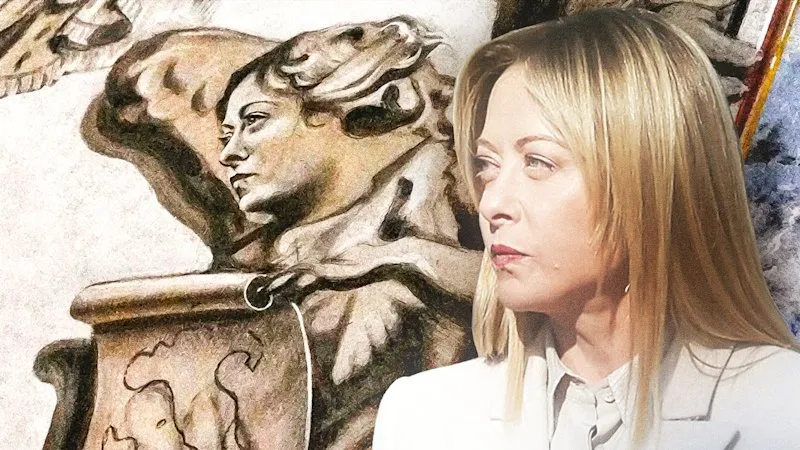
Authorities in Rome have launched parallel investigations into a recently restored church fresco depicting an angel with striking similarities to Italian Prime Minister Giorgia Meloni. Both religious and cultural officials are examining renovations at the historic Basilica of San Lorenzo in Lucina after images of the artwork circulated widely this week.
The 5th-century basilica, located near Rome’s Spanish Steps, saw unusual crowds this week as visitors flocked to view the controversial depiction in a side chapel near the main altar. Reports indicate some visitors disrupted religious services while attempting to photograph the artwork.
Political Symbolism Under Scrutiny
At the center of controversy is a restored cherub originally painted in 2000 as part of a chapel honoring Italy’s last king, Umberto II. The figure appears kneeling before a royal bust while holding a map of Italy. Recent conservation work has drawn attention due to the angel’s facial features now resembling those of the current prime minister.
This depiction raises historical sensitivities given Italy’s monarchy supported fascist dictator Benito Mussolini before being abolished post-World War II. Meloni’s Brothers of Italy party traces its origins to neo-fascist political movements.
In response to the growing controversy, Meloni downplayed the resemblance through social media, writing: “No, I definitely don’t look like an angel” alongside a laughing emoji.
Historical Context Adds Complexity
The basilica, currently state-owned and maintained by Italy’s Interior Ministry, underwent restoration after water damage affected the chapel area. Restoration artist Bruno Valentinetti maintains he simply refreshed his original 2000 work without intentional alterations. “The resemblance exists only in the eye of the beholder,” Valentinetti stated in recent interviews.
Parish priest Daniele Micheletti acknowledged the similarity while distancing himself from the artwork: “The priest isn’t responsible for decorations here since the owner is someone else. I didn’t create the painting.” He noted artistic tradition often incorporates real-life models, citing historical examples like Caravaggio’s religious works.
Church Authorities Take Firm Stance
Roman Catholic officials have adopted a markedly different tone from the parish clergy. Cardinal Baldassare Reina, Vicar of Rome, announced a formal investigation while criticizing the perceived trivialization of sacred art.
“Images of sacred tradition cannot be misused or exploited,” stated a diocesan announcement. “They exist exclusively to support liturgical life and spiritual reflection.”
Cultural authorities have dispatched specialist Daniela Porro to examine the fresco as part of the government’s investigation. Ministry officials confirm their priority is determining the artwork’s provenance and deciding on appropriate next steps.
Ongoing Examinations Continue
Investigators are currently comparing the restored artwork with archival photographs of the original 2000 fresco. Art historians note the chapel’s politically charged context – created during a wave of neo-monarchist sentiment – adds layers to current interpretations.
As examinations proceed, the basilica remains open to visitors under heightened security protocols while authorities determine whether the restoration constitutes artistic license or improper politicization of sacred space.