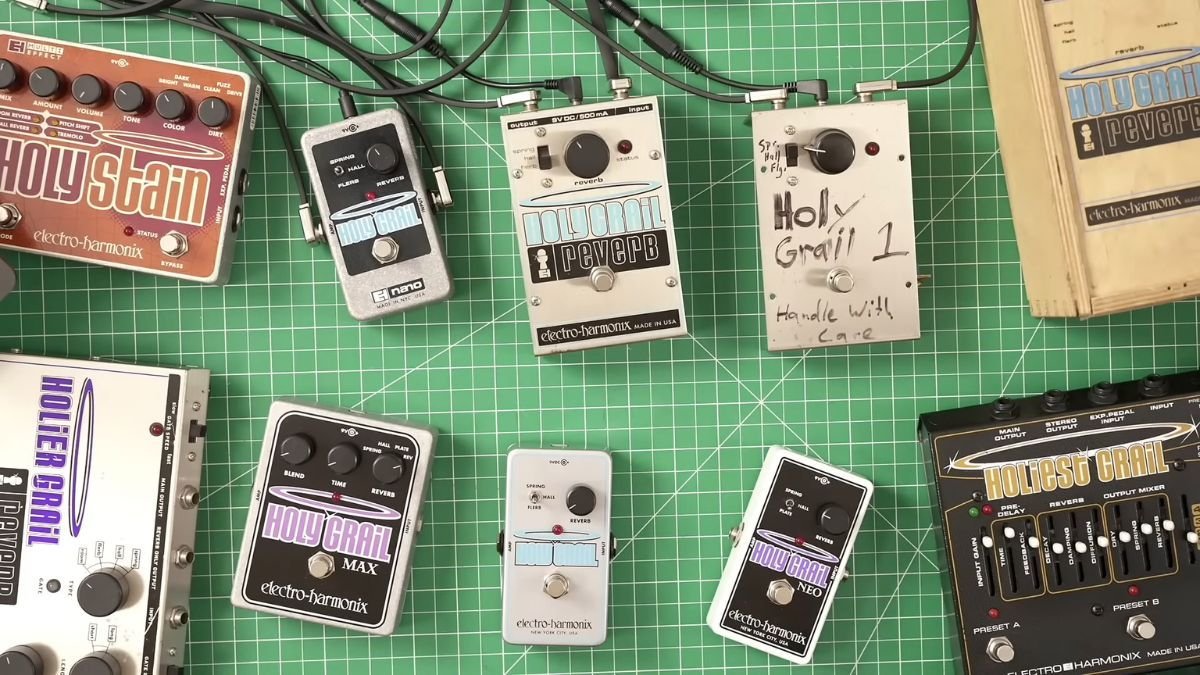
Prototype of Iconic Reverb Pedal Found After Years of Search
Effects pedal expert Josh Scott, owner of JHS Pedals, has uncovered the long-lost prototype of the Electro-Harmonix Holy Grail reverb pedal. This legendary stompbox, favored by artists like John Frusciante and Jim Root, represents a milestone in guitar effects innovation. Scott, a renowned historian of pedals, pursued the original unit for years despite repeated assurances that no such prototype existed.
The Hunt Leads to Electro-Harmonix Archives
During research for his upcoming book, Made on Earth for Rising Stars, Scott visited the Electro-Harmonix facility in Queens, New York. Co-authored with illustrator Daniel Danger after six years of work, the book delves into the company’s history through interviews, creative insights, and in-depth explorations of pedal technology. Scott views the Holy Grail as the pinnacle of Electro-Harmonix’s groundbreaking designs, calling the firm one of America’s most innovative in the field.
The breakthrough came unexpectedly in the facility’s depths. As Scott recounted in a recent live stream, “We were digging in the basement at Electro-Harmonix. We’d always ask, but we were always met with, ‘Nah, there are no prototypes.’ At some point, you’re like, ‘There has to be prototypes.’”
While packing up after engineer interviews, Owen Matthews—son of Electro-Harmonix founder Mike Matthews and artist relations specialist—suggested checking a lower level. The massive Queens building spans half a city block, with the sub-basement dedicated to research and development plus tube storage. There, amid the shadows, the team located the prototype.
Features of the Revolutionary Unit
The find features a stainless steel front plate marked “Holy Grail 1, handle with care” in Sharpie, paired with intricate internal wiring. At its core lies the Crystal CS4811 chip, a game-changer introduced around 2000. Scott explains, “Mike Matthews goes to this trade show, and he sees this chip set, the Crystal CS4811. With it, you can essentially load in their pre-programmed algorithms, and you can mess around with it and tweak it.”
This technology marked the dawn of accessible digital signal processing for guitarists. The prototype stands as the world’s first digital spring reverb unit, with Matthews quickly turning the concept into a market-leading product. Early versions offered three reverb modes via an external switch, but users soon discovered eight variations accessible through internal dip-switches, each delivering unique tonal characters.
Future Plans and Book Release
Scott’s discovery raises questions about the prototype’s next steps, now in his possession. The book, published by Third Man Books under Jack White’s Third Man Records, is available for pre-order. It builds on prior collaborations, such as the innovative Troika Delay pedal developed with White. For more details, visit Third Man Records.