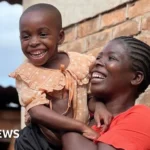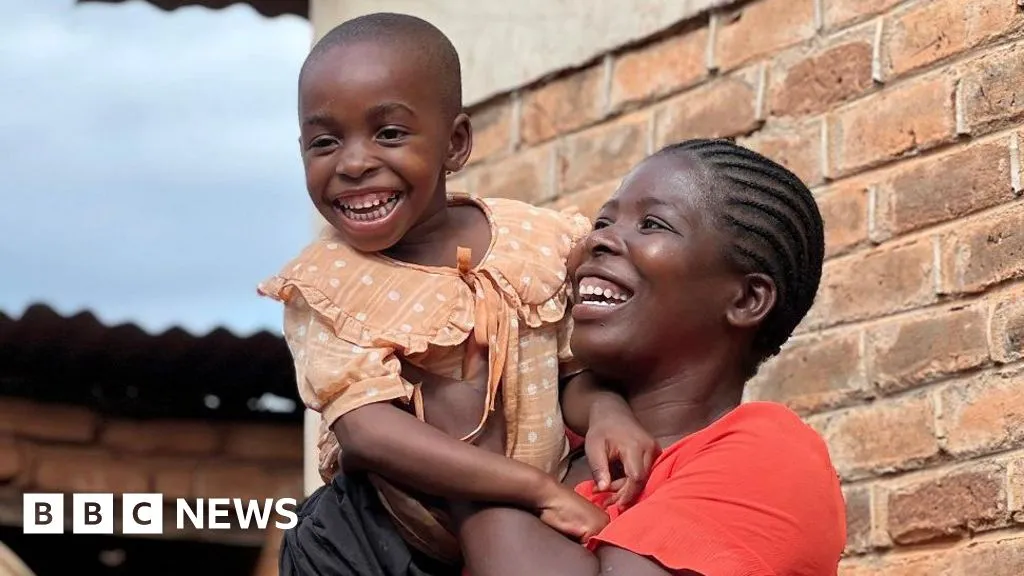
Martha Ongwane gazes lovingly at her energetic, giggling four-year-old daughter Rachael, a far cry from the desperation she felt two years ago when she contemplated ending her child’s life. Non-verbal, prone to biting, and unable to sit still, Rachael’s autism diagnosis had overwhelmed Martha, leading to isolation and depression in their community in northern Malawi.
A Mother’s Darkest Moment
Neighbors shunned Martha, blaming her for Rachael’s behavior and urging her to lock the child away. With little understanding of autism, Martha once poured poison into a cup, intending for Rachael to drink it. “I told myself it would be better if she died because that would mean she would rest and that would be the end of our problems,” she recalls softly. “But my heart didn’t let me. I changed my mind and cried so much.”
Today, mother and daughter share joyful moments on the floor of their Mzuzu home. Rachael climbs into Martha’s lap, laughing and hugging her face as the 33-year-old prepares vegetables alongside nsima, Malawi’s staple maize porridge.
Access to Expert Support
The family’s turnaround stems from specialized care. During a visit to Mzuzu Central Hospital, Rachael was referred to Saint John of God, a Catholic Church-funded organization offering community mental health services and a school for children with special needs. This became their lifeline, providing counseling for Martha and her husband, along with a support network and educators equipped to handle Rachael’s challenges.
Autism in Malawi: Limited Resources and Stigma
World Health Organization statistics indicate over 60 million people worldwide live on the autism spectrum. Autism spectrum disorder affects brain development, influencing communication, social interactions, and sensory processing. While many autistic individuals exhibit strengths like intense focus and innovative thinking, low-resource countries often overlook milder cases, fostering stigma.
Malawi, with a population exceeding 22 million, has only two developmental pediatricians and three consultant psychiatrists. The term “autism” lacks a direct translation in Chichewa, Malawi’s primary language, often described as “ozelezeka” (mentally challenged) or “ofuntha” (troublesome).
Shifting Community Perceptions
Saint John of God conducts awareness sessions to combat misconceptions, such as beliefs in witchcraft causing autism. At a community center near Martha’s home, religious leaders from Christian and Muslim backgrounds discuss these views. Christopher Mhone, from the organization, guides participants toward practical interventions, noting, “For a woman to come to a point where she feels like she should kill her child—as a nation we have failed her. Her burden has become so impossible to bear.”
Most autism support relies on NGOs and charities. Basic mental health services exist at district levels, but only Zomba Central Hospital serves as the sole government psychiatric facility. “Autism is not even mentioned in the Disability Act. For me, that tells you about the issue of visibility,” Mhone states.
Risks of Traditional Healing
With limited healthcare access, many Malawians turn to traditional healers. Natasha Lusinje sought help for her five-year-old non-verbal son Shalom in Lilongwe. Believing witchcraft silenced him, she visited healer Maness Sanjelekani, who chanted rituals claiming Shalom’s autism stemmed from Satan. After paying 26,500 kwacha ($15), Shalom endured herbal baths, drinks, and skin incisions over three weeks, showing no improvement.
Sanjelekani, lacking medical qualifications, insisted, “I can only say I am trying to save his life.” Natasha persists in her hope for a divine cure.
Progress and Hope
In contrast, Rachael now attends Saint John of God’s school in Mzuzu, which supports over 600 children annually. She learns to speak, participates eagerly in class, and joins friends in songs. Young adults with disabilities tend gardens there, embodying Mhone’s vision: “Disability is ability, in a different way.”
Martha dresses Rachael in her school uniform, marveling at the change. “When I look at her, I feel so guilty. Every day I think about the fact that my daughter could have been dead. I adore her now.” She shares her story to encourage other mothers to seek help sooner.