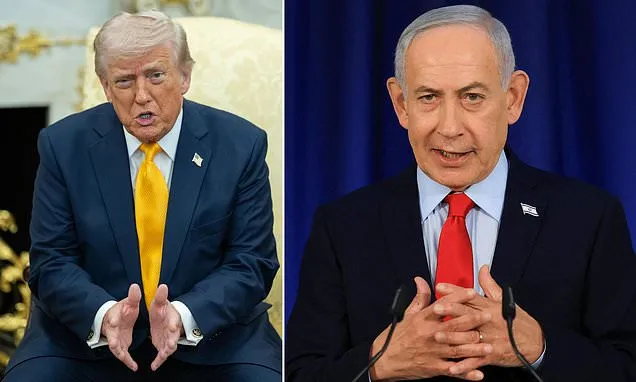
Israeli Prime Minister Benjamin Netanyahu rejects claims that Israel drew U.S. President Donald Trump into the conflict with Iran. He asserts the United States played no role in the strike on South Pars, the world’s largest natural gas field.
Netanyahu Counters Accusations
Netanyahu addressed the press on Thursday following criticism from Joe Kent, a former Trump counter-intelligence official, who accused Israel of persuading Trump to join the fight. The prime minister dismissed the claims as ‘fake news.’
‘Does anyone really think that someone can tell President Trump what to do? Come on. President Trump always makes his decisions based on what is good for America and what is good for future generations,’ Netanyahu stated.
He highlighted close coordination between U.S. and Israeli militaries and intelligence services, noting swift achievements. Netanyahu also pledged to follow Trump’s directive against targeting regional oil infrastructure after the South Pars attack. Israel acted independently, he insisted, and will refrain from further strikes on the facility.
The prime minister minimized any rift with Trump, emphasizing shared views on Iran’s threat. ‘It’s been said that for 40 years I’ve been saying that Iran is a danger to Israel and a danger to the world. That is true. You know who else said that? President Trump,’ he remarked during a Jerusalem news conference.
‘Look, I don’t think any two leaders have been as coordinated as President Trump and I. He’s the leader. I’m his ally. America is the leader,’ Netanyahu added.
Trump Clarifies U.S. Stance
Trump addressed the strike during an Oval Office meeting with Japanese Prime Minister Sanae Takaichi. He confirmed neither approving nor endorsing Israel’s action on South Pars.
‘I told him, “Don’t do that,”‘ Trump said of Netanyahu. ‘We get along great. It’s coordinated, but on occasion he’ll do something. And if I don’t like it — and so we’re not doing that anymore.’
Sources familiar with the matter indicate U.S. officials knew of Israel’s plans beforehand, with targets generally aligned. Top administration figures stress Trump’s decisions prioritize U.S. national security.
Strategic Differences Emerge
The U.S. campaign targets Iran’s missile program, nuclear facilities, and navy. Israel focuses on high-profile assassinations to undermine the clerical regime in power since 1979.
Netanyahu views the conflict as a chance for a moderate, Israel-friendly government in Tehran. Strong domestic support in Israel allows sustained operations.
Trump prioritizes preventing Iran from acquiring nuclear weapons. Director of National Intelligence Tulsi Gabbard told the House intelligence committee that U.S. and Israeli objectives differ, particularly on the gas field strike.
Trump has shifted from initial optimism about regime change, expressing caution over Iran’s Basij force. In a recent interview, he questioned Iranians’ readiness to rise up: ‘So, I really think that’s a big hurdle to climb for people that don’t have weapons. I think it’s a very big hurdle.’
‘I would think that Bibi would understand that too,’ Trump added, referring to Netanyahu.
Despite close alliance over Trump’s tenure, recent weeks reveal natural divergences. ‘You know, they’re there, and we’re very far away,’ Trump noted.
Iran retaliated by striking Qatar-owned LNG facilities after smoke and flames engulfed South Pars.