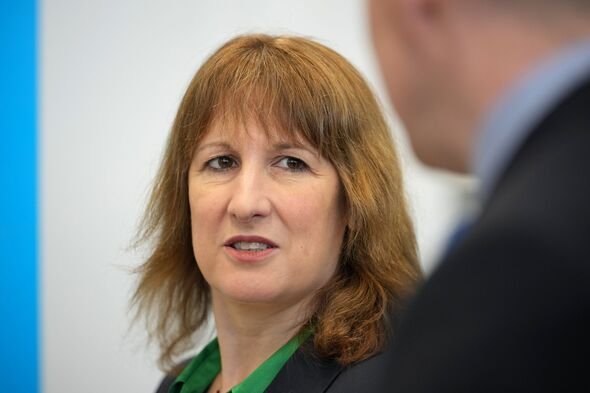
Rachel Reeves’ economic strategy, known as Securonomics, is constraining entrepreneurial activity and undermining the free market, according to financial expert Bob Lyddon. The approach seeks to create a stable foundation for private investment by expanding government involvement, but it risks consuming resources and limiting true market dynamics.
Understanding Securonomics
Bob Lyddon, founder of Lyddon Consulting Services, argues that Reeves adheres strictly to Securonomics, a philosophy that appears to overlook how businesses operate amid government interventions, high taxes, and regulations. He states, “Reeves may appear not to have an economic credo, or to have any idea about how businesses and markets work, or to understand how businesses react to government intervention, high taxation, and high regulation. There is a credo, though, and Reeves’ lack of apparent grip derives from her adherence to it. It is called Securonomics.”
Introduced in the November 2025 Budget, this model avoids direct renationalization but enforces state priorities on private companies in sectors like energy, water, transport, education, and health through regulations, incentives, and penalties. It particularly targets oil and gas industries while prioritizing Net Zero goals.
Massive Government Investment Plans
The strategy involves £1.64 trillion in investments over the next decade, equivalent to 57% of the UK’s 2024 GDP. Combined with the existing 42% public sector share, this could elevate state-controlled economic activity to nearly 60%. Lyddon explains, “The government’s ‘investment’ plans amount to nearly £1.7 trillion (60% of the UK’s 2024 GDP) to be spent on its Net Zero/Clean Energy, Infrastructure, and Industrial strategies over the next 10 years. Public policy objectives – not market opportunities – determine where the money will be spent.”
Such heavy state direction resembles the EU’s economic model, which Lyddon views as stagnant. He warns that aligning the UK with this system through Labour’s policies could hinder growth just as Europe recognizes its shortcomings. Lyddon adds, “Reeves’ implementation of Securonomics is the most insidious element in the government’s EU Re-set: it will make the UK’s economy work exactly like the stagnant EU.”
Challenges with Net Zero Focus
Net Zero lies at the heart of Securonomics, aiming to shield the UK from energy disruptions like those triggered by Russia’s invasion of Ukraine. However, critics highlight issues, including the ban on new North Sea exploration licenses, which overlooks supply vulnerabilities, and the high costs of renewable energy transitions. A recent Institute of Economic Affairs report questions these expenses, despite government claims of positioning the UK as a “clean energy superpower.”
Lyddon emphasizes, “Net Zero, with its huge allocations of money and resources as well as its huge body of regulations, is intrinsic to Securonomics: supposedly ensuring abundant supplies of cheap, home-produced energy as part of our stable, predictable, and secure economic base.” Yet, global shifts pose risks. With potential increases in US oil and gas production under policies favoring exploitation, market prices could plummet—propane prices have already fallen 13% from 2024 averages. Nations reliant on fossil fuels may gain trade advantages, disadvantaging high-cost Net Zero adopters like the UK.
Potential Economic Impacts
Lyddon predicts that extensive borrowing will crowd out private investment, further eroding the free market. Recent data shows job vacancies dropping sharply after the Budget, marking the steepest hiring decline since the pandemic. While the Treasury highlights stability and a capped 25% corporation tax, businesses grapple with escalating costs and regulatory burdens.
Overall, Lyddon cautions that annual spending at 6% of current UK GDP for a decade will expand the state-directed sector to 15-20% of the economy, atop the existing public sector. He concludes, “That results in 60% of all economic activity being controlled by the state. There is no elbow room for a private sector in that economy.” This approach, he argues, threatens wealth creation and economic freedom.