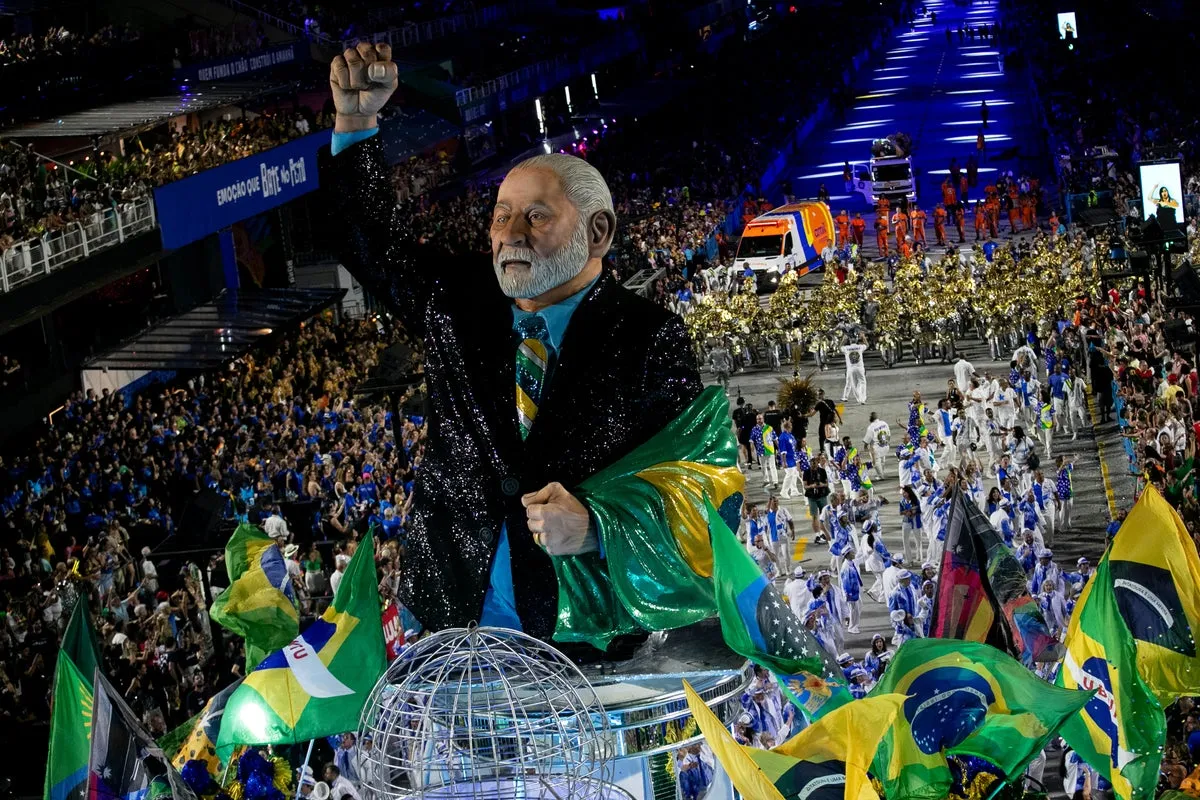
Rio de Janeiro’s Sambadrome hosts a spectacular Carnival parade that celebrates President Luiz Inácio Lula da Silva’s journey, but the event fuels a heated political debate as opponents label it an unlawful early election campaign.
The Parade’s Theme and Execution
The Academicos de Niteroi samba school presents a vivid tribute tracing Lula’s rise from poverty in Brazil’s northeast to a prominent Latin American leader. Floats, elaborate costumes, and performances overflow with admiration for the president, whose approval ratings hover around even levels.
President Lula attends alongside Vice President Geraldo Alckmin, their wives, and Mayor Eduardo Paes from the city hall viewing area. Revelers perform his famous campaign jingle without incident, and Lula steps onto the Sambadrome floor for photos amid cheers.
Organizer’s Defense
Tiago Martins, the parade’s lead organizer, explains that the 2025 theme originally targets Brazil’s northeast region. Lula’s story aligns perfectly, despite acknowledged legal risks. “Lula deserves a tribute like this, just like any other Brazilian who does a lot for our people,” Martins states, rejecting claims that the elements promote his campaign.
Martins confirms that school leaders shared the concept with Lula in Brasilia months earlier, gaining his approval.
Critics’ Warnings
João Santana, who managed Lula’s 2006 reelection, questions potential benefits. He argues the display risks alienating moderate and evangelical voters wary of politics mixing with Carnival. “The president and the first lady have dangerously approached this parade. This could all backfire,” Santana cautions, pointing to unnecessary legal exposure.
Political analyst Thomas Traumann highlights scrutiny over possible misuse of public funds for travel or lodging. “There could be fines, the loss of free airtime during the campaign. That matters in a close election,” Traumann notes. While Lula enjoys support in samba circles, linking the event to elections raises flags.
Legal and Political Battles
This marks the first such presidential honor during an election year, unlike tributes in 2003 and 2012. The school directs its 3,000-plus participants to skip “L” hand signs or vote pleas.
Conservative lawmakers attempt to halt the parade, citing unfair advantages since samba schools receive public funding. Lawmaker Kim Kataguiri posts: “Samba schools are not meant to campaign for anyone. I filed a complaint to stop your money from being used to finance electoral campaigns disguised as tributes.”
Brazil’s top electoral court dismisses preemptive blocks, refusing to censor the school upfront, but pledges post-event review for violations.
Election Context
Lula leads polls as the front-runner against Senator Flávio Bolsonaro, son of former President Jair Bolsonaro, in a tight race. The court’s leadership soon shifts to Supreme Court Justice Kássio Nunes, a Bolsonaro appointee and Carnival skeptic, who oversees the October presidential vote. The parade’s fallout lingers as a key test.