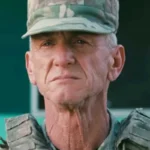
At the 2026 Oscars, Sean Penn secured his third Academy Award for Best Supporting Actor, earning acclaim for his role as a racist military officer in Paul Thomas Anderson’s One Battle After Another. The 65-year-old actor, previously honored for Mystic River in 2004 and Milk in 2009, skipped the glitzy event at Los Angeles’ Dolby Theatre.
“Sean Penn couldn’t be here this evening, or didn’t want to, so I’ll be accepting the award on his behalf,” quipped Kieran Culkin, last year’s Best Supporting Actor winner from Succession, as he opened the envelope.
Penn Heads to Ukraine Amid Ongoing Conflict
Sources indicate Penn departed for Europe late last week, targeting Ukraine without detailing his precise activities or locations. Photographs captured him arriving by car in Kyiv on Monday, followed by images of him meeting President Volodymyr Zelensky.
Choosing a war zone over Hollywood’s biggest night aligns with Penn’s recent trajectory. He once loaned an Oscar statuette to Zelensky, insisting it stay in Kyiv until Ukraine defeats Russia. He even considered melting his awards to forge bullets against Russian forces.
Unlike many celebrities whose support for Ukraine faded after Russia’s 2022 invasion, Penn remains a vocal advocate, emerging as one of the strongest U.S. voices defending the nation.
A Legacy of Hands-On Activism
Penn’s commitment stems from deep-rooted family activism. His father, Leo Penn, faced Hollywood blacklisting in the 1950s for defying the House Un-American Activities Committee.
In the early 2000s, Penn challenged the Iraq War under President George W. Bush. Skeptical of weapons of mass destruction claims, he published a Washington Post advertisement urging reconsideration and visited Baghdad to document civilian suffering, stating he aimed to make “their blood – along with that of American soldiers – would not be invisible on my own hands.”
Later, he operated rescue boats post-Hurricane Katrina in New Orleans, saving trapped residents. In 2010, after Haiti’s earthquake, he established a major refugee camp, earning praise from aid experts and appointment as Haiti’s ambassador-at-large.
Not all efforts escaped criticism. Penn defended leaders like Venezuela’s Hugo Chavez and Cuba’s Raul Castro. His 2015 Rolling Stone interview with drug lord El Chapo drew backlash, overshadowing his drug war commentary. “I have a terrible regret,” he later admitted.
Critics often question if his actions prioritize spotlight over altruism.
From Film Project to Unwavering Alliance
Penn’s Ukraine involvement began as a documentary pursuit after other projects stalled. Zelensky’s story—a comedian turned president via anti-corruption fame—promised a lighthearted film. “We thought we’d follow this kind of interesting story that would have been a light-hearted take,” Penn explained.
Delayed by COVID-19, production started late 2021. Penn met Zelensky on February 23, 2022, unfilmed to build trust. Russia invaded that night; filming began the next day amid war.
“I saw a very big change in him from one day to the next,” Penn recalled. “At that moment, he was the significant target. But he wasn’t going anywhere. That day, he found out that he was born for this.”
Zelensky’s decision to remain in Kyiv impressed Penn. “President Zelensky and the Ukrainian people have risen as historic symbols of courage and principle,” he declared. “Ukraine is the tip of the spear for the democratic embrace of dreams. If we allow it to fight alone, our soul as America is lost.”
The resulting film, Superpower, premiered at the Berlin Film Festival in 2023. Penn embraced its pro-Zelensky stance: “If it’s propaganda, I’m proud.” Reviews varied, praising its heart while critiquing self-focus.
Sustained Support Through Challenges
Beyond filming, Penn deepened ties. In late 2022, he gifted Zelensky an Oscar: “It’s just a symbolic silly thing, but if I know this is here with you then I’ll feel better and stronger for the fight.” Zelensky reciprocated with Ukraine’s Order of Merit.
In 2025, after tensions between Donald Trump and Zelensky at the White House, Penn lauded the president as “constantly, extemporaneously genuine” in pursuing Ukraine’s freedom. “I think the last significant moment that we [Americans] were bridging a division was in support of Ukraine and its head of state,” he added. “And if we lose track of that, we really have to ask ourselves if we’re losing track of the value of democracy.”
Weeks later, he visited Ukrainian special forces. At Cannes, he appeared on the red carpet with soldiers, U2’s Bono, and The Edge.
His current Kyiv trip underscores ongoing dedication. “It’s his personal visit, that’s how he sees it, that he needs to be in Ukraine,” a senior Ukrainian official stated. “He just wants to support Ukraine.” Whether he offers his newest Oscar remains unclear.