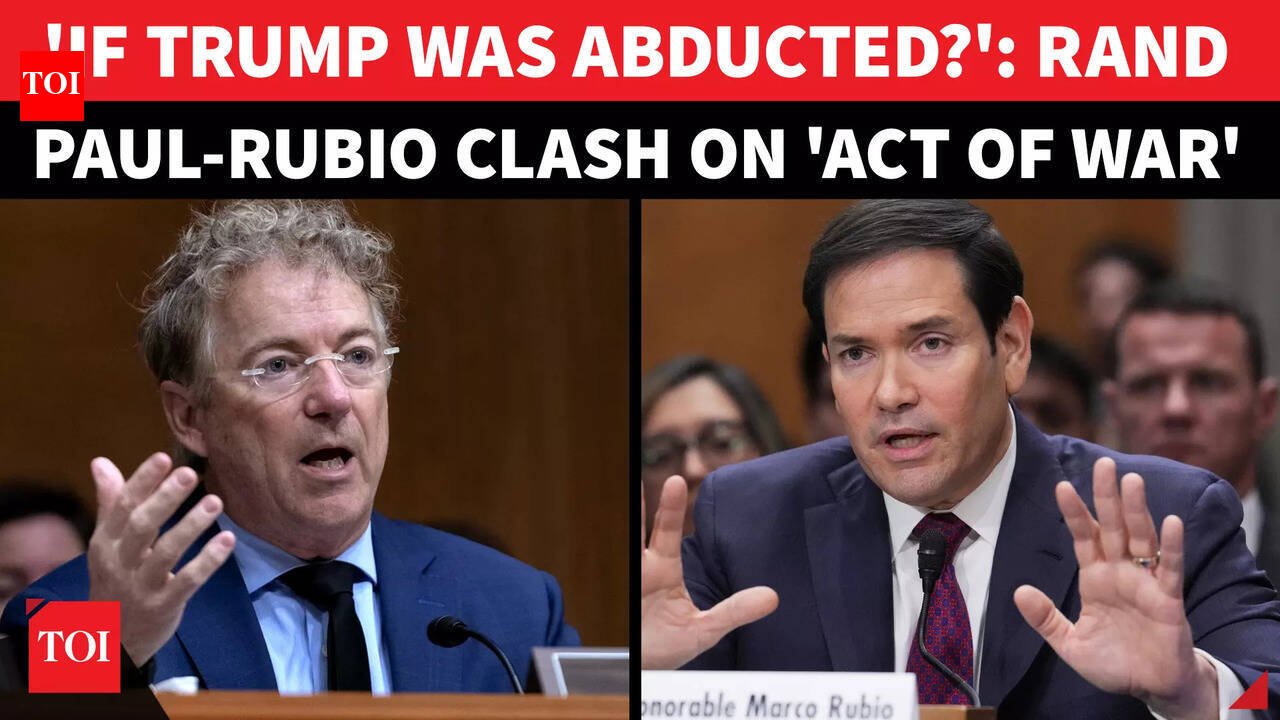
A heated exchange between two prominent senators highlighted deepening divisions over the recent U.S. military operation in Venezuela during Wednesday’s Senate Foreign Relations Committee hearing.
Constitutional Authority Questioned
Senator Rand Paul (R-KY) forcefully challenged Secretary of State Marco Rubio’s justification for the capture of Venezuelan President Nicolás Maduro, calling it ‘a ruse to bypass congressional war powers.’ The operation, which took place in early January, resulted in Maduro’s arrest and transfer to U.S. custody.
‘Let’s be honest about what this really is,’ Paul stated during the three-hour hearing. ‘This was a military operation to overthrow a foreign government, not a law enforcement action. Calling it anything else is deliberately misleading the American people.’
Administration Defends Legal Basis
Secretary Rubio strongly defended the administration’s position, arguing that Maduro’s alleged involvement in drug trafficking provided clear legal authority for the operation. ‘This was a legitimate law enforcement action against a criminal enterprise that poses an imminent threat to American security,’ Rubio responded.
Military Presence Expansion
The confrontation comes amid growing U.S. military presence in the region, with over 6,500 troops now deployed. The administration has also seized multiple oil tankers linked to Venezuela in recent weeks, signaling an escalation in enforcement actions.
Congressional Oversight Battle
The debate reflects a larger struggle over executive war powers and congressional oversight. A resolution to restrict further military action in Venezuela failed in the Senate last week by a narrow 51-50 margin, with Vice President JD Vance casting the deciding vote.
‘The Constitution is clear on this matter,’ Paul emphasized. ‘The power to declare war rests with Congress, not the executive branch. We cannot allow that fundamental principle to be eroded through creative legal interpretations.’
Broader Implications
The hearing’s tensions underscore growing concerns about the scope of presidential authority in foreign interventions, particularly as the administration signals potential future actions in other regions, including expanded interests in Greenland and ongoing tensions with Iran.