Landmark Agreement Marks End of 26-Year Diamond Mining Era
The Tłı̨chǫ government and Rio Tinto finalize a closure agreement for the Diavik diamond mine in Behchokǫ. Production at the site ceases next month, ushering in a new phase of partnership focused on restoration and community support. This pact represents one of Rio Tinto’s initial closure deals in Canada.
Emphasis on Collaborative Closure and Land Restoration
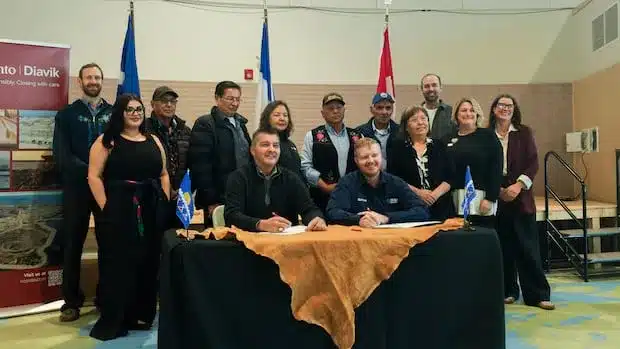
Tłı̨chǫ Grand Chief Jackson Lafferty highlights the significance of joint mine closures. “That speaks volumes of how partnership truly works… We opened our mine together, let’s close the mine together,” he states. The ceremony opens and closes with traditional song and prayer.
The closure strategy prioritizes land rehabilitation, drawing on elder knowledge from the mine’s inception. “We’re going to do what we can to protect and preserve our land, our waterways and also wildlife,” Lafferty adds. “And that’s always been our ancestors’ vision, to protect our environment. At the same time creating opportunities for people with [the] mine closure.”
Funding and Opportunities for Tłı̨chǫ Citizens
The deal allocates funding for Tłı̨chǫ- led programs during the shutdown. It secures commitments for employment, training, and business prospects tailored to Tłı̨chǫ citizens.
Diavik’s manager of communities and social performance, Tara Marchiori, notes that social impacts have informed planning since 2019. “The original agreements really had business opportunities, education and employment and training and sort of a cultural well-being aspect to them,” she explains. “So that has largely transferred over…. Community governments can determine what’s the best way to put that towards programs and services for citizens.”
Negotiations commenced in April 2024, marking a key milestone. Marchiori describes hearing praise from former leadership as particularly rewarding.
Reflections from Mine Veterans
Former Tłı̨chǫ Grand Chief Joe Rabesca, a signatory to the 2000 partnership, addresses attendees. “Overall, thank you very much for working with us and I hope wherever the company goes that people will ask us, ‘How was Diavik?’ and I would say they are good friends,” he remarks.
Peter Huskey recalls early consultations with elders, including the late Harry Apples, who urged firsthand visits. Huskey served in multiple roles at Diavik, including interpreter for elder site tours.
Behchokǫ Chief Bertha Rabesca Zoe joins Diavik representatives at the event, holding a painting by artist Darrell Chocolate.
Updates for affected workers and families continue through Tłı̨chǫ Client Services, Diavik, and local channels.