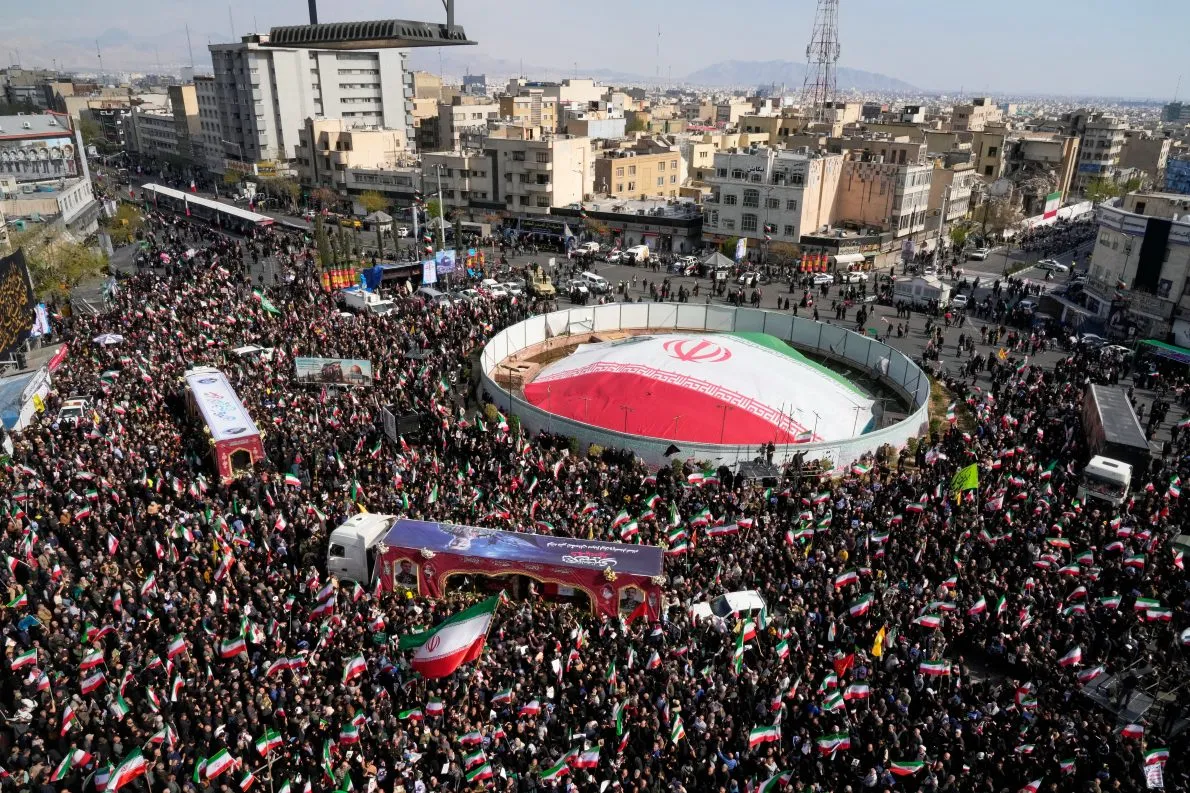
Iran launches ongoing assaults on Israel and Persian Gulf nations while airstrikes target Tehran. U.S. President Donald Trump delivers mixed messages on ending or intensifying the conflict, demanding Iran unblock the Strait of Hormuz—a key route for global oil—or face devastating bombings.
Trump’s Contradictory Warnings
In a recent Truth Social post, Trump adopts a tough stance, threatening to bomb Iran ‘back to the Stone Ages’ unless it clears the strait. This follows his earlier remark that the U.S. stays out of securing ships there, reversing a prior warning to strike Iran’s power grid by April 6 if the blockade persists.
Trump plans a televised address this evening. He indicates the war could conclude in two to three weeks if he confirms Iran cannot develop nuclear weapons, regardless of Tehran’s ceasefire stance. Additional U.S. troops deploy to the region, fueling talk of a potential ground operation after weeks of airstrikes.
Trump asserts that Iran’s ‘New Regime President’ seeks a ceasefire, though Iran retains its current leadership. Foreign Ministry spokesman Esmail Baghaei labels this claim ‘false and baseless’ on state television.
Iran Rejects Threats and Signals Resolve
Foreign Minister Abbas Araghchi tells Al Jazeera that threats and deadlines fail against Iranians. ‘We do not set any deadline for defending ourselves,’ he states. No evidence shows Iran easing its control over the Strait of Hormuz since the war erupted on February 28.
Diplomatic Stalemate
The U.S. offers Iran a 15-point ceasefire proposal, requiring the strait reopened and nuclear program curtailed—Iran maintains its program is peaceful. Iranian officials counter with demands, including strait sovereignty.
Araghchi confirms receiving messages from U.S. Mideast envoy Steve Witkoff but rules out direct talks. ‘The trust level is at zero,’ he says, warning against a U.S. ground push: ‘We are waiting for them.’
Recent Strikes and Regional Fallout
A cruise missile strikes an oil tanker off Qatar’s coast; the crew evacuates safely. A Kuwaiti tanker faces attack off Dubai, among over 20 vessels hit. In the UAE, debris from an intercepted drone kills one in Fujairah. A drone ignites a fuel tank at Kuwait International Airport, causing a major blaze.
Jordan intercepts a ballistic missile and two drones from Iran. Saudi Arabia downs two drones. In Israel, sirens blare amid missile alerts, with explosions shaking Tel Aviv—no immediate damage reported.
An airstrike hits Tehran’s former U.S. Embassy compound, now Revolutionary Guard territory; nearby buildings suffer shattered windows.
Israel Expands Operations in Lebanon
Israeli forces strike a Beirut neighborhood, killing at least five. Israel invades southern Lebanon following Hezbollah missile barrages into northern Israel post-war outbreak. Lebanese authorities report over 1,200 deaths and more than 1 million displaced. Ten Israeli soldiers die there.
Casualties Mount and Oil Prices Surge
Iran reports over 1,900 deaths. Israel tallies 19 fatalities. Gulf states and the West Bank see more than two dozen deaths; 13 U.S. service members perish.
Oil prices climb over 40% since war’s start, with Brent crude exceeding $103 per barrel, driving up gasoline, food, and goods costs.