
Independent Pubs Grapple with Surging Business Rates
Independent pubs across England and Wales face a steep challenge as business rates rise, requiring them to sell over 825 million additional pints annually to break even, according to recent economic analysis. With an average profit margin of just 13 pence per pint, each establishment must push 43,969 more pints to absorb the increased costs.
Operators in the sector view the upcoming 15% discount on business rates for pubs and music venues, effective from April, as insufficient relief, calling it “small beer.” Concerns extend to the restaurant industry, where escalating rates threaten job cuts and operational viability.
Projected Rate Increases and Job Impacts
Business rates for the period from 2024-25 to 2028-29 are projected to climb by an average of £13,561 per affected business, equivalent to the earnings of an 18- to 20-year-old working three eight-hour shifts weekly at minimum wage. This surge aligns with broader worries about entry-level employment in hospitality.
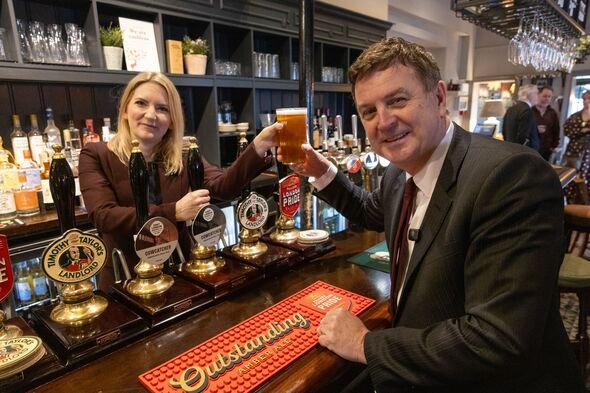
Shadow Chancellor Sir Mel Stride highlighted these pressures during a visit to the Jobber’s Rest pub in Upminster, a London suburb, where he engaged with hospitality professionals facing mounting expenses. “Rachel Reeves’s business rates rise is yet another tax on jobs,” Stride stated. “Labour promised they’d fix business rates. Instead, they are punishing businesses, destroying entry-level jobs, and hollowing out our high streets.”
Stride pointed to significant job losses in retail, hospitality, and leisure sectors—around 90,000 positions under the current administration—attributing them to policy decisions like higher employers’ National Insurance contributions. “We have lost about 90,000 jobs in retail hospitality and leisure under this Government. It hasn’t happened by accident – it’s happened because of the government’s choices,” he remarked.
He emphasized the ripple effects on communities, warning that declining pubs, restaurants, and shops could weaken social ties and fragment neighborhoods. “If you see pubs go and restaurants go and shops go and high streets start to dwindle and decay, then you have all sorts of knock-on consequences as a result of that,” Stride said. “Communities become less strong, they become weaker, they become more fragmented. We need to be building up our high streets, not pushing them down.”
Addressing Youth Unemployment and Cost Pressures
The hospitality sector plays a key role in combating youth unemployment, with nearly 900,000 young people currently not in employment, education, or training. Stride called for welfare reforms to shift individuals from benefits to work, freeing up funds to ease tax burdens on pubs. He also advocated reducing energy costs by eliminating certain carbon taxes and subsidies, a move he believes could yield quick results.
Local MP and Shadow Science Secretary Julia Lopez joined Stride at the pub, criticizing the government’s discount as inadequate. “It’s not enough to change the fundamental pressures that are facing these businesses,” she said. “These people put their heart and soul into these businesses. They’re employing people, they’re taking risks, they’re trying to make some money, they’re paying their taxes and they’re being crushed.”
A government spokesperson defended the approach, noting a £4.3 billion budget package to limit sharp bill increases for over half of business properties. “We’re backing hospitality and the high street,” the spokesperson said. “Our Plan for Small Business will help small businesses to medium enterprises access the tools and support they need to unleash their potential, and later this year we’ll publish a new High Streets Strategy to do even more to back Britain’s high streets.”
Voices from the Frontline: Pub and Restaurant Owners
Jack Sandhu, 71, owner of the Chequers pub in Hornchurch, east London, reflects on shifting cultural habits. “Back in the old days, the first thing you did when you finish work was go down the pub. Now you can’t find a pub,” he observed. Rising costs—from TV sports subscriptions to energy and taxes—compound the strain, with Sandhu stating, “Business rates are just killing us.”
In the restaurant space, Honey Uppal, 44, who co-manages the Tandoori Lounge in Hornchurch with her husband Sukh, 46, ed survival fears upon learning of the rate hikes. “How are we going to survive?” she wondered. The cost-of-living crisis has slashed patronage, dropping from weekly outings to once or twice monthly. Uppal’s team has reduced staff by three, and she warns Chancellor Rachel Reeves: “Whether it’s a pub, whether it’s a restaurant, whether it’s a small local business, I think it’s becoming more and more difficult to stay alive. Unless she acts to help restaurants, there won’t be many of us around.”
Alison Taffs, 53, co-owner of Hornchurch’s Hopp Inn, anticipates rates jumping from £2,700 to £6,500 despite the discount, alongside increases in minimum wage, alcohol duty, and National Insurance. “If she wants growth, growth has to start with small independent businesses on local high streets,” Taffs urged. “Everything we spend is local. We pay local council tax, we live locally, we spend all our money locally, we employ locally… We don’t take out, we put in.”
At the Jobber’s Rest, Richard Ferrier, 40, chief executive of Heartwood Inns, forecasts a rise from £20,000 to nearly £44,000 in rates. He demands bolder support: “There’s just got to be something bigger and bolder around hospitality in general.” Ferrier voiced sector-wide frustration over unfulfilled promises of business rates reform, noting added pressures on already strained operations. “There’s a lot of frustration around the sector because we were promised fundamental business rates reform in the Labour manifesto. And unfortunately what we’ve seen is more and more costs loaded onto businesses,” he said. He positioned hospitality as a solution for youth employment but described the industry as currently “apoplectic.”