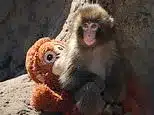
Scientists uncover the heartbreaking reasons behind the rejections faced by Punch, the viral Japanese macaque captivating millions online.
Punch’s Challenging Start at Ichikawa Zoo
The seven-month-old Japanese macaque, born at Ichikawa Zoo last year, experienced maternal rejection shortly after birth. Zookeepers provided a stuffed orangutan toy, which Punch quickly adopted as a surrogate, leading to heartwarming viral videos of him clinging to it.
Viewers rejoiced briefly when footage showed another macaque grooming and comforting the young monkey. However, days later, Punch faced a more aggressive rejection from the group.
Rare Maternal Abandonment in Macaques
Professor Jo Setchell, a primatologist at Durham University, notes that maternal abandonment is highly unusual among macaques. It often occurs with young, inexperienced mothers, and Punch’s mother was having her first infant.
“Inexperienced primate mothers can appear stressed, sometimes holding their baby upside down as it wriggles,” Professor Setchell explains. “Transitioning from pregnancy to constant attachment is a major shift for a first-time mother.”
High temperatures during Punch’s birth likely exacerbated the situation. Mothers in poor condition may prioritize their own survival and future offspring over an infant facing harsh conditions, according to Professor Setchell.
Dr. Emily Bethell, Associate Professor in Primate Cognition and Welfare at Liverpool John Moores University, adds that the mother’s own history plays a role. Abandonment increases if she endured abnormal rearing, such as early separation from her mother or captivity-related stress.
Why Peers Reject Punch
Without maternal guidance, Punch missed crucial lessons in social behavior. “A baby monkey normally gains protection and learns proper responses from its mother, but Punch lacks this support,” Professor Setchell states.
Japanese macaques maintain strict dominance hierarchies, where group members assert their rank. Other macaques may have initially shown interest in the motherless infant, common in these highly social primates.
“Interest in youngsters is typical, including handling others’ infants,” Dr. Bethell says. “An abandoned baby attracts attention, sparking conflicts over access and resulting in rough treatment.”
A Caution on Monkey Popularity
While Punch’s story enchants social media, Professor Setchell warns that such attention to cute baby monkeys boosts demand for pets and illegal trade, causing widespread suffering. “Monkeys require their species’ companionship; Punch’s plight underscores the need for a mother’s care, as he grows into an adult needing his troop.”