Western Australia’s public transport networks experience a significant surge in usage this month, coinciding with sharp rises in petrol prices across Perth.
Government Highlights Usage Increase
Premier Roger Cook reports a 15 percent jump in bus, train, and ferry boardings for March to date. Transport Minister Rita Saffioti notes a 10 percent growth when comparing recent weeks to the previous year. “We looked at one week in March, a couple weeks back compared to last year, and we’ve already seen about a 10 per cent growth in this year,” Saffioti states.
Unleaded petrol averages $2.41 per litre, while diesel reaches $2.86 per litre in the Perth metro area, up 82.3 cents per litre recently amid Middle East tensions driving global crude oil costs higher.
Factors Boosting Public Transport Patronage
Capped fares contribute to the rise, particularly the Go Anywhere option allowing travel from Yanchep to Mandurah for $2.80. “A lot of these people are taking advantage of our Go Anywhere fare,” Cook explains. Free bus travel for schoolchildren, who no longer need to tag on, also inflates figures. Saffioti adds, “We’re seeing a little bit of under-reporting, [and] we believe this year’s figures will be even bigger.”
New Metronet rail lines and stations, including the Armadale line extension to Byford, complicate year-over-year comparisons. Perth’s train network now records its highest annual patronage in a decade.
Road and Cycle Data Shows Stability
Traffic volumes on key routes like the Narrows Bridge remain steady at over 200,000 vehicles per weekday. Cyclist counts on major bike paths exhibit minimal fluctuations.
Commuters Confirm Shift to Trains
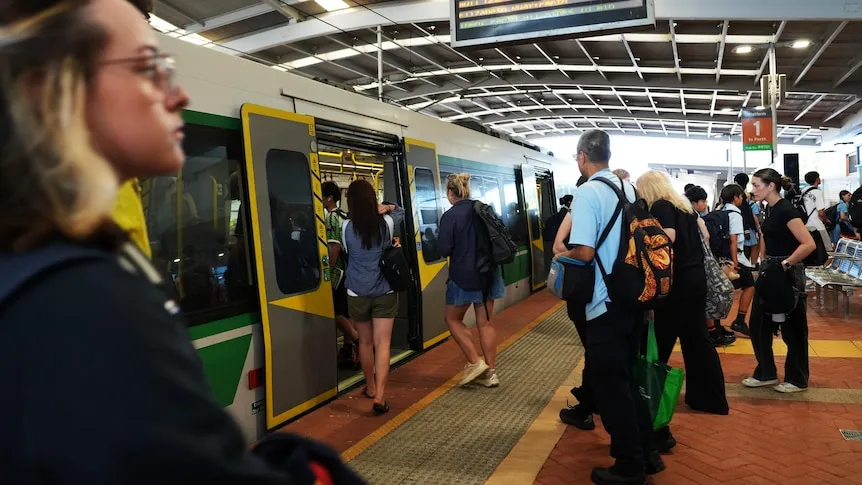
At Rockingham station, 50 kilometres south of Perth’s CBD, crowds swell noticeably. Commuters park in overflow areas despite early arrivals. One rider observes, “Trains are fuller … it must be everyone’s like, ‘I’m going to jump on the train because it’s too expensive to drive.'” Another, starting train commutes to a city job, says, “It makes it much more cost effective than paying for the fuel to get there.”
Cook anticipates further fuel price hikes. “Western Australia is not immune to the escalation in crude oil prices,” he states. “We can do what we can within the confines of Western Australia to make sure that people get fuel.”