The night sky seems static at first glance, but deeper observation reveals constant motion. Satellites, asteroids, and interstellar objects streak across it, while stars flare with sudden energy or erupt in brilliant supernovae. These dynamic events offer physicists rare chances to probe cosmic phenomena impossible to replicate on Earth.
A New Era of Astronomical Discovery
The Vera C. Rubin Observatory ushers in transformative advancements. Perched on a pristine mountaintop in Chile, this facility delivers ultra-wide, deep, and high-resolution images of the southern sky. Over the next decade, it produces a detailed, high-definition record, unveiling countless previously unseen objects.
Development spanned over 20 years, culminating in the world’s largest camera at 3,200 megapixels. Each exposure covers an area equal to 40 full moons, with such sharpness that it could identify a lime’s variety from 24 kilometers away.
Recent test images already showcased swarms of undiscovered asteroids, variable stars in the Milky Way, and stunning galaxy vistas, hinting at the survey’s potential.
Legacy Survey of Space and Time
The observatory dedicates its gaze to the Legacy Survey of Space and Time (LSST), a ten-year mission tackling the universe’s profound enigmas. This systematic scan revisits sky patches up to 100 times annually, generating 10 terabytes of data nightly—surpassing all prior optical observatories combined in a single year.
Expectations include 6 million asteroid detections in our Solar System, catalogs of 17 billion stars in the Milky Way, and color images of 20 billion galaxies beyond.

Unraveling Dark Matter and Dark Energy
Researchers target core questions, such as the essence of dark matter and dark energy, which dominate the cosmos. Analysis focuses on whether the universe’s expansion sustains steady acceleration or evolves over time. Dark energy drives 70% of this expansion, yet its nature remains elusive. Emerging data suggests shifting rates, enabling tests of competing theories.
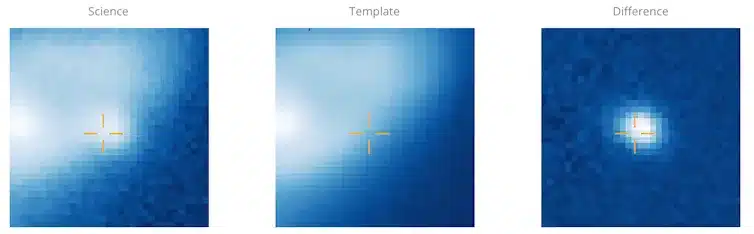
Difference imaging detects changes: new observations subtract from reference templates to spotlight supernovae or variable sources.
Processing the Cosmic Data Surge
Seven community brokers manage the influx, processing alerts within minutes. These teams deploy distributed computing and AI to sift thousands of detections per minute—up to 10 million nightly—for standout events like exploding stars or hazardous asteroids.
One broker, Fink, unites global scientists and engineers to democratize discoveries.
Participate as a Citizen Scientist
Engage directly with early images via tools like Orbitviewer for asteroid tracking and SkyViewer for deep-sky exploration. Projects such as Rubin Difference Detectives and Comet Catchers invite volunteers to spot transients and comets.
Public portals, including Fink’s, offer real-time access to raw detections, packed with cosmic gems straight from the telescope.