

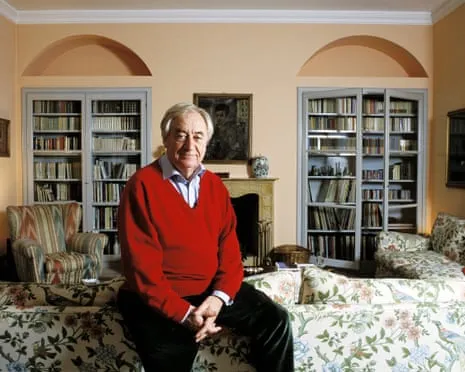
The Dutch author Cees Nooteboom, who passed away at 92, embodied the suave, cosmopolitan man of letters in his later years. A dedicated European, he resided in an elegant 1731 merchant’s house in Amsterdam and spent summers on Menorca. Over his career, he produced nearly 60 books spanning fiction, poetry, and travel writing—stylish, erudite works that earned him prestigious awards, including the 2009 Prijs der Nederlandse Letteren, a lifetime honor for Dutch-language writers.
Early Life Amid War and Upheaval
Born on July 31, 1933, in The Hague as Cornelis Johannes Jacobus Maria Nooteboom, he experienced profound trauma as a child. In 1940, he witnessed Rotterdam burning from his family’s apartment during air raids. Early 1945 brought further devastation when misdirected RAF bombs killed his father amid the Netherlands’ “hunger winter,” claiming over 20,000 lives from starvation. Nooteboom described himself as “a child of the war, and after that the cold war.” He once reflected, “I have not remembered chaos. I found my way out of all that in my books.”
His childhood involved eight moves as his parents, businessman Hubertus Nooteboom and Johanna Pessers, separated and remarried. The family name, meaning “nut-tree”—hard outside, tasty within—suited his self-description. A Catholic stepfather enrolled him in strict Franciscan and Augustinian schools, where he rebelled but valued the Latin and Greek literature taught there.
Career Beginnings and Wanderlust
After school, Nooteboom worked in a Hilversum bank, secretly reading William Faulkner. Postwar gloom—“Everything in our country was grey, sad, poor”—drove him south. Hitchhiking through Italy and Provence inspired his debut novel, Philip and the Others (1954). Success led him to Amsterdam, where he pursued journalism.
He covered pivotal events, rushing to Budapest in 1956 for Het Parool to report the Soviet crushing of Hungary’s revolution. The boy who saw Rotterdam destroyed became a chronicler of history: Paris 1968, Berlin 1989. A 1957 stint as a freighter sailor to Suriname funded his marriage to Fanny Lichtveld. His reporting thrived at Elsevier, De Volkskrant, and Avenue.
Literary Achievements and Travel Legacy
Nooteboom’s 1963 novel The Knight Has Died showcased his playful narrative style. His poetry, filling 12 volumes, explored “unknown territory” beyond novels. From the mid-1960s, he divided time between Menorca and the mainland, finding refuge in Spain’s landscapes and art. “On the inside, I look just like that,” he said of its parched plains.
After divorcing in 1964, he partnered with pop star Liesbeth List for 15 years and married photographer Simone Sassen in 2016, whose images enhanced his books. Travelogues spanned Brazil, Bolivia, Tunisia, Iran, and Spain. Fiction resumed with award-winning Rituals (1980), blending Japanese culture, intricate plots, and melancholy. Follow-ups included In the Dutch Mountains (1984), The Following Story (1991)—a bestseller during Dutch Book Week—All Souls’ Day (1998), and Lost Paradise (2004).
Translated into 38 languages, including Chinese and Hindi, his works gained international acclaim before full Dutch embrace, as noted by Jane Fenoulhet, emerita professor of Dutch studies at University College London and author of Nomadic Literature. Roads to Santiago (1992) became his signature, a vivid journey through Spain. He taught at Berkeley and Berlin, reporting the Wall’s fall. “I started travelling in order to find something to write about, and I succeeded,” he stated.
Later Reflections and European Ideal
Collections like Nomad’s Hotel (2002), Tombs (2007) with Sassen’s grave photos, and Letters to Poseidon (2012) carried an elegiac tone. Spain’s 2020 Formentor prize praised his tie to Europe’s cultural tradition. Yet he critiqued its limits, writing of a drowned Syrian toddler in 2015: “the child was too heavy for Europe.” Nooteboom feared the postwar European dream stood “broken before it was truly whole.”
He is survived by Sassen. Nooteboom died on February 11, 2026.









