

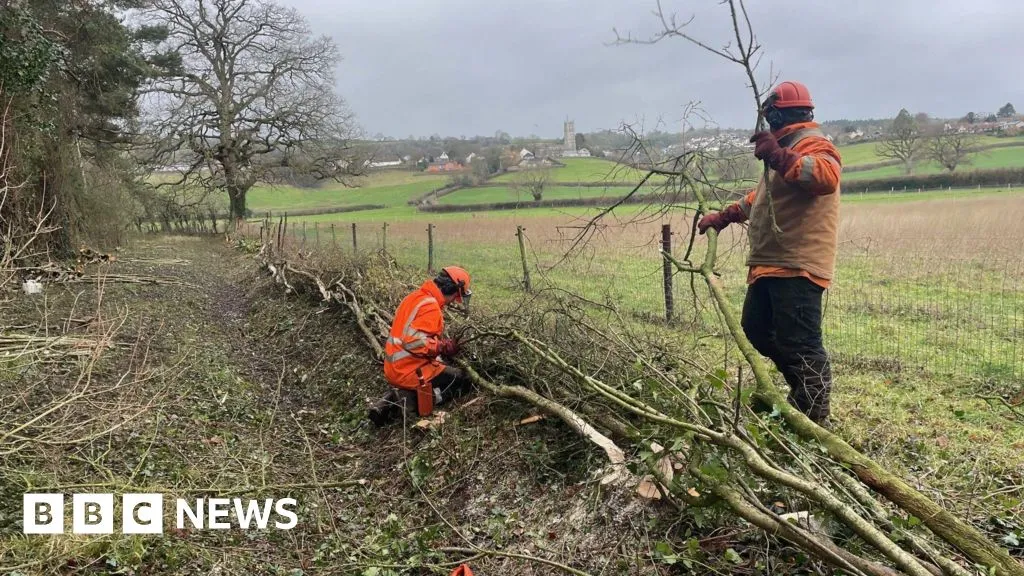
A water company employs traditional hedge laying methods to enhance wildlife diversity around a scenic reservoir. The initiative targets Blagdon Lake, a 440-acre site and trout fishery nestled in the Mendip Hills of Somerset, designated as a Site of Special Scientific Interest.
Restoring Hedgerows for Wildlife
Teams restore thinning hedgerows by laying trimmed base stems horizontally. This approach, led by hedge laying specialist Mike Reed, creates vital habitats amid declining populations of farmland birds and hedgehogs.
Mike Reed states, “So many of our farmland and countryside birds are endangered, as are hedgehogs, so creating these spaces for them to live and nest in is more important than ever.” He adds, “Hedge laying is a historical craft with a strong local tradition and I’m proud to be passing it onto the next generation through this work.”
How the Technique Works
The method permits light to reach the base of hedgerows, encouraging dense vertical regrowth. This provides essential cover for animals and birds during winter. In contrast, conventional trimming with heavy machinery often results in sparse hedges, which offer poor shelter for birds, hedgehogs, and insects.
Project Timeline and Progress
Workers have laid approximately 1,800 meters of hedge to date. Operations pause during nesting seasons to avoid disturbing birds and other species. The two-year project anticipates a surge in local wildlife returning to the area.
Simon Hughes, treescape officer, notes, “It won’t be long before we will start to see a complete transformation in the hedgerows and it’s exciting for all of us to be a part of creating this significant and important change.”









