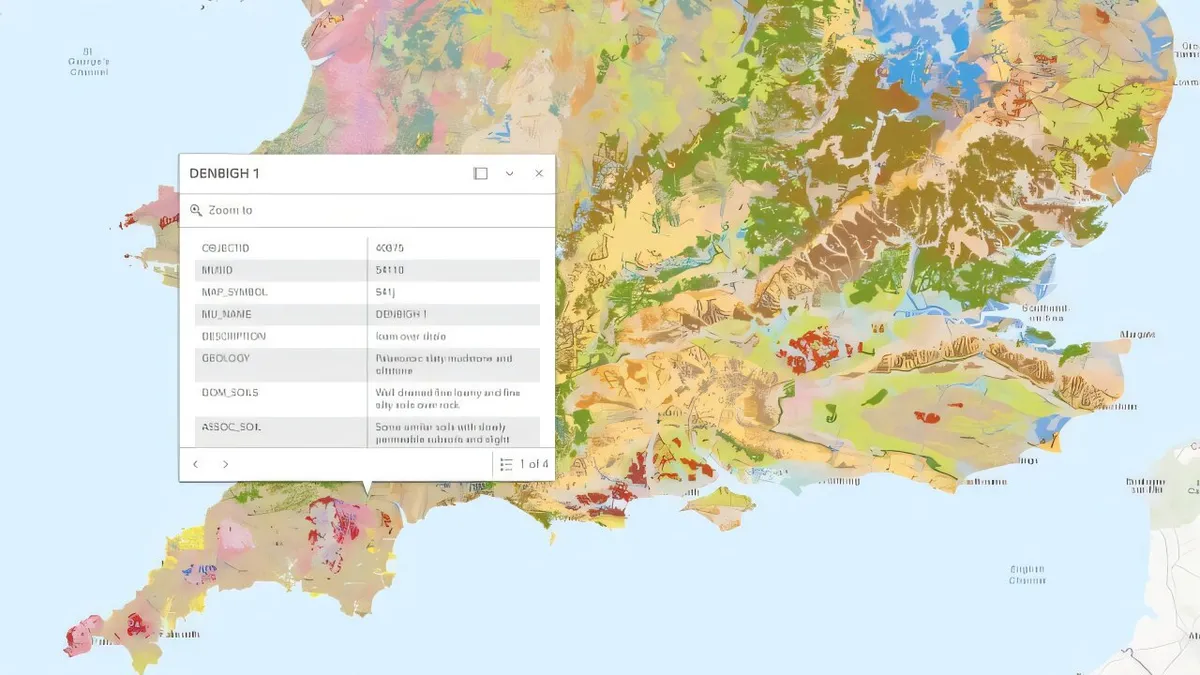
Cranfield University has introduced a comprehensive online soil and environmental database and mapping platform, providing detailed land data for England and Wales. Developed in partnership with the Department for Environment, Food & Rural Affairs (Defra), the LandISPortal system—including the National Soil Map of England and Wales (NATMAP)—now operates on an open-access platform, available at no cost to the public.
This release fulfills the government’s Land Use Framework pledge to provide free access to essential soil information.
Nature Minister Highlights Soil’s Vital Role
Nature Minister Mary Creagh emphasized the importance of the initiative: “Soils are a Cinderella ecosystem but healthy soils are the foundation of our food security, our landscapes and tackling climate change. Opening up Cranfield’s LandISPortal means that farmers, planners, government bodies, researchers and communities now have free access to powerful soils and land data—which will protect our soils for the future.”
LandISPortal: Europe’s Leading Soil Resource
The LandISPortal serves as the primary national repository for soil data in the UK, ranking among Europe’s largest systems. It draws from over 30,000 soil samples and 250,000 observations, covering aspects like water catchments, subsidence risks, and tree health. Experts utilize this data for advancing sustainable agriculture, assessing long-term landfill effects, and analyzing soil erosion patterns.
Water utilities, government agencies, universities, urban planners, and consultants rely on LandISPortal for informed decision-making.
Protecting Soil Amid Growing Threats
Soil faces mounting challenges from erosion, compaction, organic matter decline, and pollution. The government’s 25-Year Environment Plan aims to halt degradation, restore fertility, and enhance soil health monitoring. Cranfield University has gathered soil data since the 1970s, supported by cutting-edge research in soil quality, crop production, environmental informatics, and ecosystem dynamics at the Cranfield Environment Center.
Professor Ron Corstanje, Head of the Cranfield Environment Center and Professor of Environmental Data Science, stated: “Soil is a key element of our natural capital and it is something that can’t be replaced. I can’t emphasize enough how vital soil health and sustainable management of our soils is to food security, our environment, our health and our way of life. Opening up access to this data will help monitor soil health and the wider ecosystems at both local and national levels—this is crucial to protecting and safeguarding our future.”
Professor Dame Karen Holford DBE FREng, Chief Executive and Vice-Chancellor of Cranfield University, added: “By making decades of soil and environmental data available to everyone, we’re helping support better decision-making, more sustainable land use and a healthier environment for future generations. It is great to see the knowledge we generate at Cranfield being made more accessible to everyone.”