

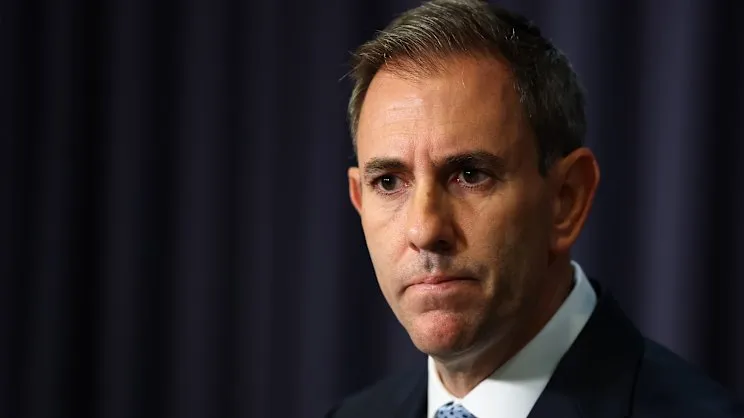
Plans to eliminate tax advantages for landlords and property investors could include unexpected income tax reductions in next week’s budget. Officials present the shift away from prior commitments on negative gearing as a principled adjustment.
Treasurer Chalmers Dodges Direct Answers
Treasurer Jim Chalmers offered no confirmation of new income tax cuts when questioned on Monday. Instead, he highlighted upcoming tax relief measures, including a $1000 standard deduction. “We’ve already got tax cuts coming, cutting income taxes,” Chalmers stated, pointing to modest reductions set for July that were introduced before the last election.
Chalmers left the door open for additional cuts potentially starting next year. Government insiders, including cabinet members, avoided speculation about the Tuesday budget but did not dismiss the possibility of worker-focused tax boosts.
Balancing Tax Reforms with Relief
Income tax reductions have long served as a strategic offset for broader tax changes. The government prepares to implement key elements of its 2019 platform, such as scaling back negative gearing, capital gains tax discounts, and increased taxes on family trusts. Unlike before, franking credits remain untouched.
Prime Minister Anthony Albanese and Chalmers previously pledged no alterations to negative gearing ahead of the election, though capital gains tax faced no such assurance. Chalmers defended potential reversals by emphasizing decisions made for sound reasons, citing the stage 3 tax cut modifications. “You build trust by taking the right decisions for the right reasons,” he explained.
Any negative gearing overhaul—allowing losses from rental properties to offset taxable income—would likely apply only to new investments, with existing ones grandfathered to support housing supply. Albanese had called such changes “off the table” in a prior debate, arguing they would not increase home building.
Opposition Criticism Mounts
Shadow Treasurer Tim Wilson condemned the approach as a “full suite of family savings taxes.” He accused Chalmers of hypocrisy: “Chutzpah is Jim Chalmers arguing he needs to betray Australians to be trusted.”
Economic Pressures Shape Budget Choices
Efforts to curb inflation, exacerbated by the Iran conflict and Strait of Hormuz closure, argue against tax cuts that could stimulate spending. Yet, surging fuel prices have eroded consumer confidence, prompting nearly $2.5 billion in excise reductions.
Chalmers and Finance Minister Katy Gallagher emphasized banking upgraded revenue forecasts for a responsible budget. Higher inflation anticipates a third Reserve Bank rate hike on Tuesday, raising monthly repayments on a $600,000 mortgage by nearly $300 cumulatively. Markets price a 75% chance of the increase, with more expected by October.
Existing tax relief remains limited: July cuts deliver $5 weekly for earners over $45,000, costing $3 billion in 2026-27. A mid-2027 cut projects $6.7 billion, plus $1.2 billion for the deduction.
Expert Calls for Targeted Adjustments
Productivity Commission Chair Danielle Wood advocated pairing property tax changes with income tax relief. “We would certainly hope to see these types of changes reduce pressure on income tax over time,” she noted.
HSBC Australia Chief Economist Paul Bloxham suggested precise spending cuts to ease Reserve Bank pressures. “A surgical approach with the fiscal scalpel would reduce the need for the RBA’s governor Michele Bullock to deliver more blows with the sledgehammer,” he said.
ANZ analysts Daniel Hynes and Soni Kumari forecast sustained high oil prices, with Brent crude above $US90 per barrel through 2026 due to lost capacity from the conflict. “Even if the worst of the oil shock is over by late 2026, the underlying causes of the Middle East conflict are unlikely to go away,” they warned.









