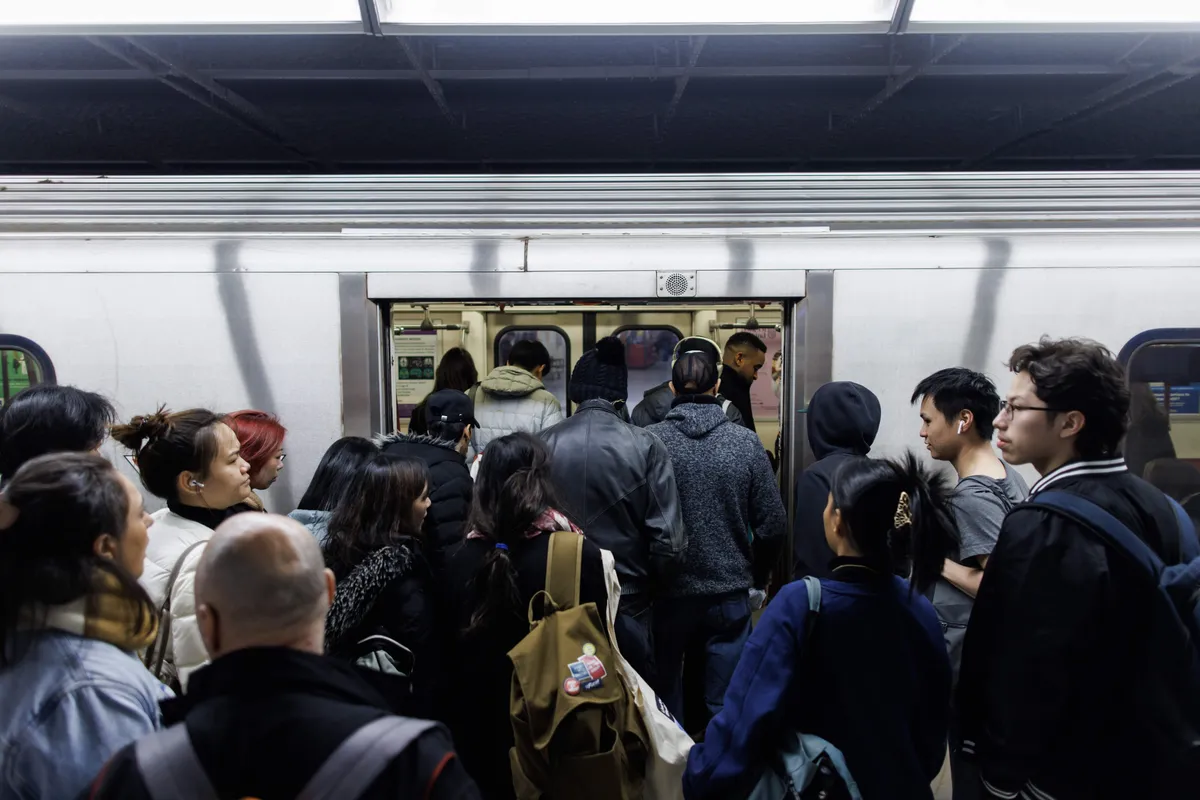
An urban planning expert warns that Toronto could face a transportation breakdown during FIFA World Cup matches if public transit usage falls short of expectations. City officials project that 70% of spectators—around 25,000 people—will rely on public transit for travel to and from games.
Expert Highlights Critical Transit Threshold
“If we start to think about any number less than that, the city really may just collapse on itself,” states Jeff Casello, a professor in the school of planning at the University of Waterloo.
Recent Geotab data reinforces this concern, ranking Toronto last—and Vancouver just above—among the 16 host cities in preparedness for event-related transportation demands. The analysis drew from vehicle data during June and July 2025 major events. “While the tournament will bring obvious pressure around stadiums and fan travel, the wider issue is how well host city road networks maintain resilience as they absorb major event demand by limiting disruption to local traffic, commercial operations and the movement of goods,” the Geotab analysis notes.
Existing Congestion Amplifies Risks
Toronto and Vancouver top the latest TomTom traffic index for congestion, with drivers averaging 28 and 26 minutes, respectively, to cover 10 kilometers. City projections anticipate a 10-15% surge in congestion during Toronto’s six World Cup matches, leading to severe delays for motorists.
“You may see that in the early games where people say, ‘Well, maybe I’ll just take a chance to see if I could drive into the city,’” Casello predicts. “But I think the city is really going to perform so poorly if you do try and drive that by the time the first experiment is over, people will realize that public transportation is probably the only viable way for this to happen.”
Evidence shows drivers prefer personal vehicles when feasible, but heightened highway congestion—up to 15%—makes transit far more appealing. “You can get from Pearson Airport to downtown in 30 minutes and get to the game by transit, and there’s no possible way you can do the same thing by car,” Casello explains.
Enhanced Transit Services in Place
The TTC boosts service on Lines 1 and 2, plus select streetcars and buses serving the stadium. Metrolinx expands GO Transit, running up to six trains per hour on the Lakeshore West line before and after games.
Casello deems the strategy sound but stresses flawless execution for safe, reliable access. Toronto can draw lessons from last summer’s World Series, where crowd management faltered. “There were some missteps last year,” he notes. “Lots of people were coming out of games, coming out of bars and restaurants, and there wasn’t really the kind of control or the kind of organization on platforms and entering and exiting stations that we would like to see. And it did create some safety concerns and some frustration amongst passengers.”
The TTC plans to deploy 600 transit ambassadors to guide visitors and residents. Late-night service remains essential to avoid stranding fans post-game; subways run until 1:30 a.m., with potential extensions.
Reliability Challenges Ahead
However, TTC reliability poses hurdles. A May report shows Lines 1 and 2 at 83% and 84% on-time performance, while buses and streetcars lag at 74% and 56%.
“The reality is that when you have this kind of spike in demand, there’s going to be people who are unaccustomed to the system, there’s going to be people who are just getting used to it,” Casello observes. “There are going to be people who have expectations about the way the system is going to run and I’m not sure we’re going to meet that. People are going to be leaving a game or leaving a bar or restaurant and they’re gonna have to wait one or two or three trains to get onto a train because the system is going overcrowded. I think that’s just the reality of what’s happening.”