

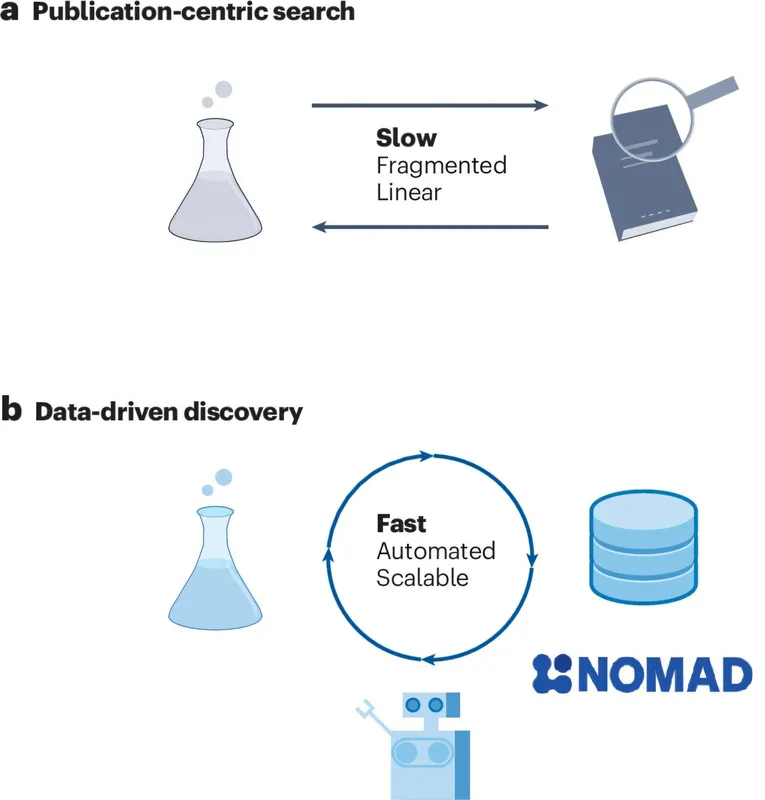
Catalysis lowers activation energy in chemical reactions, driving the chemical industry and sustainable technologies for a low-carbon economy. Finding high-performance, eco-friendly catalysts remains expensive and slow, but data-driven approaches speed up the process. Experimental data often lacks machine-readable, standardized formats, hindering progress.
Introducing the Catalysis App
The Catalysis App solves this by allowing researchers to store and share data in a unified format. This enhances result comparability and supports AI-driven catalyst development. “With the Catalysis App, we have created a solution that enables researchers to store and share their data in a unified format. This facilitates the comparability of results and lays the foundation for future AI-supported catalyst development,” states Dr. Annette Trunschke, Principal Investigator at FAIRmat.
Developed by the FAIRmat consortium under the National Research Data Infrastructure (NFDI), the app stems from collaboration among experts at the Center for the Science of Materials Berlin (CSMB) at Humboldt-Universität zu Berlin (HU), the Fritz Haber Institute of the Max Planck Society, and Helmholtz-Zentrum Berlin. Dr. Julia Schumann, FAIRmat Catalysis Expert at HU, played a key role, with Dr. Trunschke providing scientific leadership.
Powerful Features for Researchers
Researchers access structured, comparable, machine-readable data through an intuitive graphical user interface (GUI) or an application programming interface (API). These tools enable multifaceted data exploration, such as identifying catalysts for specific reactions or analyzing products from starting materials.
Filters cover synthesis methods, catalyst forms, and reaction conditions, including high-pressure or low-temperature scenarios. Integrated data visualization adds value. Uploads occur manually via GUI or programmatically via API, using specialized structures and templates for standardized entry.
Growing Value Through Community Input
The app’s scientific impact hinges on data volume, diversity, and quality. “As community participation grows, the benefits of the platform will continue to increase. Researchers worldwide are therefore invited to use the application, contribute data and provide feedback in order to actively help shape its further development,” adds Dr. Trunschke.
Backed by FAIRmat and NOMAD
FAIRmat implements Findability, Accessibility, Interoperability, and Reusability (FAIR) principles for materials science data, coordinated at HU. It promotes transparency, reproducibility, and data reuse via the NOMAD infrastructure.
NOMAD, launched in 2014 for computed data, now supports experimental catalysis data. It hosts the Catalysis App to enforce FAIR practices in catalysis research.
Details appear in a recent Nature Catalysis publication by Julia Schumann and colleagues (DOI: 10.1038/s41929-026-01508-9).









