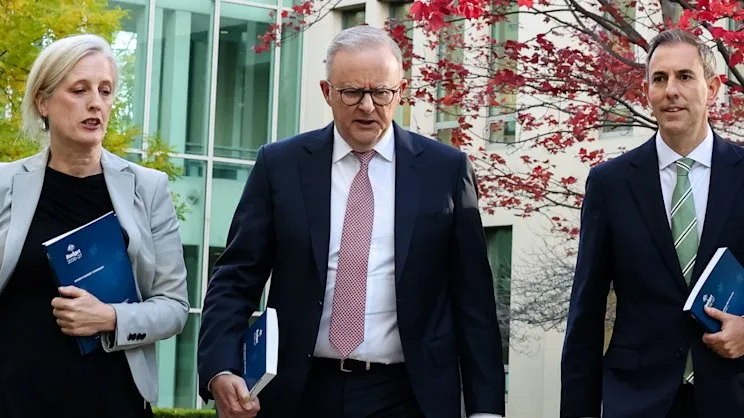
Treasurer Jim Chalmers plans to introduce the most significant property tax reforms this century, alongside substantial reductions to the National Disability Insurance Scheme (NDIS) and initiatives to lower business expenses, in Tuesday’s budget. These measures address election commitments while prioritizing affordable housing for young Australians.
Addressing Inflation and Fiscal Improvement
Recognizing ongoing inflation that prompted the Reserve Bank to raise interest rates in its last three meetings, Chalmers commits to a $45 billion enhancement in national finances, with all additional tax revenue preserved. This budget emerges as the most impactful since Joe Hockey’s 2014 fiscal strategy, focusing on intergenerational equity across government policies.
Key Tax and Housing Reforms
The core elements include tax restructuring and increased housing investment. Negative gearing faces restrictions, the capital gains tax (CGT) concession returns to its original structure, and minimum tax rates apply to family trusts. Wage earners receive a tax cut, likely as an offset for the 2027-28 financial year.
Prime Minister Anthony Albanese previously assured no alterations to negative gearing before last year’s election, amid criticism that it, combined with the CGT concession, drives up Australia’s world-leading property prices. On Monday, Albanese confirmed shifts in property tax policies, stating the government cannot ignore young people being priced out of homeownership.
“For a long period of time, young people have tried to save for a home. Another year has passed since the election and not enough has changed,” he told ABC Radio. “So many people have had another year of missing out at auctions, of renting and paying someone else’s mortgage. And too many young people are close to giving up on the opportunity of owning their own home.”
Albanese addressed caucus members on Monday, emphasizing that “a responsible government needs to be prepared to make tough decisions.”
Opposition Criticism and Housing Support
Changes to property taxes draw opposition from the Coalition, weakened by the Farrer byelection where Liberal-Nationals garnered just 21 percent. Shadow Treasurer Tim Wilson labels the moves “deceit and betrayal,” claiming they harm intended beneficiaries.
“It’s extremely clear that this government’s intention is to hit every single Australian, to tap into their wealth because they cannot control their spending addiction,” Wilson stated. “This government’s budget process is in complete disarray because they have broken their word and Australians have woken up to the dishonesty at the heart of this government and its budget.”
Housing gains prominence with nearly $60 million allocated over four years to house young people on Youth Allowance or Austudy. Community housing providers target 2,325 individuals this financial year, rising to 4,355 by 2029-30.
Market Analysis and Investor Impact
While the Coalition warns of harm to property investors, UBS analysts argue the reforms promote investment balance and ease property price pressures. Strategists Richard Schellbach and Lily Huang note that negative gearing changes “level the playing field” against other assets, as current rules fuel the multi-decade house price surge.
“The multi-decade boom in Australian house prices has been aided by favourable tax treatment, in particular negative gearing, extended towards investment properties,” they stated.
Budget Projections and Economic Pressures
Following surpluses in 2022 and 2023, Chalmers forecasts deficits over four years. However, boosted revenue—partly from the conflict with Iran—and $64 billion in spending cuts yield a $44.9 billion fiscal improvement from 2025-26 to 2029-30, reversing prior $180 billion deficit projections. Gross debt exceeds $1 trillion this year.
Chalmers attributes gains to savings and restraint: “We’ve delivered a big improvement in the budget bottom line since we were elected and another improvement since the last update in December. What’s driving this improvement in the budget are the savings we’ve found and the spending restraint we’ve shown.”
Brent crude surged nearly 5 percent to $US105 per barrel Monday amid fading war resolution hopes. Inflation may hit 5 percent mid-year due to rising petrol costs, with economic growth—previously 2.25 percent—facing downgrades. Persistent high oil prices risk prolonged inflation and sluggish job growth.
Spending Cuts and Productivity Boost
The largest cut targets NDIS with $35 billion trimmed over four years; $3 billion saves by ending the Private Health Insurance rebate discount for those over 65. Savings fund $25 billion for state hospitals and $6 billion for new Pharmaceutical Benefits Scheme listings.
A productivity package accelerates non-inflationary growth, featuring a permanent $20,000 instant asset write-off for small businesses, elimination of construction and safety fees, and expedited building approvals.